
Global Timekeepers Abolish Leap Second to Streamline Clocks
International timekeeping authorities have voted to abolish the leap second, a measure used to keep atomic time in sync with Earth's rotation. The change aims to prevent disruptions for digital systems.

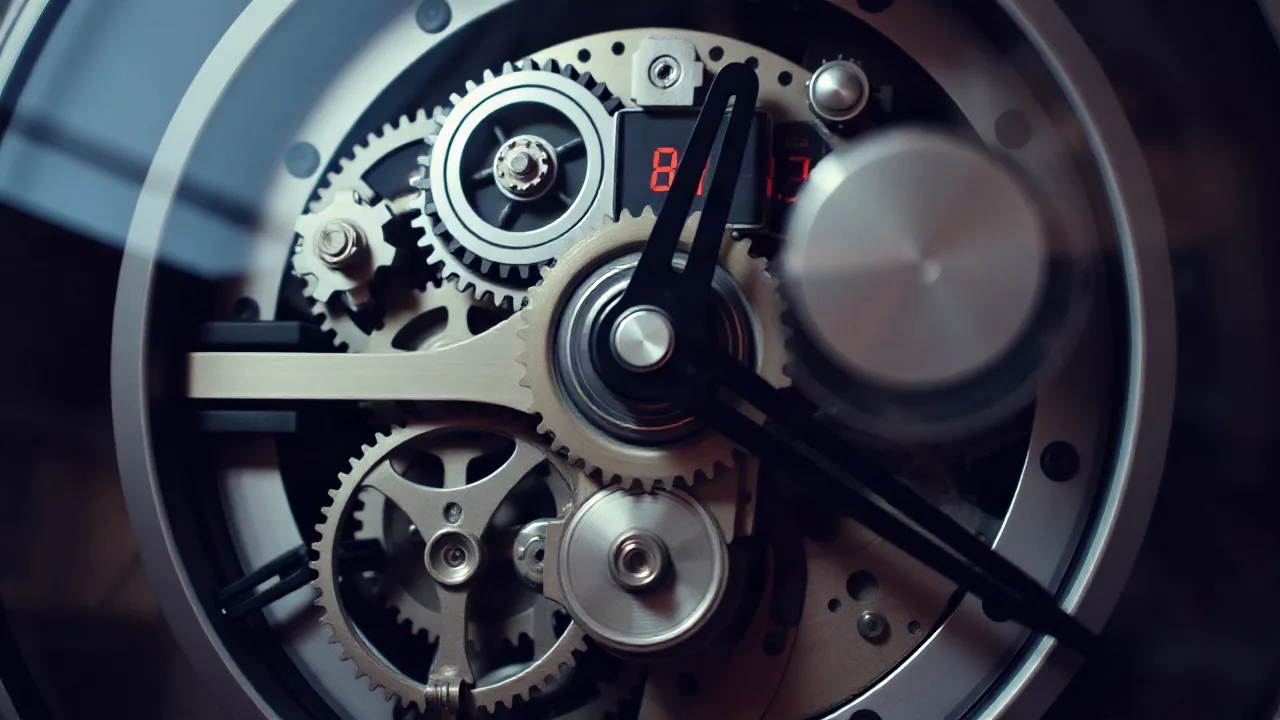
GENEVA – In a landmark decision set to redefine global timekeeping, international authorities have voted to permanently eliminate the "leap second," an occasional adjustment used to synchronize the precise atomic clock with the slightly irregular rotation of the Earth. The decision, made by the International Bureau of Weights and Measures (BIPM) and ratified by member states, will take effect in 2035. This move is expected to simplify timekeeping for the digital age and prevent potential disruptions for critical global systems.
For decades, the leap second has been a necessary, albeit complex, component of global timekeeping. Atomic clocks, which measure time with incredible accuracy, have slowly drifted apart from Coordinated Universal Time (UTC), the standard that accounts for the Earth's slowing rotation. When the difference between these two measures approached 0.9 seconds, an extra second was inserted into UTC, typically at the end of June or December. The last leap second was added on December 31, 2016.
However, the unpredictable nature and increasing frequency of these adjustments have become problematic for many modern technological systems. Financial markets, satellite navigation, and internet infrastructure often rely on precise, uninterrupted timing signals. The addition of an extra second can cause software glitches, data errors, and require complex, costly updates to maintain operational integrity. "This was a difficult decision, but it was necessary to ensure the stability and reliability of our global timekeeping systems in the face of technological advancements," stated Dr. Demetrios Matsakis, a former scientist at the U.S. Naval Observatory who was a prominent voice in the debate. "The leap second was a solution for a world that no longer exists."
A New Era of Timekeeping: The Leap Hour
The abolition of the leap second does not mean that the discrepancy between atomic time and Earth's rotation will be ignored indefinitely. Instead, experts have agreed to introduce a more significant adjustment, termed the "leap hour," which would be implemented only once every several centuries. This would involve a full hour being added or subtracted from the standard time, a change that would be far more manageable for digital systems and the global population.
The scientific community has been debating this issue for years. As early as 2015, a proposal was floated to scrap the leap second, with proponents arguing that the technological risks outweighed the scientific need for precise synchronization with Earth's rotation. While the Earth's rotation is slowing, it is doing so at an irregular rate, making precise, frequent adjustments difficult to manage. Conversely, some scientists have expressed concern that completely decoupling atomic time from the Earth's natural rhythms could eventually lead to a significant divergence, potentially causing issues for astronomy and long-term navigation.
The International Telecommunication Union (ITU), a United Nations agency, played a key role in facilitating the international consensus. Representatives from over 100 countries participated in discussions, ultimately agreeing that the benefits of a simplified, stable timekeeping system for the digital era were paramount. The BIPM will now be responsible for defining the precise conditions under which the future leap hour will be implemented, ensuring a smooth transition.
This fundamental change in how the world measures time is a testament to the evolving relationship between human technology and natural phenomena. As our reliance on digital infrastructure grows, the need for stable and predictable standards becomes increasingly critical. The retirement of the leap second marks a significant step in adapting our temporal systems to the demands of the 21st century and beyond.