
Android 17 Integrates Gemini Intelligence Ahead of iOS 27
Google unveiled Android 17, rebranding its AI features as 'Gemini Intelligence.' The update promises proactive, on-device AI capabilities, set to roll out this summer, positioning it against Apple's upcoming iOS 27.

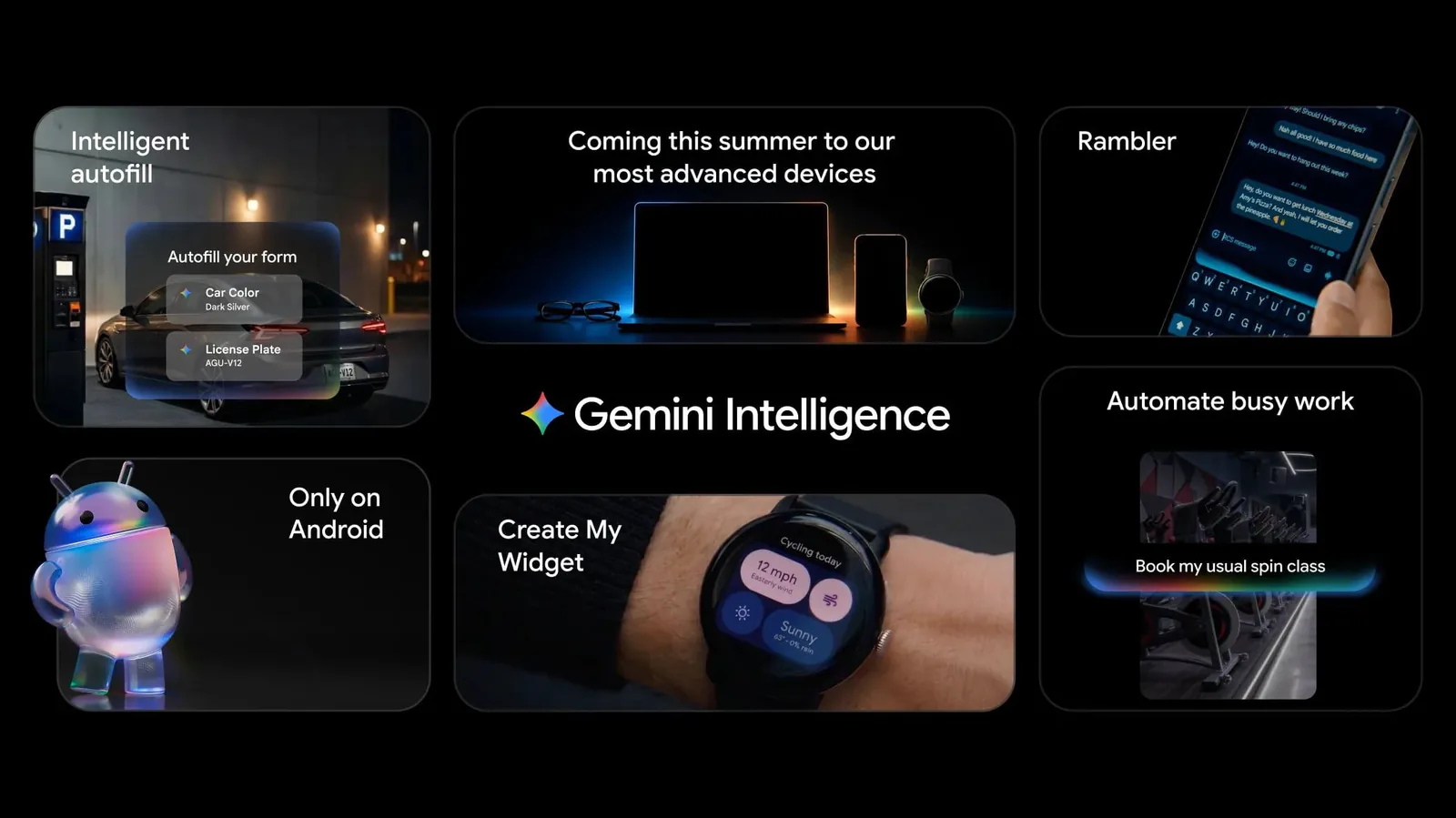
Google officially previewed Android 17 on May 12, 2026, heralding a significant shift in its mobile operating system by integrating advanced artificial intelligence features under the banner of "Gemini Intelligence." This unveiling comes approximately one month before Apple is expected to reveal its own AI-enhanced iOS 27, intensifying the competition in the smartphone AI landscape. Google is positioning Android not just as an operating system, but as an "intelligence system" with proactive, on-device AI agents designed to assist users.
The core of Android 17's enhancements lies in the expanded capabilities of Gemini. The AI will gain the ability to perform more tasks autonomously, ranging from booking appointments and classes to facilitating purchases. A key new feature is "Visual Context," allowing Gemini to understand and act upon information displayed on the screen. For instance, a user could highlight a long shopping list in the notes app and instruct Gemini to build a shopping cart for delivery with all listed items. This visual understanding capability mirrors features anticipated in Apple's upcoming iOS release.
Further enhancing the user experience, Gemini integration in Chrome will offer smarter web browsing tools, enabling users to research, summarize, and compare online content more efficiently. The "Chrome auto browse" functionality will also be expanded to handle tasks like reserving parking spots or booking appointments directly. Additionally, Gemini's "Personal Intelligence" will leverage data from apps like Gmail and Google Photos to autofill text fields across various applications, streamlining data entry.
Rambler and Custom Widgets Transform User Interaction
Among the innovative new tools is "Rambler," an AI-powered voice dictation feature designed to filter out filler words like "um" and "ah," producing concise messages from voice recordings. Rambler will also support multiple languages simultaneously, enhancing its global utility. Complementing this is "Create My Widget," which empowers Android users to design custom widgets using natural language prompts. These widgets can display a variety of information, including weather forecasts, recipes, event countdowns, stock prices, and more, offering a highly personalized dashboard experience.
Google is also introducing a new visual style with the adoption of "Noto 3D," a collection of 3D emoji, and a refreshed look for Android Auto. The Android Auto interface will incorporate "Material 3 Expressive" design principles, offering customizable widgets, edge-to-edge Google Maps, and "Immersive Navigation" with 3D views for crucial navigation details. When a vehicle is parked, Android Auto will support YouTube playback. Gemini Intelligence will also extend to Android Auto, enabling features such as automatic text responses and food ordering for pickup.
Cars equipped with "Google built-in" will receive similar Gemini enhancements, alongside access to meeting applications like Zoom. Gemini's presence in these vehicles will extend to answering car-specific questions. For users focused on content creation, "Screen Reactions" will allow simultaneous recording with front and back cameras, ideal for social media reaction videos. Google has also collaborated with Meta to improve video and photo quality for Instagram content uploaded from Android devices, including new tools in the Edits app and enhancements for Android tablets.
A unique feature aimed at digital well-being is "Pause Point." This function allows users to designate an app as distracting, triggering a 10-second delay before the app opens. During this pause, users can engage in short breathing exercises, set time limits for app usage, review photos, or switch to alternative applications. Pausing Point requires a phone restart to disable, making it a more persistent tool for managing app usage. Google stated that Gemini Intelligence features will begin rolling out in waves this summer, starting with select Samsung Galaxy and Google Pixel phones, with broader expansion to Android watches, cars, glasses, and laptops later in 2026. The Gemini in Chrome features are slated for release in late June, with other Android 17 features reaching stable release stages in June.