
Apple Intelligence Uses No Google Gemini, Emphasizes Custom AI Models
Apple executives clarified their new AI architecture, stating it uses none of Google's Gemini models or infrastructure. The company detailed its custom Apple Foundation Models and proprietary training methods.

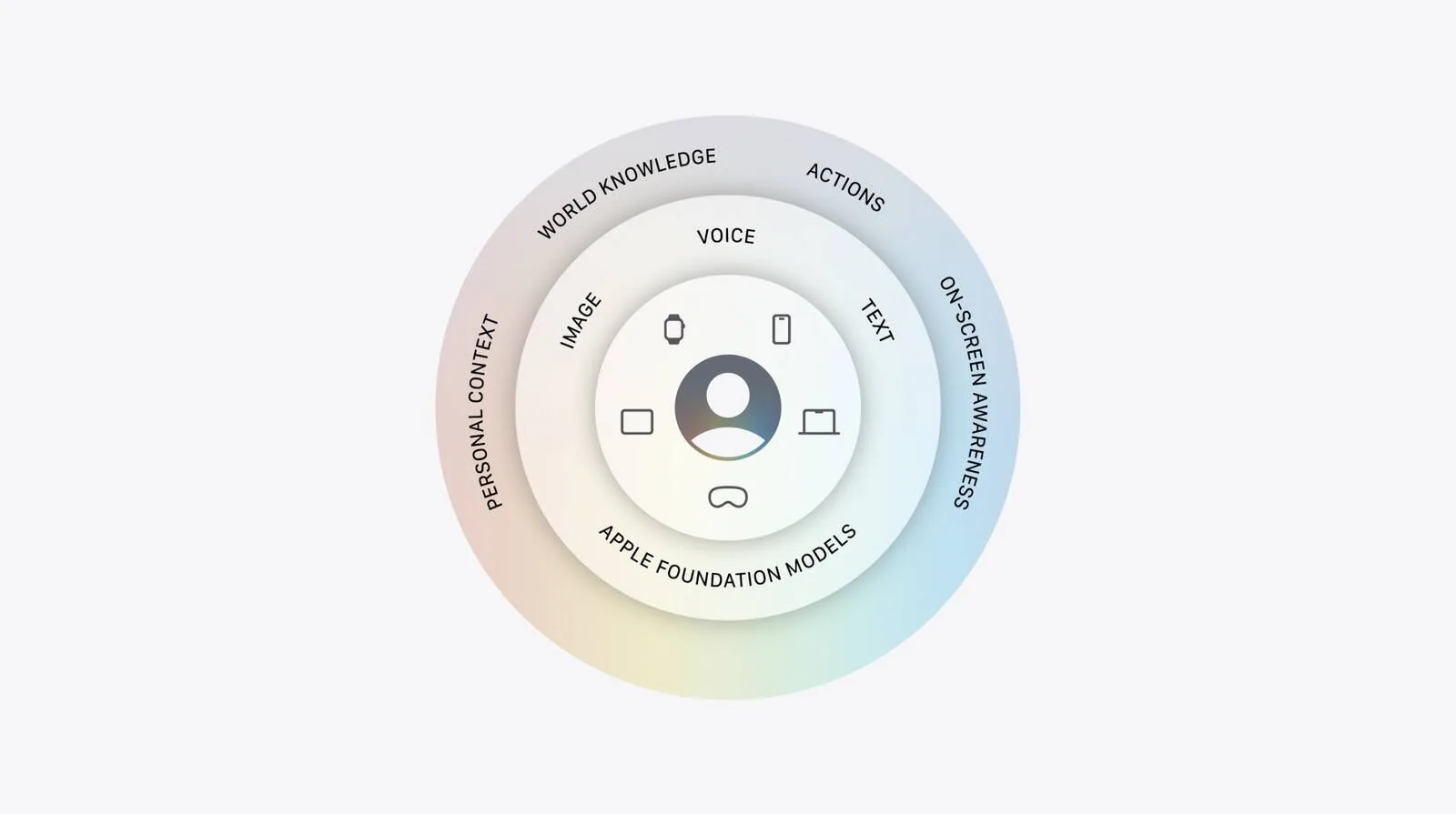
Apple executives on Monday detailed the architecture of their new Apple Foundation Models (AFM), explicitly stating that Google's Gemini AI technology plays no part in the core functionality of Apple Intelligence. Craig Federighi, Apple's Senior Vice President of Software Engineering, alongside AI VP Amar Subramanya, Siri lead Mike Rockwell, and software VP Sebastien Marineau-Mes, provided insights during a post-keynote tech talk. They explained that the third-generation AFM family, which powers Apple's new AI features, was built independently.
"The amount of the Google Assistant we use is none," Federighi stated definitively, clarifying that Apple does not employ any Gemini models available to Google customers, nor does it utilize Google's client-side code or its Search infrastructure as its knowledge base. "For these models, we use none of the models that Google deploys to their customers, nor do we use the infrastructure and means by which they deploy models to their customers," he added.
The new AFM family comprises two on-device models and three server-side models. The on-device tier includes AFM Core, a next-generation dense architecture model, and AFM Core Advanced, which features a sparse architecture and is natively multimodal. According to Subramanya, AFM Core Advanced represents a significant advancement, enabling features like expressive voices and the ability to handle certain tasks without needing cloud connectivity.
Custom Models and Strategic Partnerships
On the server side, AFM Cloud is designed for latency-optimized Private Cloud Compute requests, while AFM Cloud Image handles image generation and editing tasks, including spatial reframing. A key aspect of the training process, as described by Subramanya, involved proprietary data and reinforcement learning. While outputs from Gemini frontier models were used for refinement, he stressed that this was a distillation-based process, not a wholesale adoption of Google's technology. "All of these are custom built for Apple Silicon, trained using proprietary data with reinforcement learning and refined using outputs from Gemini frontier models," he said.
The most advanced model, AFM Cloud Pro, is designated for complex reasoning tasks and agentic tool use. Subramanya noted its quality is comparable to leading frontier models. This model's deployment marks a notable shift, as Apple collaborated with both Google and Nvidia to extend its Private Cloud Compute infrastructure to Nvidia GPUs hosted within Google's cloud. Marineau-Mes explained the necessity of using Nvidia's latest chips while ensuring Apple's data remained secure. A solution was found through Nvidia's "ambiguous confidential compute" technology, which configures the GPUs to prevent access to the contents of Apple's servers. "We wanted to avail ourselves of the latest technology from Nvidia, and so we set out to extend private cloud compute to third-party cloud," he commented.
Federighi outlined the broader system architecture, emphasizing the role of a "System Orchestrator." This software component is central to the privacy architecture, routing queries to the appropriate model—either on-device or cloud—based on complexity and the need for personal context. The orchestrator integrates with an App Toolbox for in-app actions, a Spotlight Semantic Index for accessing personal content, and on-screen context for real-time awareness. For queries related to current events, Apple relies on its proprietary World Knowledge Service, a system the company has been developing for several years. Apple asserts that its Private Cloud Compute infrastructure, including the extended GPU capacity, can be independently verified by third-party researchers to ensure user data is never stored or accessed, reinforcing the company's commitment to user privacy in its AI endeavors.