
Roku Launches First OLED TVs, Challenging Midrange Market
Roku has entered the OLED TV market with its new Pro Series and Pro Series LX models, offering competitive pricing against established brands like LG and Samsung.

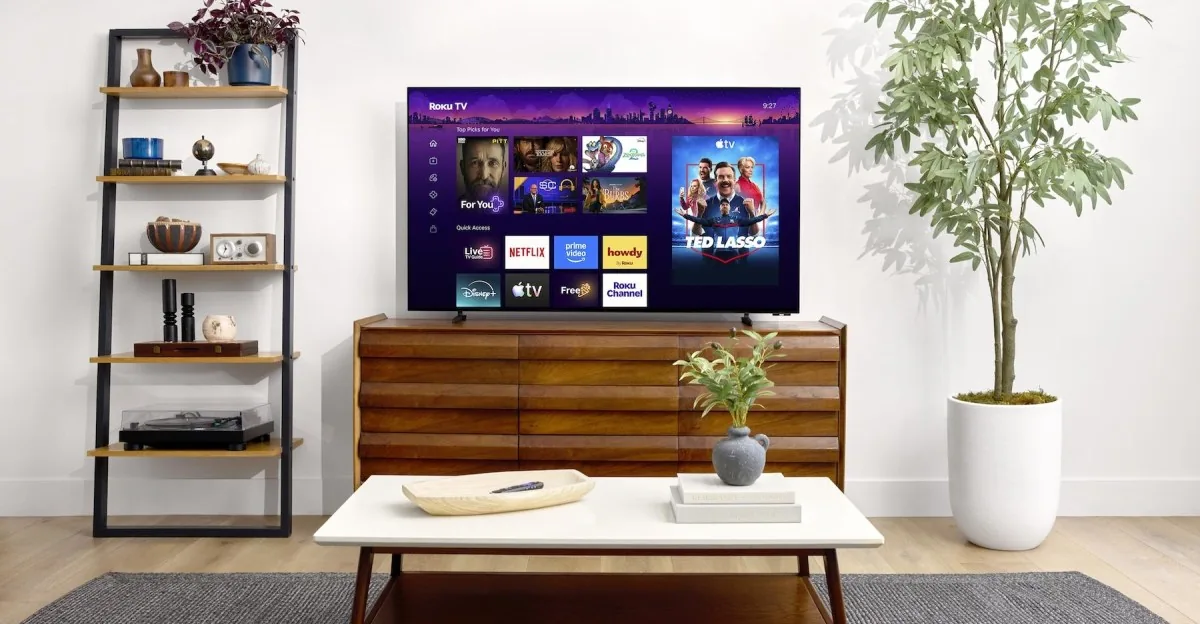
Roku has officially entered the premium television market with the launch of its first-ever OLED TVs, the Roku Pro Series and the upcoming Pro Series LX. These new models aim to disrupt the midrange segment, which has recently seen new offerings from major players like LG, Samsung, and Sony. The Pro Series is now available exclusively through Amazon, with the step-up LX model set to debut next month.
The Roku Pro Series boasts a 120Hz panel, ensuring smooth motion for fast-paced content and gaming. It features four HDMI 2.1 ports, essential for modern gaming consoles and high-bandwidth video sources. Support for Dolby Vision and HDR10 Plus ensures a superior viewing experience with enhanced contrast and vibrant colors. For gamers, the TVs include auto low latency mode (ALLM), FreeSync Premium, and variable refresh rate (VRR) technology, which work together to reduce input lag and screen tearing for a more fluid gameplay.
Included with the new televisions is a backlit Roku remote, adding convenience in low-light conditions. A unique remote finder button is integrated directly onto the TV itself, a practical feature for those prone to misplacing their remote. Both TV series run on the familiar Roku operating system, providing access to a vast library of streaming apps and services.
Enhanced Features for the Pro Series LX
The Roku Pro Series LX, slated for an October release, is positioned as a higher-end option. It is designed to be approximately twice as bright as the standard Pro Series, making it more suitable for well-lit rooms and providing even more impactful HDR performance. This model also supports a faster 144Hz VRR for gaming and incorporates a polarizer to significantly reduce screen reflections, improving picture clarity in environments with ambient light.
This strategic move by Roku signals a significant expansion beyond its traditional streaming device market. By offering OLED TVs, Roku is directly competing with established television manufacturers in a segment known for its picture quality. The pricing strategy appears aggressive: the 55-inch Roku Pro Series starts at $999, while the 65-inch model is priced similarly to its midrange competitors. The Pro Series LX will be available in 55-inch for $1,299 and 65-inch for $1,599, placing it competitively against other premium offerings.
The introduction of these Roku TVs is particularly noteworthy given the recent announcements from other major brands. Sony unveiled its Bravia 6 OLED TV last week, further intensifying the competition. LG and Samsung have long been dominant forces in the OLED space, offering a range of models that cater to various budgets and performance requirements. Roku's entry, especially with competitive pricing, could significantly alter the market dynamics for midrange OLED sets in 2026 and beyond. Consumers now have more choices than ever when seeking high-quality displays without necessarily venturing into the ultra-premium price brackets.
Roku's established user base, familiar with its intuitive interface, may find the transition to these new Roku Pro Series televisions seamless. The integration of the Roku OS directly into the hardware eliminates the need for a separate streaming stick or box for many users, simplifying the setup and user experience. This approach mirrors strategies adopted by other manufacturers who embed their proprietary operating systems into their televisions. The success of these new Roku OLED models will likely depend on their real-world performance, picture quality consistency, and long-term reliability in a highly competitive landscape.