
Microsoft Surface Devices Get AI Integration at October 2026 Event
Microsoft unveiled new Surface hardware and AI-powered features at an October 7, 2026 event, marking the latest push to integrate artificial intelligence across its personal computing lineup.

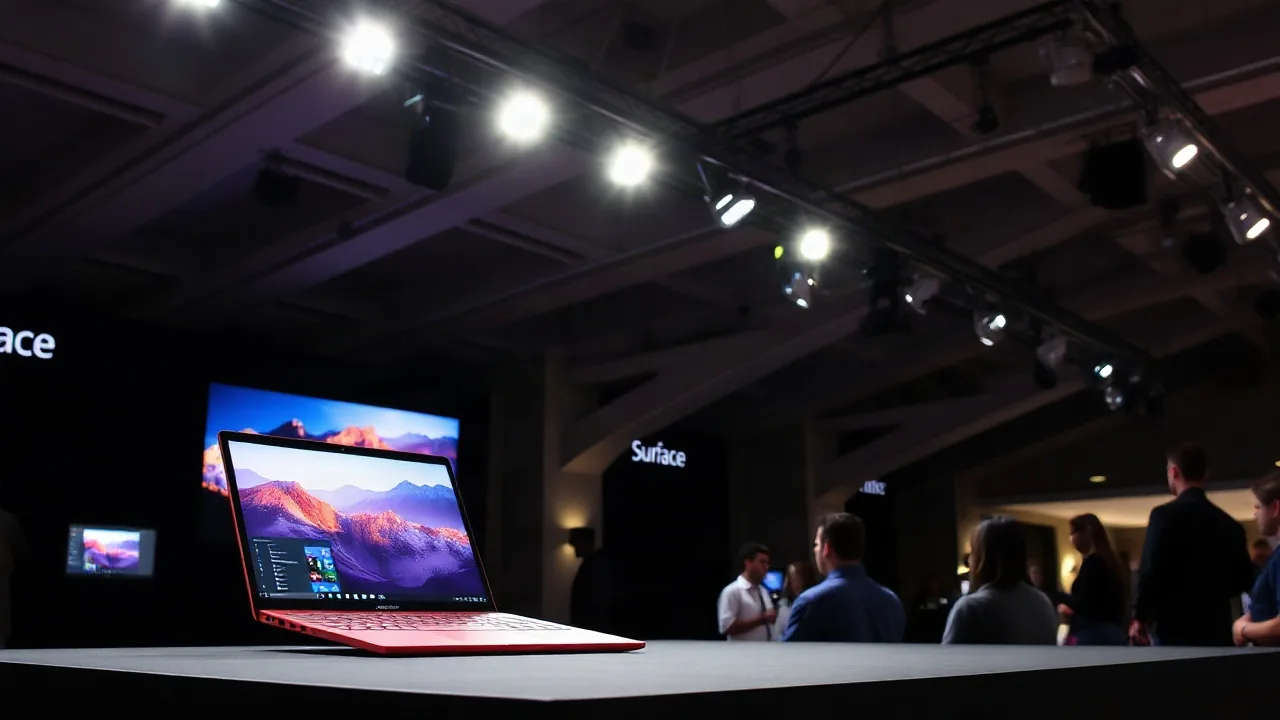
Microsoft held a major hardware and software showcase on October 7, 2026, revealing updated Surface devices alongside new AI capabilities designed to reshape daily computing workflows. The Redmond-based tech company demonstrated how Microsoft Surface products would now feature tighter integration with generative AI tools, positioning the product line as a centerpiece of the company's broader artificial intelligence strategy for consumers and professionals alike.
The event, held at Microsoft's Seattle headquarters, drew industry analysts, press, and executives who came to see the company's latest bets on merging productivity hardware with AI capabilities. Company executives stressed that these weren't merely incremental updates but instead represented a philosophical shift in how Surface devices would function in the post-AI era.
New Surface Hardware Lineup
Microsoft introduced several updated models within its Surface portfolio. The refreshed lineup included a new Surface Laptop Pro, Surface Book 3 successor, and an entry-level Surface Go model optimized for AI workloads. Each device featured upgraded processors designed specifically to handle on-device machine learning tasks without relying solely on cloud infrastructure.
The new processors, built in collaboration with semiconductor partners, delivered roughly 40% better performance for AI inference compared to the previous generation. Storage configurations expanded to include options with up to 2TB of SSD space, addressing demands from content creators and data scientists who need substantial local capacity.
Battery life remained a focus area. Microsoft engineers reported achieving up to 20 hours of continuous video playback on the Surface Laptop Pro, a significant jump from the 15-hour capability of the 2024 model. The company also introduced an improved thermal management system to keep device temperatures stable during sustained AI processing tasks.
AI Features and Real-World Applications
Beyond hardware specs, Microsoft demonstrated how AI would be woven into the user experience. The demonstration included a feature called "Copilot Pro," which would serve as an on-device AI assistant capable of understanding user context across multiple applications simultaneously. According to Panos Panay, Chief Product Officer at Microsoft, "These devices are no longer just tools you use; they're collaborative partners that anticipate what you need."
The AI features included real-time language translation in video calls, intelligent document summarization in Word and Excel, and advanced image generation tools directly within Paint and Designer applications. Microsoft emphasized that much of this processing would happen locally on the device, reducing latency and protecting user privacy compared to cloud-dependent systems.
The company also revealed "RTX Spark," a hardware and software framework designed to accelerate graphics and AI workloads simultaneously. RTX Spark would allow developers to build applications that leverage both visual computing and machine learning without technical overhead, opening possibilities for professional design software, video editing, and 3D modeling tools.
- On-device Copilot Pro assistant with contextual awareness across apps
- Real-time multi-language translation for calls and meetings
- Advanced image generation integrated into Microsoft Paint and Designer
- Document and email summarization powered by local AI models
- RTX Spark framework for unified graphics and AI acceleration
Market Positioning and Industry Impact
The October 2026 announcement underscores Microsoft's strategy to compete directly with Apple's recent AI-focused hardware initiatives and emerging AI-native computing platforms from startups. By embedding AI capabilities into Surface devices at both the hardware and software levels, Microsoft aims to capture users who prioritize productivity and efficiency over raw processing power.
Pricing for the new Surface models begins at $899 for the entry-level Surface Go with AI capabilities and extends to $2,499 for fully configured Surface Laptop Pro units. Microsoft also announced a 2026 subscription bundle bundling Copilot Pro with Microsoft 365 and OneDrive storage for corporate and individual users.
Industry analysts see the move as a necessary response to shifts in computing preferences. Mark Schofield, an analyst at Keesing Tech Research, commented, "Microsoft understands that AI is no longer a feature to add later; it's table stakes. Users expect AI capabilities integrated from day one, and these Surface devices deliver that expectation."
The manufacturing footprint for these devices will expand across facilities in Mexico, Vietnam, and the Philippines, with Microsoft targeting a 15% increase in production capacity by the end of 2026 to meet anticipated demand. The company also committed to carbon-neutral production processes for all new Surface devices by 2027.
Windows 11, the underlying operating system on these devices, will receive corresponding updates in late October 2026 to fully support the new AI features. Users with existing Surface hardware can expect some AI capabilities through software updates, though the new hardware will deliver significantly faster performance for machine learning tasks.
The October 7, 2026 event signals that Microsoft's hardware-software integration strategy remains central to the company's future. With these new Surface devices and AI frameworks, the company is betting that users want seamless, intelligent computing experiences built into the devices they use every day, rather than bolted-on AI services added retroactively to older hardware platforms.