
Galaxy Watch Predicts Fainting Episodes Up To 5 Minutes Early
Samsung's Galaxy Watch can now predict fainting spells up to five minutes in advance, according to a new study. The breakthrough uses biosignals analyzed by AI to alert users to impending vasovagal syncope.

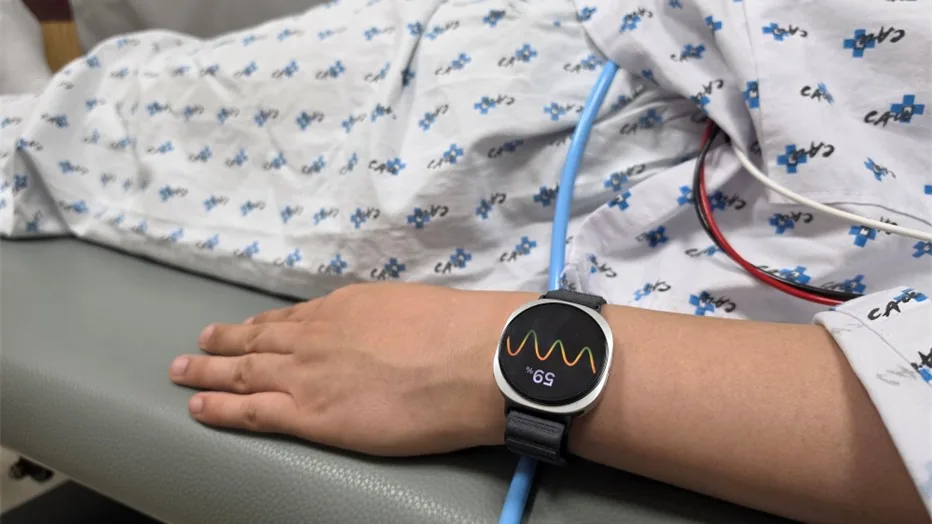
Samsung Electronics has announced a significant advancement in wearable health technology, successfully demonstrating the ability of its Galaxy Watch6 to predict vasovagal syncope (VVS) episodes up to five minutes before they occur. This groundbreaking capability was validated in a joint clinical study with Chung-Ang University Gwangmyeong Hospital in South Korea. Vasovagal syncope, a common cause of fainting, is triggered by a sudden drop in heart rate and blood pressure, often due to stress or emotional triggers. While the fainting itself is usually harmless, the subsequent falls can lead to serious injuries like fractures or concussions.
The research, published in the European Heart Journal – Digital Health, marks the first time a commercial smartwatch has shown success in predicting syncope events. Professor Junhwan Cho of Chung-Ang University Gwangmyeong Hospital, who led the study, highlighted the potential impact: "Up to 40% of people experience vasovagal syncope over their lifetime, with one-third experiencing recurrent episodes. An early warning could give patients advance time to get into a safe position or call for help, which would dramatically reduce the incidence of secondary injuries."
During induced fainting tests, researchers evaluated 132 patients exhibiting suspected VVS symptoms. By leveraging the photoplethysmography (PPG) sensor in the Galaxy Watch6, the team analyzed heart rate variability (HRV) data. An artificial intelligence algorithm then processed this information, achieving an 84.6 percent accuracy in predicting fainting episodes up to five minutes in advance. The model also demonstrated a clinical sensitivity of 90 percent and a specificity of 64 percent.
Preventive Healthcare Through Wearable Technology
This development signals a pivotal shift in healthcare, moving from reactive treatment to proactive prevention. Jongmin Choi, Head of Health R&D Group at Samsung's Mobile eXperience (MX) Business, stated, "This study is an example of how wearable technology can help shift healthcare from being designed for ‘post-care’ to a model of ‘preventive care.’ We are committed to driving technological innovation that empowers our users to lead healthier everyday lives." The ability of devices like the Galaxy Watch to monitor vital signs and detect anomalies opens new avenues for managing chronic conditions and preventing acute health events.
Samsung plans to build upon these findings by enhancing the health monitoring features in its future wearable devices and expanding collaborations with leading medical institutions globally. The company aims to solidify its position in the digital health industry by accelerating the development and implementation of personalized, preventive health solutions. This could dramatically change how individuals manage their health, offering peace of mind and potentially averting dangerous accidents associated with sudden health crises. The integration of advanced AI with sophisticated sensors in consumer electronics is paving the way for a future where health management is more accessible and effective.