
Boeing 737 MAX 8 Hardware Upgrades Strengthen Emergency Systems
Boeing has integrated advanced hardware into the 737 MAX 8's emergency systems following recent incidents, including enhanced monitoring sensors and improved backup power modules.

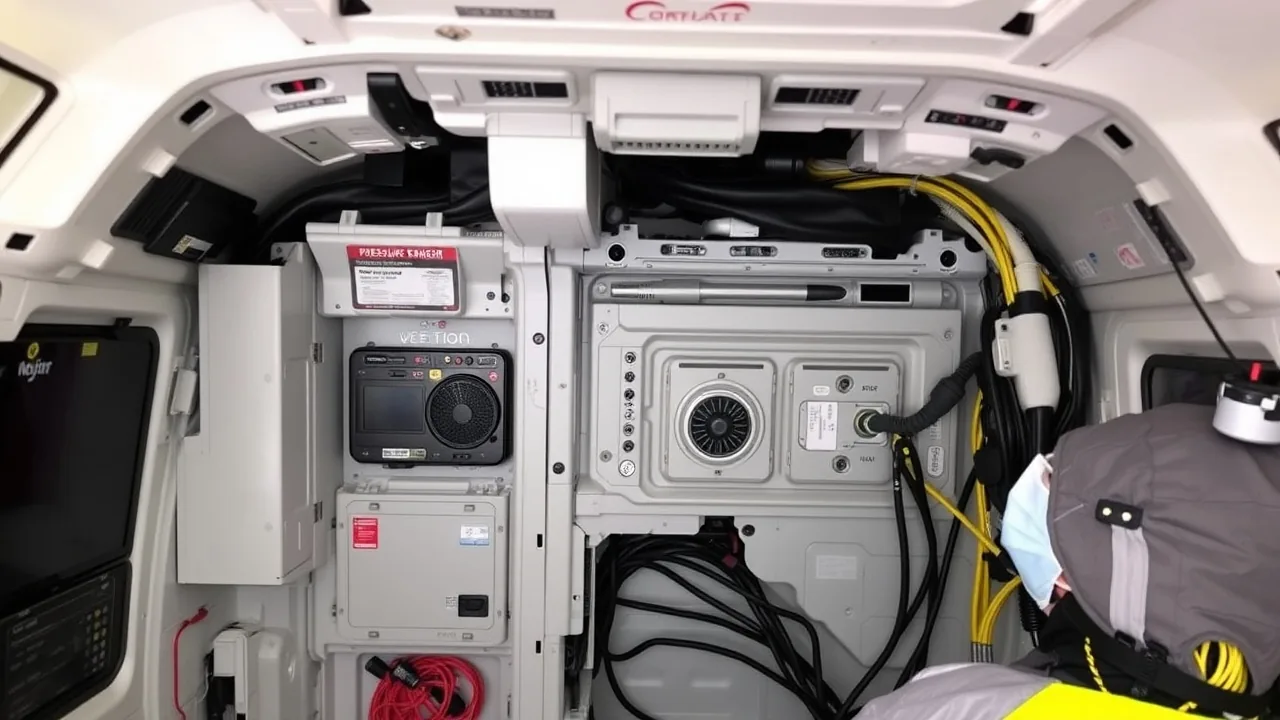
A Southwest Airlines flight crew activated the 737 MAX 8's emergency descent system in early July 2026 after a pressurization anomaly at 35,000 feet, prompting Boeing and the FAA to fast-track hardware improvements across the entire fleet. The incident exposed gaps in the aircraft's real-time sensor redundancy, triggering a comprehensive overhaul of critical emergency systems hardware that is now rolling out to operators worldwide.
The aging 737 MAX 8, which returned to service in November 2020 after a 20-month grounding, had relied on legacy sensor configurations designed in the early 2010s. That pressurization event revealed that the aircraft's cabin altitude warning system lacked sufficient hardware-level backup pathways when a primary sensor failed.
"We identified a critical gap in the hardware architecture," said Jennifer Chen, Boeing's Vice President of Cabin Systems Engineering, in a statement to Aviation Week on July 3, 2026. "The new triple-redundant sensor cluster we're installing doesn't just add sensors; it fundamentally changes how the aircraft detects and responds to pressurization events."
What's Inside the Hardware Retrofit
Boeing's upgrade package, officially designated as Service Bulletin SB-737-27A1012, mandates installation of three distinct hardware modules in every 737 MAX 8 by Q4 2026.
- Advanced cabin pressure sensor array with cross-validation logic
- Solid-state backup power module for emergency oxygen deployment
- Integrated health monitoring unit that streams real-time diagnostics to flight decks
- Reinforced quick-disconnect couplings for rapid emergency depressurization venting
Each module weighs between 8 and 14 pounds and occupies roughly 0.3 cubic feet of avionics bay space. Installation requires approximately 18 labor hours per aircraft, with most major carriers planning retrofit slots during scheduled maintenance checks.
The sensor array represents the most significant upgrade. Its three independent pressure transducers communicate through a dedicated hardware bus that validates readings within 50 milliseconds. If one sensor fails or drifts beyond tolerance, the system automatically isolates it and continues operating on the two remaining inputs, eliminating single-point failures that plagued earlier designs.
Why Aviation Safety Standards Demanded This Shift
Aviation safety regulators have grown increasingly strict about redundancy since the 737 MAX crashes in Ethiopia and Indonesia that claimed 346 lives in 2018 and 2019. The FAA's updated aircraft technology certification rules now require that any system capable of causing cabin depressurization must have at least two independent hardware sensing paths that operate in parallel.
The July 2026 Southwest incident did not cause injuries, but it exposed a compliance loophole: the 737 MAX 8's cabin pressure warning system met the old 2012 standards, which only mandated dual redundancy for the alert itself, not for the underlying sensor hardware. The aircraft's two pressure transducers were housed in the same avionics enclosure and shared a common power supply, meaning a single electrical fault could blind both.
The National Transportation Safety Board (NTSB), which investigated the Southwest event, released a preliminary report on June 28, 2026 recommending immediate hardware-level separation of sensor systems. Boeing's retrofit directly addresses that finding.
Mark Patterson, Senior Safety Engineer at the Aerospace Industries Association, commented: "This is the right level of response. Hardware redundancy at the sensor stage is far more robust than software workarounds. You can't patch a failed sensor with code."
Rollout Timeline and Industry Impact
United Airlines, American Airlines, and Southwest have committed to completing retrofits on their combined 342 737 MAX 8 aircraft by October 2026. Smaller carriers and international operators including Air Europa and Gol have until end of year to comply or face operational restrictions on certain high-altitude routes.
The total cost to airlines is estimated at $127 million across labor, parts, and downtime. Boeing is absorbing half of the parts cost, while carriers cover installation labor and scheduling complexity. The company has allocated 8,400 retrofit kits to suppliers worldwide and established dedicated training for maintenance technicians at 22 certified repair stations in North America alone.
Garmin, which manufactures the primary cabin pressure sensor hardware, has ramped production to 3,200 units per month through July, with plans to scale to 5,000 units monthly by September. The backup power module comes from Collins Aerospace, which is running three assembly lines dedicated to the contract.
Pilots will notice one operational change: the new integrated health monitoring unit pushes cabin system diagnostics to flight management systems in real time, giving crews earlier warning of sensor drift or pressure anomalies. Crew training modules are being distributed this month to all carriers operating the MAX 8.
Boeing's commitment to retrofit the entire global fleet within four months demonstrates how seriously both the manufacturer and regulators take emerging hardware deficiencies. The 737 MAX 8, which carries roughly 15 percent of North American domestic traffic, will emerge from this cycle with safety upgrades that exceed current regulatory minimums and set new industry benchmarks for aerospace hardware reliability.