
Apple's iPhone Duo Hinge: Innovative Design Meets Durability
Apple's first foldable, the iPhone Duo, features a groundbreaking hinge designed for durability. Engineers focused on minimizing crease and ensuring longevity through extensive testing.

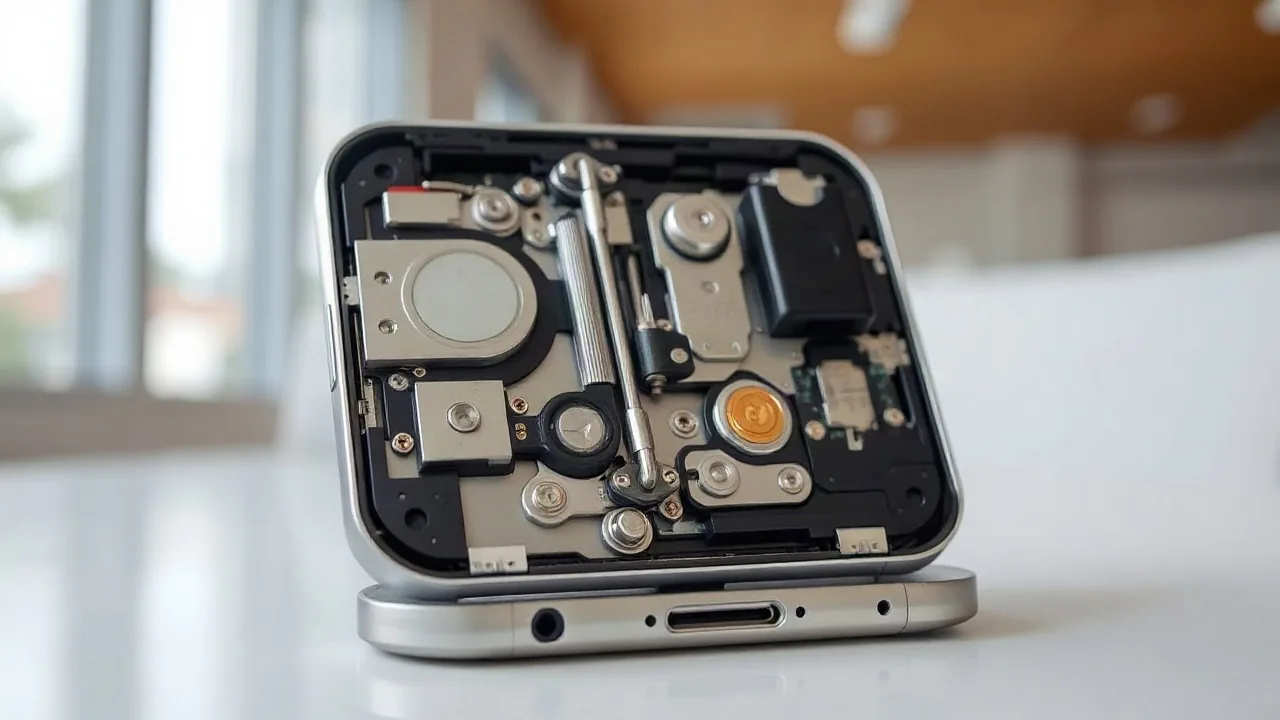
Apple's inaugural foldable smartphone, the iPhone Duo, has arrived with a complex and innovative hinge mechanism designed to withstand tens of thousands of folds. Engineers dedicated significant effort to crafting a system that not only enables the device's folding functionality but also addresses common durability concerns associated with flexible displays.
The hinge, a critical component of any foldable device, underwent rigorous development to ensure it could endure repeated stress. Early reports and teardowns suggest Apple employed a multi-link system that allows the display to fold more naturally, reducing tension and the appearance of a crease. This approach is a departure from some competitors, aiming for a seamless viewing experience when the device is unfolded.
Durability Testing and Engineering Challenges
Apple reportedly subjected the iPhone Duo's hinge to an extreme number of folding cycles, with some tests pushing beyond 32,000 folds without significant degradation. This extensive testing regimen is a hallmark of Apple's product development process, emphasizing reliability and longevity. The company has a history of meticulously refining hardware components before public release, and the iPhone Duo appears to be no exception.
The challenge with foldable hinges lies in balancing flexibility with structural integrity. A hinge that is too loose can lead to screen damage, while one that is too stiff can be difficult to operate or cause undue stress on the display. Apple's design reportedly utilizes a combination of advanced materials and precise engineering to achieve the desired balance. This includes attention to the internal structure of the hinge and how it interacts with the flexible OLED panel.
The development of the iPhone Duo also involved addressing the persistent issue of screen creasing. While some crease is often unavoidable in foldable designs, Apple's engineers aimed to minimize its visibility and tactile impact. The hinge's geometry plays a crucial role here, controlling the radius of the fold and thus the stress on the display's surface. Early user experiences shared online suggest that while a crease is present, it is less pronounced than on some competing devices.
Industry analysts note that Apple's entry into the foldable phone market, while later than some rivals, often signifies a mature approach to the technology. The company typically waits until it believes it can offer a superior user experience and a well-executed product. The detailed engineering of the hinge and its integration with the overall device architecture are key indicators of this strategy.
The success of the iPhone Duo will not only depend on its unique features but also on its ability to prove its durability over time. The innovations packed into its hinge are central to this promise, offering users a glimpse into the future of mobile technology with enhanced resilience and refined design.