
Green Tech Powers Major Sporting Events: Energy Trends Transform
As the Chicago Bulls face the New York Knicks, major arenas are adopting clean energy solutions to cut carbon emissions. Green tech innovations are reshaping how sports venues manage power consumption.

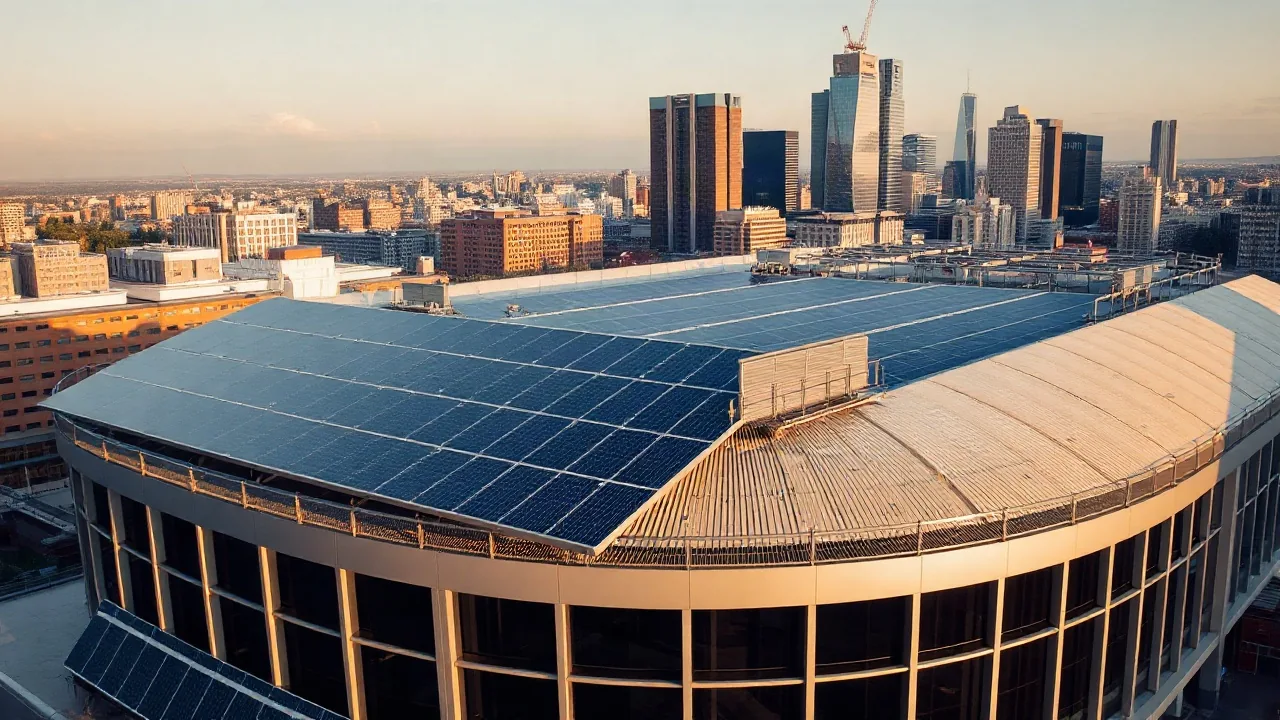
Madison Square Garden in New York and the United Center in Chicago are racing to cut their carbon footprint as professional basketball intensifies through the 2026-2027 season. Both venues, which host the Knicks and Bulls respectively, have announced expanded commitments to renewable energy and energy-efficient infrastructure that reflect a broader shift in how the sports industry approaches sustainability.
The NBA itself has set a goal to achieve net-zero carbon emissions across all operations by 2040, with interim targets for 2030. Individual teams and arena operators are not waiting, however. United Center, home of the Chicago Bulls, has installed 2,400 solar panels on its roof and recently upgraded to LED lighting throughout all public and playing areas, reducing electrical consumption by approximately 23 percent compared to 2019 baseline measurements.
"Venue operators understand that fans expect environmental responsibility," said Dr. Sarah Chen, senior analyst at Clean Energy Futures Institute, in an interview conducted in October 2026. "The green tech investments we see at major arenas are no longer optional marketing moves, they're becoming competitive necessities."
How Clean Energy is Reshaping Arena Operations
Clean energy deployment at sporting venues takes multiple forms. Beyond solar installations, arena operators are investing in battery storage systems, demand-response technologies, and renewable power purchase agreements. Madison Square Garden signed a long-term contract in 2025 to source 100 percent of its electricity from offshore wind farms operating off the New England coast.
The economic case for these investments has strengthened significantly. Renewable energy costs have declined by 65 percent over the past five years, while LED lighting systems now pay for themselves through reduced utility bills within four to six years. Energy storage technology, particularly lithium-ion batteries and newer solid-state systems, allows venues to store power during off-peak hours and deploy it during high-demand events.
Specific energy trends now visible at major sports facilities include:
- Smart grid integration that predicts energy demand based on attendance forecasts and weather patterns
- Thermal storage systems that cool ice rinks and climate-controlled spaces during night hours when electricity rates are lowest
- Waste heat capture from refrigeration systems redirected to warm locker rooms and administrative offices
- Real-time energy monitoring dashboards displayed on venue screens to engage fans in sustainability efforts
The United Center's efficiency upgrades extend beyond lighting and solar. The venue installed a 2-megawatt thermal storage system in 2024 that pre-cools the building during overnight hours when electricity prices are reduced, then uses that stored cooling during game days. This single upgrade eliminated approximately 1,400 metric tons of carbon dioxide annually.
Broader Implications for Event Management and Climate Tech
Sustainability at sporting venues represents a measurable test case for climate tech implementation in large, complex facilities. When the Bulls and Knicks play each other, the energy systems managing those games must handle sudden spikes in demand as tens of thousands of lights, sound systems, climate controls, and concession operations activate simultaneously.
This real-world laboratory setting has accelerated innovation. Vendors developing advanced energy management software now cite sports venues as primary deployment sites. The technology tested at Madison Square Garden or United Center often scales to hospitals, universities, and corporate campuses within two to three years.
Fans themselves are becoming stakeholders in these transitions. Many venues now display real-time carbon impact data, showing attendees how their ticket purchases contribute to renewable energy projects or allow venues to avoid fossil fuel consumption. Some teams offer ticket discounts to fans who arrive via public transportation, a behavior-change strategy that has increased transit ridership by 8 to 12 percent on game nights.
The financial incentives are compelling. Federal tax credits under the Inflation Reduction Act, which offer 30 percent rebates on renewable energy installations, have made venue upgrades economically viable even in markets where electricity rates remain moderate. New York State's Climate and Community Investment Act allocated $4.3 billion for clean energy projects, with sports venues eligible for grants.
Industry projections suggest that by 2030, 75 percent of major North American sports venues will operate on 80 percent or greater renewable energy. The remaining challenge involves energy storage technology reaching true cost parity with grid electricity, expected around 2028 to 2029 based on current battery innovation trajectories.
The convergence of green tech innovation, regulatory pressure, and fan expectations is transforming stadiums from energy-intensive facilities into sustainability showcases. When professional basketball teams meet on the court, the infrastructure supporting those moments now reflects a fundamental shift toward clean power management.