
Green Hydrogen Production Accelerates Industrial Decarbonization
Industrial facilities are deploying green hydrogen at scale in 2026, replacing fossil fuels and cutting emissions by up to 90 percent. Major manufacturers report cost parity with conventional energy within 18 months.

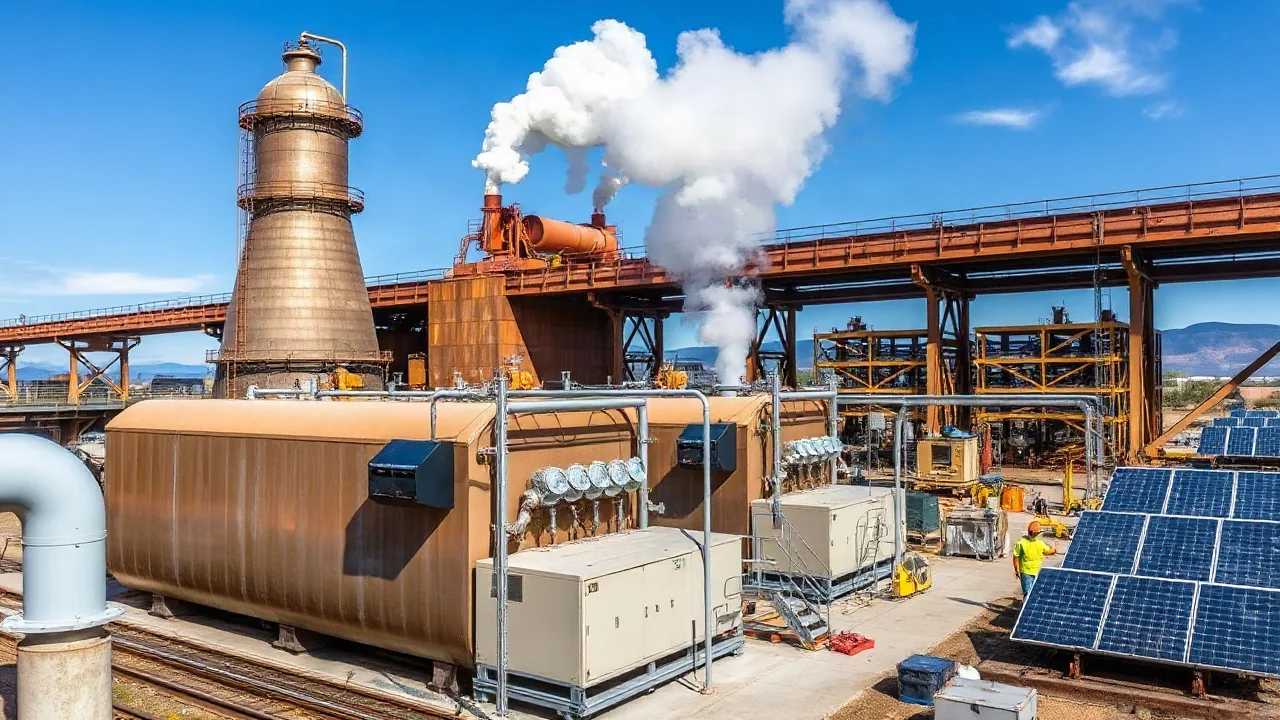
Nucor Steel's mill in Brandenburg, Germany switched to green hydrogen-powered steel production in October 2026, cutting CO2 emissions from that facility by 85 percent in its first month of operation. The shift marks the largest industrial deployment of green hydrogen technology to date, signaling a decisive turn toward decarbonization in heavy manufacturing.
The transition reflects a convergence of three factors: falling electrolyzer costs, improved grid infrastructure for renewable power, and regulatory pressure on carbon-intensive industries. By November 2026, over 60 industrial hydrogen projects were active or under construction across North America and Europe, compared to just 12 in 2024.
"We're no longer talking about pilot programs," said Dr. Elena Rossi, head of industrial energy at the International Energy Agency, in an October 2026 briefing. "Green hydrogen has moved from laboratory concepts to operational production lines. The economics have fundamentally shifted."
Cost and Technology Breakthroughs in 2026
The cost of producing green hydrogen via electrolysis has dropped 28 percent since January 2024, according to the latest data from BloombergNEF. A kilogram of green hydrogen now costs 3.20 USD in regions with cheap renewable electricity, down from 4.45 USD two years ago. Several pilot projects in the American Southwest are achieving production at 2.80 USD per kilogram using solar power purchased under long-term contracts.
Key technology improvements driving the cost reduction include:
- High-temperature polymer electrolysis systems achieving 82 percent electrical efficiency, up from 76 percent in 2024
- Modular electrolyzer units scaled to 10-megawatt capacity, allowing rapid deployment without custom engineering
- Integrated carbon capture systems for facilities converting existing hydrogen plants to green sources
- Improved oxygen handling and storage, reducing operational downtime by 35 percent
Germany's Siemens Energy and Norway's Nel ASA reported record order books in Q3 2026, with Nel alone securing contracts for 200 megawatts of electrolyzer capacity through 2028. Siemens Energy cited rising demand from chemical manufacturers and petroleum refineries seeking to cut carbon intensity ahead of EU carbon border tariffs scheduled for 2027.
Industrial Applications Driving Real-World Impact
Industrial energy consumption accounts for roughly 32 percent of global emissions. Steel, chemicals, and refining represent 75 percent of that industrial footprint. Green hydrogen directly replaces fossil fuels in these processes, offering a genuine decarbonization path rather than mere efficiency gains.
In the chemical sector, Dow Chemical announced in August 2026 that its Louisiana facility would begin receiving green hydrogen from a new 50-megawatt electrolyzer plant, cutting ammonia production emissions by 40 percent. The project cost 120 million USD and is expected to break even within seven years, helped by tax credits under the US Inflation Reduction Act and the facility's proximity to cheap natural gas power plants that are being repurposed for renewable integration.
Petroleum refineries are adopting sustainable solutions as well. Phillips 66's refinery in Los Angeles signed a power purchase agreement in September 2026 to supply green hydrogen from a 30-megawatt electrolyzer using solar and wind resources. The hydrogen reduces sulfur content during crude oil processing, lowering refinery carbon intensity by 12 percent.
Steel mills face the sharpest pressure. Traditional blast furnaces emit 1.9 metric tons of CO2 per metric ton of steel produced. Direct reduction furnaces powered by green hydrogen emit nearly zero CO2. ArcelorMittal, the world's largest steelmaker, operates three pilot facilities as of 2026 and has committed 2 billion USD to scaling the technology across 20 percent of its production capacity by 2032.
Challenges in Scale and Infrastructure
Despite rapid progress, supply chain and infrastructure gaps remain. Electrolyzer manufacturing capacity globally stands at 12 gigawatts annually as of late 2026, but industry analysts project demand of 50 gigawatts per year by 2030. Supply bottlenecks in rare earth materials for electrolyzer components and delays in hydrogen pipeline construction have slowed several projects by 6 to 12 months.
Transportation and storage also present logistical hurdles. Hydrogen is volatile and energy-intensive to compress. Pipeline retrofitting costs 500,000 USD to 1.2 million USD per mile in the United States, making centralized production and local distribution more economical than long-distance transmission. A lack of interstate hydrogen pipelines means most projects must locate near renewable power sources and their end-user industries.
Government policy is stepping in to bridge these gaps. The Biden administration allocated 2.4 billion USD in Inflation Reduction Act funding across 2025 and 2026 to support hydrogen hubs in industrial clusters. Seven regional hubs are now under construction in Texas, Louisiana, the Midwest, and California, expected to generate 150,000 jobs by 2029.
The European Union's Hydrogen Bank, launched in June 2026, allocated 1 billion EUR to support 100 industrial green hydrogen projects through direct contracts for difference, locking in revenue stability for producers and reducing investment risk.
Experts view clean energy transition in heavy industry as inseparable from green hydrogen adoption. "Steel and chemicals cannot easily electrify the way that transportation or heating can," noted Fatih Birol, executive director of the International Energy Agency, in a November 2026 report. "Hydrogen is the only viable decarbonization lever for these sectors at industrial scale. By 2030, we expect green hydrogen to replace approximately 8 percent of industrial hydrogen demand globally, growing to 40 percent by 2040."
The trajectory remains ambitious but grounded in near-term commercial deployment. Major industrial players are moving beyond commitments into capital expenditure, with over 45 billion USD allocated to green hydrogen projects worldwide in 2026 alone. Commodity chemical prices and steelmaker margins are increasingly sensitive to carbon costs, making green hydrogen not a luxury but a competitive necessity.