
BYU Rock Glacier Study Reveals Utah Water Supply Insights
A Brigham Young University study is investigating the role of "rock glaciers" in Utah's water supply. These hidden ice formations could be crucial to understanding and managing water resources amid ongoing drought.

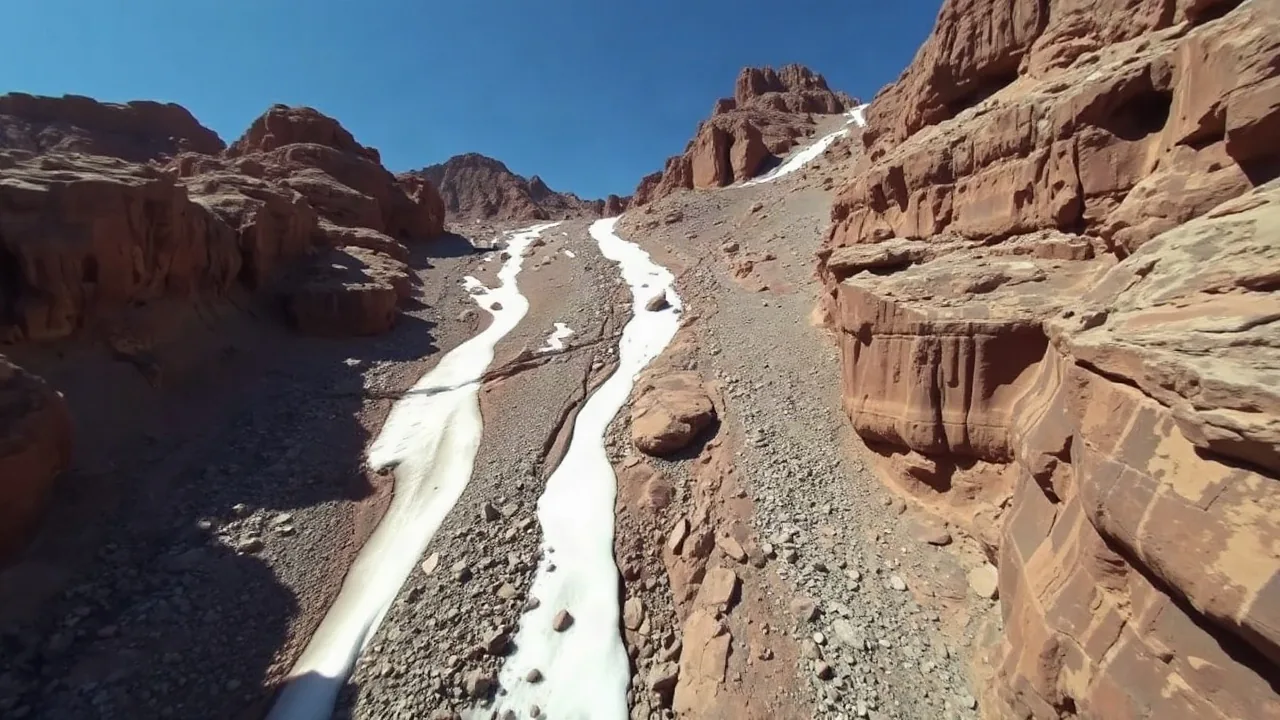
Researchers at Brigham Young University (BYU) have launched an in-depth study to understand the significant, yet often overlooked, role of rock glaciers in Utah's water cycle. These unique geological formations, essentially a mixture of rock debris and ice, can store substantial amounts of water beneath the surface, acting as crucial reservoirs, especially in arid regions like the American West. The findings are particularly relevant as Utah and surrounding states grapple with persistent drought conditions.
The study, led by Dr. Benjamin Abbott, a professor in BYU's Department of Plant and Wildlife Sciences, aims to map and quantify the ice content within these disguised glaciers. Unlike their icy counterparts, rock glaciers are often indistinguishable from regular rocky slopes, making their identification and assessment a complex challenge. However, their capacity to hold water for extended periods, slowly releasing it through meltwater, makes them vital components of regional water security.
"These hidden ice deposits are incredibly important for our water supply," stated Dr. Abbott. "They act like natural sponges, absorbing moisture and releasing it gradually. Understanding their distribution and volume is key to predicting water availability, particularly during dry years." The research is utilizing advanced techniques, including gravity surveys and ground-penetrating radar, to peer beneath the surface and measure the hidden ice.
Subsurface Ice Reservoirs
The implications of this research extend beyond Utah's borders. Similar rock glaciers are found throughout the mountainous regions of the western United States, and their contribution to the overall freshwater supply is likely underestimated. As climate change intensifies, leading to more extreme weather patterns and diminished snowpack, these subsurface ice reserves could become even more critical for ecosystems and human consumption.
Historically, much of the focus on water resources has centered on surface water, such as rivers, lakes, and snowpack. However, this BYU study emphasizes the growing recognition of subterranean water sources. Rock glaciers, which can persist for centuries, offer a more stable and predictable water source compared to the increasingly variable surface water systems. Their hidden nature means that traditional methods of water assessment often miss them entirely, highlighting the need for new investigative approaches.
The research team has been meticulously collecting data in the Uinta Mountains and other high-elevation areas of Utah. Preliminary results suggest that the ice stored in these formations could be equivalent to a significant portion of the state's annual water usage. This discovery underscores the urgency of incorporating rock glaciers into comprehensive water management strategies. Effective water supply planning must now consider these substantial, albeit concealed, frozen resources.
Dr. Abbott's team plans to expand their research to other western states, collaborating with geologists and hydrologists to build a more complete picture of these ice reserves across the region. The ultimate goal is to provide policymakers and water managers with the data needed to make informed decisions, ensuring the sustainable use of all available water resources, both visible and hidden. The study is also contributing to a broader scientific understanding of how permafrost and glaciers function in temperate mountain environments.