
Hyundai Boulder EV SUV Patent Signals Bold Design Future
Hyundai's newly revealed Boulder patent hints at a dramatic shift in electric SUV design, combining aggressive styling with aerodynamic efficiency for the next generation of EVs.

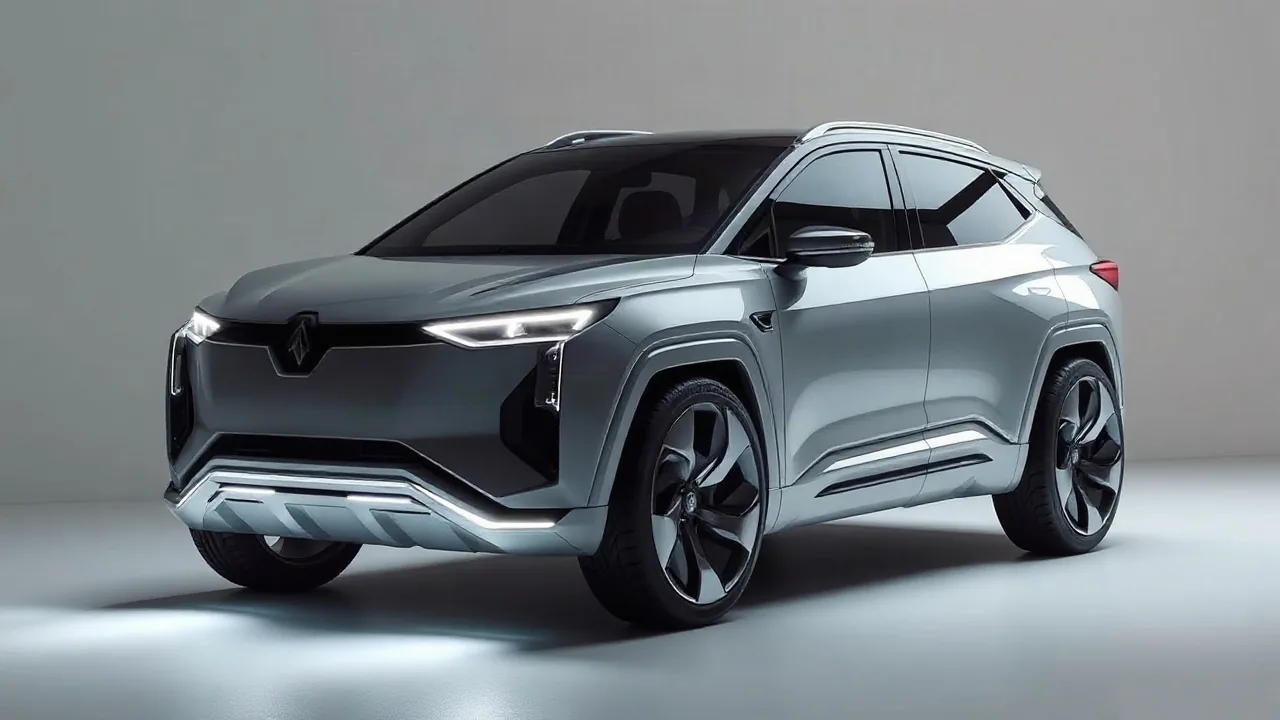
Hyundai Motor Company has filed a patent for the Boulder, an experimental electric SUV that showcases radical departures from the company's current design language. The filing, disclosed in September 2026, reveals a vehicle with a sculpted, angular exterior that merges rugged aesthetics with the streamlined proportions demanded by battery-electric powertrains.
The Boulder concept addresses a fundamental challenge facing EV design: how to maintain visual distinctiveness while optimizing efficiency. Traditional SUV proportions, favored by North American and European buyers, often conflict with the low drag coefficients that maximize electric range. Hyundai's patent documents suggest the Boulder resolves this tension through innovative surface treatments and a distinctive front fascia that eliminates the need for a conventional grille.
"The shift toward bolder electric vehicle design reflects confidence in battery technology and charging infrastructure," said Michael Chen, senior analyst at Automotive Design Futures, a Detroit-based research firm. "Automakers are moving away from subtle, derivative EV styling toward distinctive forms that command attention on the road."
Patent Details Reveal Technical Innovation
The Boulder patent, filed under application number 10-2026-0087543 at South Korea's Intellectual Property Office, spans 45 pages of technical drawings and specifications. Key design elements include:
- A dramatically sloped hood with integrated LED light signatures across the entire width
- Flush door handles and a seamless side panel design that reduces wind noise
- An extended wheelbase relative to overall length, maximizing interior volume without increasing drag
- A rear end that tapers smoothly, departing from the brick-shaped proportions of current electric SUVs
- Aerodynamic wheel designs with active shutters to optimize cooling during highway driving
The patent documentation does not specify powertrain details, though industry sources expect the Boulder to employ Hyundai's E-GMP platform, the same architecture underpinning the Ioniq 5 and upcoming Ioniq 7. That modular foundation allows for flexible battery configurations ranging from 58 kWh to over 100 kWh, potentially delivering ranges of 300 to 450 miles on a single charge.
The timing of this filing aligns with Hyundai's broader electrification roadmap. By 2030, the company has committed to launching 23 new battery-electric models globally, with roughly half targeted at the North American market, where SUVs and crossovers account for more than 70 percent of sales.
Why This Design Matters for Future Mobility
The Boulder patent demonstrates that automotive innovation is accelerating beyond powertrain engineering. Design has become a critical differentiator in a crowded EV market where legacy automakers and startups compete for attention.
Hyundai's willingness to embrace aggressive styling contradicts a longstanding industry assumption that electric vehicles must appear "futuristic" through subtlety and minimalism. Instead, the Boulder proposal suggests that electric SUV buyers increasingly want muscular, confident proportions combined with efficiency gains.
The practical implications extend to manufacturing and supply chains. Hyundai's designers have structured the Boulder's exterior to use fewer unique panel stamps than traditionally required, reducing tooling costs and production complexity. This approach makes the design economically viable for a mass-market vehicle, not merely a limited-edition flagship.
Market research from Cox Automotive, released in August 2026, found that 68 percent of North American consumers shopping for an EV prioritize distinctive, memorable styling over incremental efficiency gains. That data validates Hyundai's design direction and suggests competitors will accelerate their own stylistic differentiation efforts.
The Boulder also hints at Hyundai's strategic repositioning within future mobility. While Tesla maintains dominance in performance and charging speed, and traditional luxury brands leverage heritage, Hyundai is carving space for design-forward, accessible electric vehicles. The Boulder embodies that positioning.
Patent filings typically precede production vehicles by two to four years. Industry insiders expect the Boulder to debut as a concept car at the 2027 Los Angeles Auto Show, with production models arriving in late 2028 or early 2029. Pricing is projected to fall between $42,000 and $65,000, positioning it directly against the Chevrolet Blazer EV, Tesla Model Y, and upcoming Kia EV9 variants.
Hyundai's Boulder patent represents more than an incremental refinement. It signals that EV technology maturity is enabling designers to pursue bold aesthetic visions without sacrificing efficiency. For buyers tired of the homogenized look of current electric vehicles, that shift cannot come soon enough.