
Patriot Front: Tracking Extremism and Domestic Security Risks
Law enforcement and cybersecurity experts are monitoring Patriot Front, a white nationalist militia group active across the US since 2017. Understanding its network tactics and recruitment methods is critical for national security.

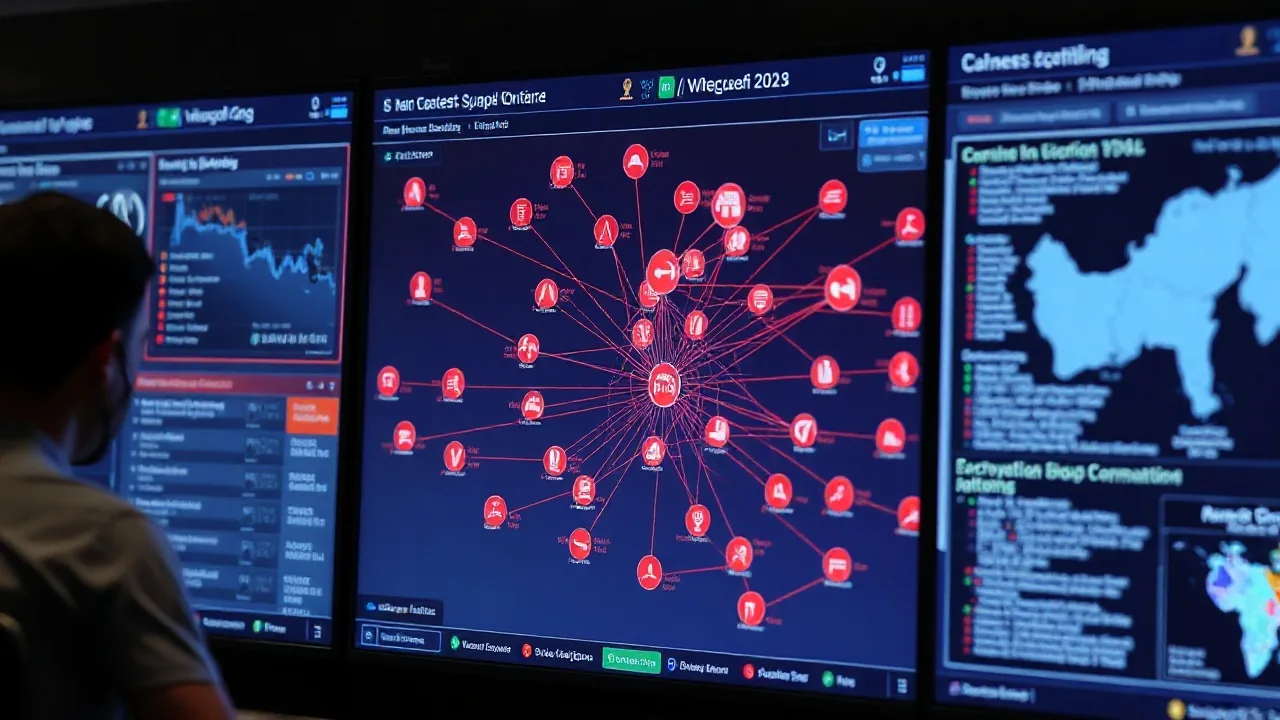
In July 2026, federal authorities continue tracking Patriot Front, a decentralized white nationalist militia organization that has operated openly across multiple US states for nearly a decade. The group, which emerged from the ashes of Vanguard America following the 2017 Charlottesville rally, uses encrypted messaging platforms, social media, and coordinated in-person demonstrations to advance its ideology and recruit members.
The organization claims tens of thousands of supporters and maintains a visible public presence through protests, postering campaigns, and paramilitary-style training exercises. Unlike many extremist groups that operate in dark web forums, Patriot Front blends above-ground activism with private encrypted communications, creating a hybrid recruitment and operational model that presents distinct domestic security challenges.
"Patriot Front represents a shift in extremist organizing," says Dr. Katherine Liu, research director at the American Institute for Strategic Analysis. "They are deliberately using legal protest and media presence to normalize their ideology while maintaining operational security through encrypted channels. This dual-track approach makes them harder to disrupt than traditional underground cells."
Ideology, Operations, and Online Presence
The group's stated mission centers on preserving what it calls "European heritage" and opposing immigration and multiculturalism. Leadership openly promotes a separatist vision while framing the organization as a civic movement rather than a militia. Internally, members follow hierarchical cell structures and participate in regimented training exercises, many documented on partially restricted social media accounts.
Patriot Front's recruitment funnels recruits through multiple touchpoints. Public demonstrations and online forums serve as entry points, while encrypted Signal and Telegram groups host more explicitly extremist content and operational planning. The group maintains decentralized regional chapters across roughly 40 states, with regional coordinators managing recruitment and event logistics.
- Public-facing channels include YouTube, Telegram, and Instagram for promotional content and event announcements
- Encrypted private groups on Signal and Telegram host tactical discussion and ideological instruction
- In-person training camps and protest mobilizations strengthen member cohesion and commitment
- Merchandise and branded materials generate funding and extend brand visibility
The organization's use of legal protest spaces to conduct security training is notable. Paramilitary-style formations during public events, combined with coordinated media outreach, blur the line between protected political speech and militia activity. This ambiguity complicates law enforcement response and cybersecurity risks assessment.
Cybersecurity and Surveillance Implications
From a cybersecurity standpoint, Patriot Front's technical infrastructure presents both vulnerabilities and adaptive capacity. The group relies on consumer-grade encrypted platforms, decentralized operational planning, and compartmentalized cell structures that resist large-scale infiltration or network mapping.
Federal law enforcement agencies have conducted surveillance operations targeting high-level organizers. A 2023 Justice Department indictment charged several leaders with conspiracy related to a planned riot, and ongoing investigations monitor encrypted communications and financial flows. However, the group's ability to recruit and organize through legal channels—protests, merchandise sales, social media—means it can sustain operations even when specific members face criminal charges.
"Traditional online surveillance focuses on dark web marketplaces and private forums," explains James Whitmore, former director of the Homeland Security Investigations cyber unit. "Patriot Front's visibility is deceptive. They are deliberate about operational security in encrypted spaces while maintaining a public face. This requires intelligence analysts to track both the legal activism and the private communications simultaneously."
The group's fundraising model also presents financial intelligence challenges. Members purchase branded merchandise through cryptocurrency and traditional payments, making transaction tracing difficult. Leadership maintains a careful separation between public donor funding and private operational budgets.
National Security and Public Safety
Law enforcement assesses Patriot Front as a significant extremism concern, though the organization has not claimed responsibility for violent attacks. Members have appeared at protests alongside other militia groups, and individuals with Patriot Front affiliations have faced charges for weapons possession and conspiracy. The potential for escalation remains a focus of federal counterterrorism programs.
The group's growth in rural and suburban areas, particularly in the Midwest and South, reflects broader recruitment success among young men aged 18 to 35. Patriot Front messaging targets economic anxiety, anti-establishment sentiment, and cultural grievances, packaging far-right ideology in nationalist and civic language. This rhetorical strategy has proven effective at converting mainstream conservative sentiment into extremist commitment.
State and local law enforcement agencies have increased monitoring of the organization's regional chapters. Several states have enacted or reinforced laws targeting militia activity and paramilitary training. However, the constitutional protection afforded to political speech and public protest limits direct enforcement action absent specific criminal conduct.
Intelligence analysts emphasize that Patriot Front's long-term threat lies not in a single catastrophic attack but in sustained recruitment and normalization of extremist ideology within mainstream conservative spaces. The organization's ability to operate visibly while maintaining encrypted operational security creates a persistent challenge for public safety agencies.
As of mid-2026, federal authorities continue monitoring the group's evolution. Congressional oversight committees have requested briefings on extremist militia activity, and the Department of Homeland Security has flagged Patriot Front as a priority in its annual threat assessment. The balance between protecting civil liberties and disrupting extremist organizing remains a central concern for policymakers and security officials.