
Iran Launches Missiles: Cybersecurity Threats Assessment
Recent Iranian missile launches intensify global concern over cyber attacks on critical infrastructure. Security experts warn of potential digital threats tied to escalating geopolitical tensions.

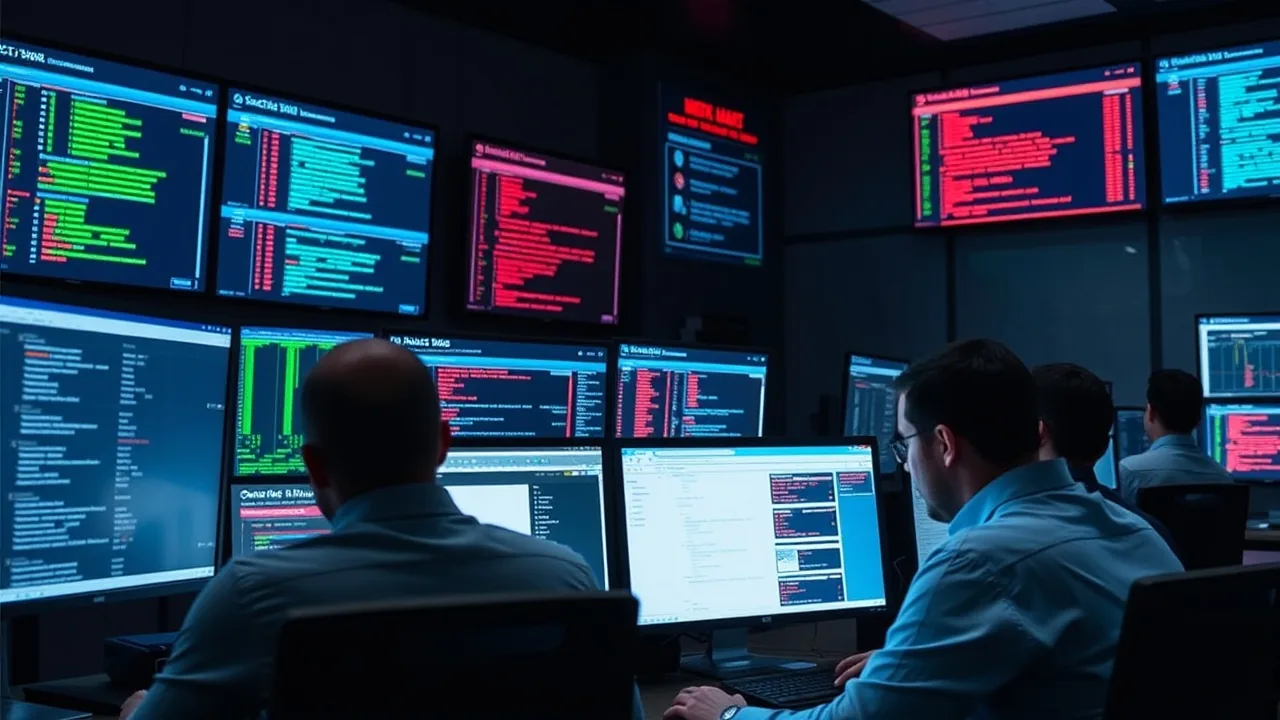
Iran conducted a series of ballistic missile tests in late July 2026, triggering urgent assessments across US government and private sector cybersecurity teams. The launches, which included reports of medium-range systems, coincided with elevated digital reconnaissance activity against American energy and financial networks, according to sources familiar with classified intelligence briefings.
The immediate concern centers on the operational link between kinetic military action and cyber operations. "We are seeing synchronized patterns where traditional military posturing correlates with increased probing of SCADA systems and critical infrastructure networks," said Dr. Michael Chen, director of threat intelligence at the Cybersecurity and Infrastructure Security Agency (CISA), in a briefing to congressional staff on July 28, 2026.
Operators of US power grids, water treatment facilities, and financial clearing houses have reported elevated volume of reconnaissance scans and attempted lateral movement probes originating from IP addresses previously linked to Iranian state-sponsored groups. No successful intrusions have been publicly confirmed, but the uptick signals preparation for potential escalation.
Geopolitical Risk and Digital Infrastructure Vulnerability
Geopolitical risk and cyber capability have converged in ways that made headlines impossible to ignore by late July 2026. Iran's demonstrated ballistic missile capability, combined with its known cyber warfare units, creates a dual-threat environment that US strategic planners now treat as interconnected.
The Islamic Revolutionary Guard Corps (IRGC) maintains dedicated cyber divisions that have previously targeted:
- Banking sector clearing systems and SWIFT-connected institutions
- Oil and gas pipeline control networks
- Electrical grid operations centers in multiple US states
- Defense contractor systems and supply chains
Intelligence officials have documented at least six separate cyber campaigns attributed to Iranian entities since January 2026, each showing incremental improvements in evasion techniques and persistence methods. The sophistication of these operations suggests months of preparation and reconnaissance.
A July 2026 vulnerability disclosure by researchers at Mandiant revealed that Iranian-linked actors had been using zero-day exploits in widely deployed industrial control system software. The discovery raised alarms because many US critical infrastructure operators still lack deployment patches.
What US Organizations Must Prepare For Now
Information security teams at critical infrastructure operators received emergency advisories from CISA on July 29, 2026, directing immediate actions across three tiers of response. The guidance prioritized segmentation of operational technology networks and deployment of enhanced monitoring on authentication systems.
Financial institutions face particular risk. Attacks on banking infrastructure in 2015 and 2016 attributed to Iranian groups caused operational outages and exposed customer data. Lessons from those incidents informed new protocols, but many smaller regional banks remain under-resourced for advanced threat response.
Dr. Sarah Voss, chief information security officer at a major US power utility (speaking on condition of anonymity due to regulatory restrictions), noted that the missile launches created real urgency in the boardroom. "When geopolitical headlines spike, board members finally understand why we need to spend on security architecture and incident response teams," she said in an off-the-record conversation with industry peers.
CISA recommendations issued in the past 48 hours include:
- Immediate vulnerability scanning of internet-facing systems and patch prioritization
- Deployment of endpoint detection and response tools on critical system administrators' workstations
- Elevation of security operations center staffing to 24/7/365 coverage
- Coordination with sector-specific Information Sharing and Analysis Centers (ISACs) for threat intelligence exchange
Smaller enterprises and municipal governments are most exposed because they often lack dedicated cybersecurity staff. A July 2026 survey by the National Association of State Chief Information Officers found that 67 percent of state agencies reported staff shortages in their security operations teams, creating dangerous gaps in monitoring and response capacity.
Defense Technology and Attribution Challenges
Attribution of cyber attacks remains imperfect even with advanced forensic methods. Actors routinely use false flags, stolen tools, and compromised infrastructure from third countries to obscure their origin. The US intelligence community has high confidence in attributing major operations to Iran, but individual campaigns sometimes remain ambiguous for months or years.
This ambiguity creates strategic problems. If Iran launches a significant cyber attack against US critical infrastructure in the coming weeks or months, rapid attribution and appropriate response become essential but difficult. Misattribution could trigger escalation against the wrong actor or fail to impose meaningful costs on the actual perpetrator.
Defense technology companies are accelerating development of attribution tools and threat hunting platforms. Products launched in 2026 by Splunk, CrowdStrike, and others include AI-assisted analysis to speed identification of attacker infrastructure and operational patterns. Adoption is growing, but many organizations still lack resources for deployment.
The intersection of missile launches and cyber threat activity underscores how modern global security challenges are no longer neatly separated by domain. Military escalation now reliably correlates with cyber reconnaissance and attack preparation. US government and private sector leaders must treat them as linked phenomena requiring coordinated defense.
For US organizations, the message from CISA and intelligence agencies is unambiguous: treat the current period as elevated risk, treat your vulnerability management and incident response as operational necessities, and treat information sharing with peers and government agencies as a collective defense asset. The window for preparation remains open, but it may not stay open long.