
Wisconsin Fossil Reveals Ancient Sea Creature's Legs Adapted for Land
Fossils found in Wisconsin's Silurian Brandon Bridge Formation reveal Waukartus muscularis, an ancient arthropod whose legs were adapted for walking on land, despite living in the ocean.

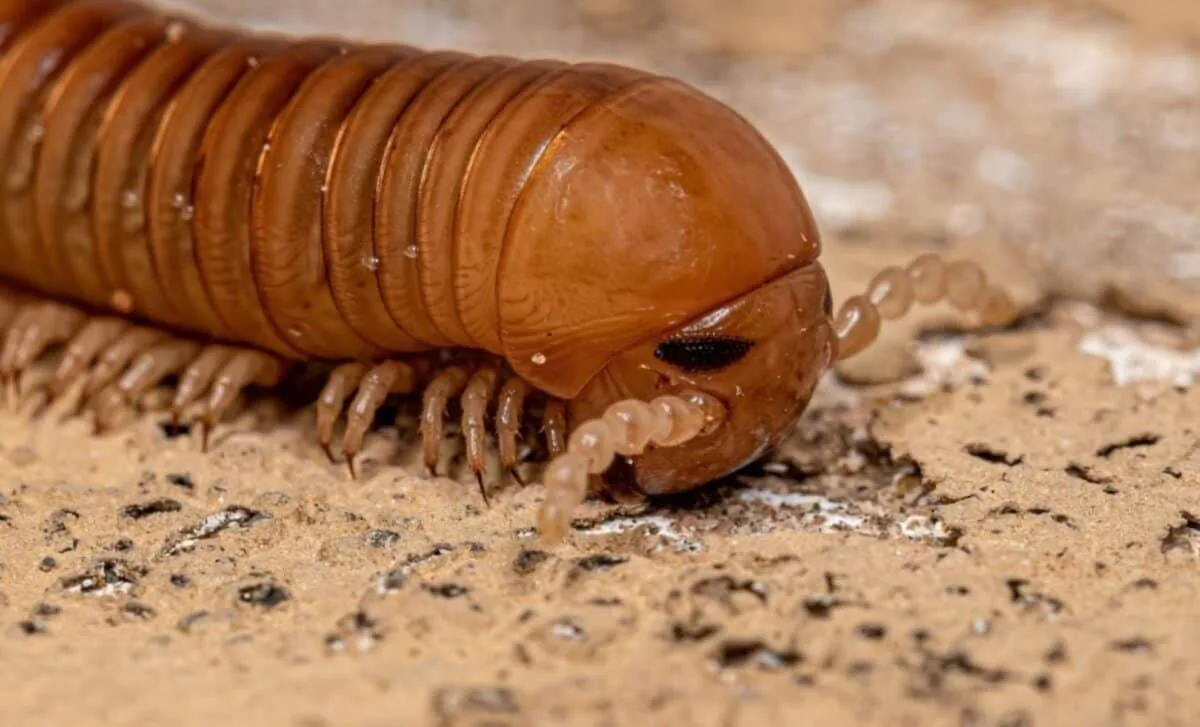
Paleontologists in Wisconsin have unearthed fossils of an ancient aquatic arthropod, named Waukartus muscularis, that suggest the ancestors of modern myriapods, such as centipedes and millipedes, developed their characteristic many legs while still living underwater. The discovery, published in Proceedings of the Royal Society B: Biological Sciences, challenges the long-held belief that these creatures' legs were solely an adaptation for terrestrial life. The exceptionally preserved specimens, dating back 437 million years, were found in the Wisconsin mudstones of the Silurian Brandon Bridge Formation near Waukesha.
The find includes 35 meticulously preserved specimens, offering scientists a rare look at muscle tissue and other soft-body details often lost during fossilization. These ancient remnants of Waukartus muscularis provide critical new insights into the evolutionary journey of these multi-legged organisms. The Waukesha Lagerstätte, the geological formation where the fossils were discovered, is renowned for preserving delicate soft-bodied organisms, making it an invaluable site for understanding prehistoric life.
The fossils bear a striking resemblance to modern centipedes and millipedes, featuring a long, segmented body and at least 11 pairs of legs. The creature possessed a head followed by an elongated trunk, with several head appendages varying in size. "Their shorter length may indicate that they were not involved in walking but specialized for sensory or feeding functions, but the mode of feeding is unknown. The trunk of Waukartus was flexible as evidenced by curved specimens and variation in the nature of the overlap between successive segments," the study's authors noted.
Evolutionary Adaptations Beneath the Waves
One of the most significant aspects of this discovery is the preservation of uniramous limbs – legs that are unbranched. This anatomical feature is typically associated with land-dwelling arthropods. In contrast, most other ancient aquatic arthropods of that era sported branched limbs, known as exopods, which aided in swimming. The presence of simpler, unbranched limbs in Waukartus, while it lived in a marine environment, has led researchers to propose that these limbs were already adapted for terrestrial locomotion before the creatures ever left the ocean.
"The uniramous limbs of Waukartus comprise an endopod alone, an anatomical trait interpreted as a terrestrial adaptation in myriapods that is convergently shared with terrestrial insects and arachnids. The inferred marine life habit of Waukartus indicates that the loss of the exopod occurred before terrestrialization and is not an adaptive change," the research team's analysis states. This suggests that the evolution of these limb structures was more complex than previously understood, potentially involving exaptation – where a trait evolves for one purpose and is later co-opted for another.
For decades, scientists have sought to pinpoint when and how creatures like centipedes and millipedes acquired the traits necessary for survival on land. This fossil find in Wisconsin offers the most compelling evidence to date, indicating that many of the characteristics we associate with terrestrial arthropods were already in place while these ancestors were still inhabiting the ancient seas.