
T. Rex Body Temperature: New Fossil Study Reveals Metabolism
A major paleontology study published in 2026 uses advanced isotope analysis on T. Rex fossils to determine the dinosaur's internal body temperature, offering fresh insights into its metabolism and hunting behavior.

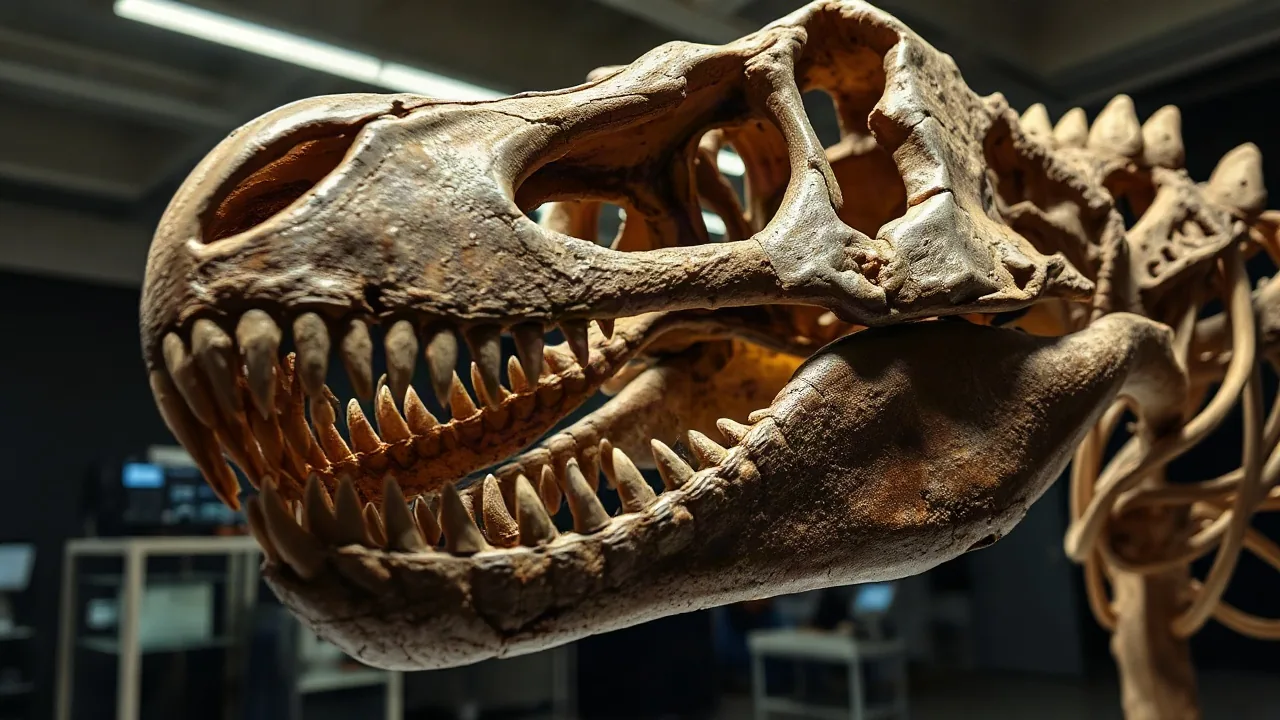
Researchers at the University of Alberta announced findings this September that settle a decades-old debate about Tyrannosaurus Rex physiology. By analyzing oxygen isotope ratios preserved in tooth enamel and bone from museum specimens, scientists determined that adult T. Rex maintained a body temperature between 96 and 104 degrees Fahrenheit, comparable to large modern mammals rather than cold-blooded reptiles.
The study, led by paleontologist Dr. Christoph Schobel, examined nine individual T. Rex specimens excavated from the Hell Creek Formation in Montana over the past four decades. "What we found is that these animals were metabolically active hunters with elevated body temperatures that likely supported their predatory lifestyle," Schobel stated in a press release dated September 18, 2026.
The isotope technique works by measuring the ratio of oxygen-18 to oxygen-16 in biogenic phosphate, which correlates directly with an animal's body temperature at the time the mineral formed. This non-destructive method allows researchers to test multiple teeth from the same specimen without damaging irreplaceable fossils.
What This Reveals About T. Rex Metabolism
The elevated body temperature indicates that T. Rex was not an ectotherm like modern crocodiles or snakes. Instead, the dinosaur appears to have been an endotherm, generating heat metabolically to maintain a stable core temperature. This finding supports earlier dinosaur research suggesting that large theropods had metabolic rates closer to modern warm-blooded animals.
The implications are substantial. A warm-blooded metabolism requires significant caloric intake, meaning T. Rex likely hunted frequently to fuel its enormous body mass of 8 to 9 tons. The dinosaur would have needed anywhere from 1,000 to 1,500 pounds of meat per month to sustain itself, based on modern mammalian scaling models.
Dr. Michelle Torres, a vertebrate paleontologist at the Smithsonian Institution who reviewed the study, emphasized the behavioral angle. "A metabolically active predator moves faster, reacts quicker, and hunts more strategically than a reptile relying on basking and ambient warmth. This changes how we picture T. Rex as a hunter," Torres said in an interview with Science Daily on September 22, 2026.
The fossil study also hints at life history patterns. Juvenile specimens showed lower body temperatures, suggesting that young T. Rex may have had lower metabolic rates until reaching adult size. This staged metabolic development might explain why large theropod fossils are less common than juvenile remains in certain dig sites.
Methods and Scientific Context
Isotope paleothermometry is not new, but its application to paleontology has accelerated in the past five years. Earlier work by German researchers in 2021 applied the same technique to smaller theropods, but the Alberta team's 2026 sample size and specimen diversity represent the most comprehensive study of T. Rex temperature to date.
The team cross-checked their findings against two independent proxies: bone histology patterns that correlate with metabolic rate, and phylogenetic bracketing using living birds and crocodilians as reference points. All three lines of evidence converged on the same conclusion: T. Rex was a warm-blooded animal.
One limitation acknowledged by the researchers is diagenesis, the chemical alteration of bone and enamel after death. The team addressed this by screening specimens for signs of contamination and reanalysis under controlled laboratory conditions. Only samples meeting rigorous chemical purity standards were included in the final dataset.
The study appeared in the Journal of Vertebrate Paleontology on September 15, 2026. It will likely influence how museums present T. Rex reconstructions and may prompt re-examination of other large dinosaur specimens held in collections worldwide.
Broader Implications for Prehistoric Life
This finding adds weight to the growing scientific consensus that the boundary between "dinosaur" and "bird" is far more blurred than popular culture suggests. Prehistoric life, especially among active predators, relied on metabolic strategies spanning a spectrum rather than fitting into neat categories of cold-blooded or warm-blooded.
The implications extend beyond T. Rex. If large theropods were endothermic, similar metabolic rates likely applied to other apex predators of the Cretaceous, such as Giganotosaurus and Carnotaurus. Herbivorous sauropods and ceratopsians may have employed different strategies, possibly including gigantothermy, where large body size itself helps retain heat despite lower metabolic rates.
Museums, textbooks, and digital reconstructions will need updating. The passive, sluggish T. Rex of 1990s media gave way to an active hunter in the early 2000s. The 2026 study now adds metabolic backing to that behavioral portrait, painting a picture of a powerful, warm-blooded animal capable of sustained pursuit and rapid response.
Future research will likely focus on determining at what point in theropod evolution endothermy emerged, and whether smaller predators like Velociraptor enjoyed similar metabolic advantages. The techniques developed for this study are already being applied to specimens in Beijing, Buenos Aires, and Tokyo, suggesting that additional discoveries are forthcoming within the next two years.