
Spider Silk: How Natural Factories Create Ultra-Strong Material
Researchers are unraveling the complex process by which spiders transform liquid silk dope into one of nature's strongest and most versatile materials. Understanding this biological manufacturing offers potential for advanced biomaterials.

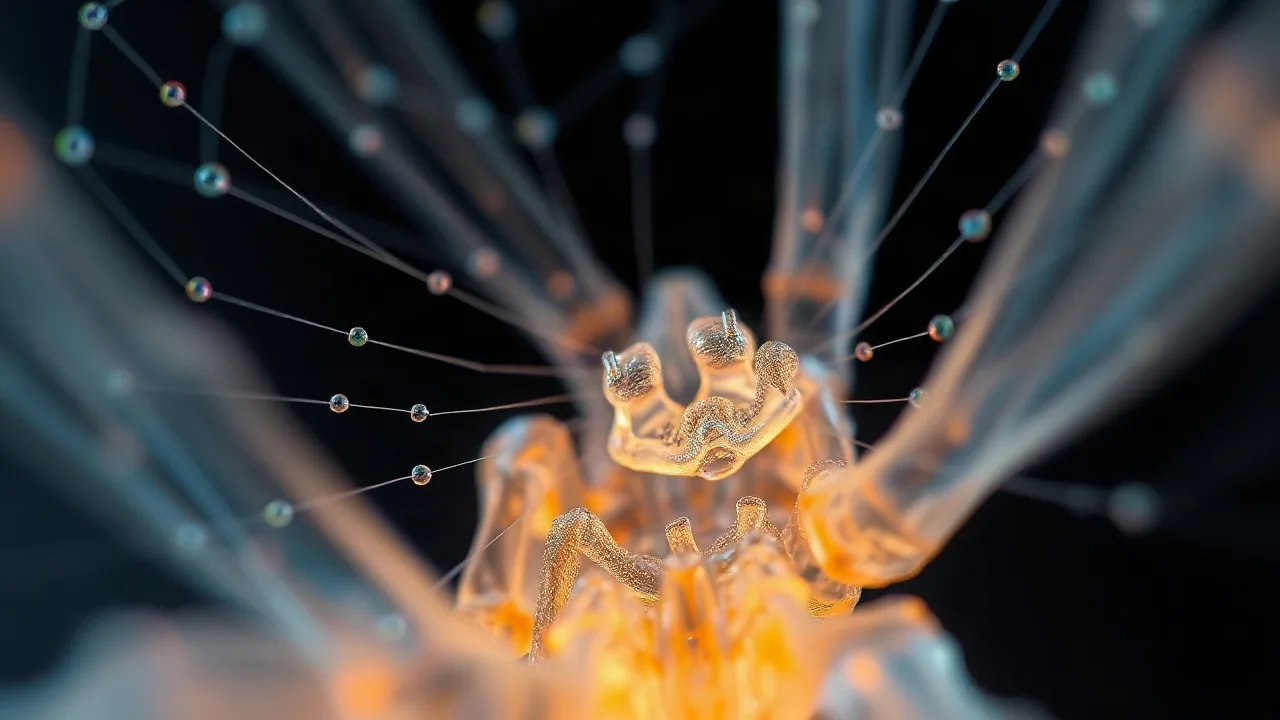
Spiders possess an extraordinary ability to produce silk, a protein-based fiber renowned for its remarkable strength and elasticity, making it one of the toughest materials known in nature. This biological manufacturing marvel, achieved by transforming a liquid protein solution known as "silk dope" into solid silk, has long fascinated scientists. Recent investigations are shedding new light on the intricate biophysical and biochemical mechanisms spiders employ in their natural factories, offering potential pathways for developing advanced biomaterials.
The process begins with specialized glands within the spider's abdomen, where spidroins – the fundamental proteins of silk – are synthesized and stored in a concentrated liquid form. This silk dope is a complex hydrogel, carefully engineered to remain liquid under specific conditions, preventing premature solidification. The precise molecular architecture of spidroins and their interaction with water and ions within the gland are critical for maintaining this liquid state.
As the spider prepares to spin, the silk dope is drawn through a narrow duct, leading to the spinnerets. It is within this duct, which tapers significantly towards the opening, that the transformation occurs. As the dope is mechanically stressed and pH changes, the spidroins undergo a dramatic structural rearrangement. They align themselves and begin to form beta-sheets, the ordered crystalline structures that give spider silk its exceptional tensile strength.
Biophysical Transformations Drive Silk Strength
The conversion of liquid dope to solid fiber is not merely a drying process; it involves sophisticated biophysical and biochemical events. Researchers have identified key factors, including changes in ion concentration and shear forces, that trigger the spidroins to reconfigure. The alignment of these proteins is crucial, creating a highly ordered structure that can withstand immense pulling forces before breaking. This controlled self-assembly mimics advanced engineering processes but occurs naturally within the spider's body.
The versatility of spider silk is also a key area of study. Different species of spiders produce silk with varying properties, adapted for diverse functions such as constructing intricate webs for prey capture, creating draglines for safety, or forming egg sacs for reproduction. The specific composition of spidroins and the spinning conditions allow for this range of material characteristics, from the sticky capture silk of orb-weavers to the super-strong structural silk of Darwin's bark spider. Understanding these variations could lead to the design of silks with tailored properties for specific applications.
The potential applications for synthetically produced spider silk are vast. Its unparalleled strength-to-weight ratio makes it a candidate for high-performance textiles, advanced medical sutures, lightweight body armor, and even biodegradable electronics. The challenge lies in replicating the spider's efficient and precise biological manufacturing process outside the organism. Bioengineers are exploring methods, including genetically engineered bacteria and yeast, to produce spidroins and artificial spinning techniques to mimic nature's method. The quest to harness this natural wonder continues to drive innovation in biomaterials science.