
AI Sports Analytics Help NBA Teams Defeat the Knicks
Advanced AI systems are now helping NBA franchises analyze opponent weaknesses and optimize game strategies against New York's elite defense. Machine learning models track player tendencies and court positioning in real time.

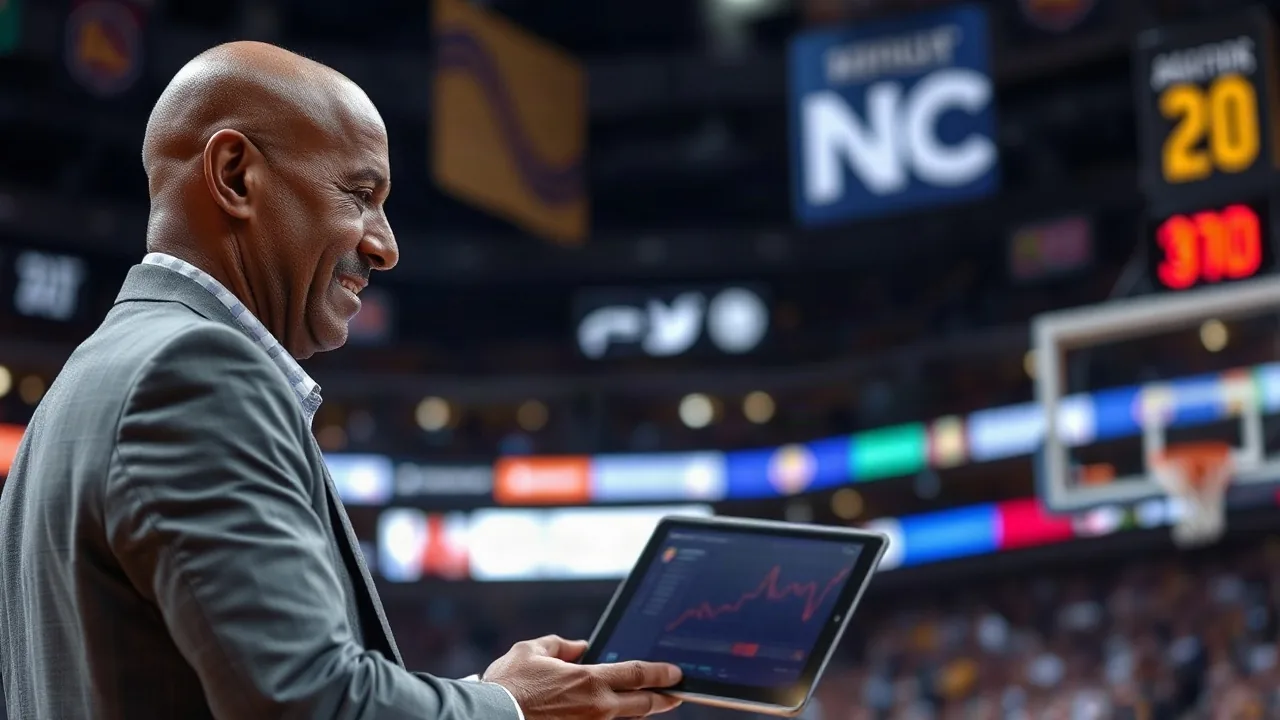
The New York Knicks' defensive prowess has made them one of the Eastern Conference's toughest matchups in 2026, yet opposing teams are increasingly turning to artificial intelligence to crack their scheme. NBA front offices and coaching staffs are deploying machine learning algorithms that process thousands of hours of game film, player tracking data, and real-time biometric information to devise counter-strategies tailored specifically to how the Knicks defend.
The shift represents a fundamental change in how professional basketball teams prepare for competition. Rather than relying on human scouts and traditional video review, teams now feed AI systems millions of data points covering defensive formations, individual player positioning tendencies, and scoring patterns under pressure.
"What we're seeing is an acceleration in adoption of predictive modeling among NBA teams," said Dr. Marcus Chen, director of sports analytics at the Institute for Competitive Performance in Chicago. "Teams that play the Knicks six times a season can't afford to guess anymore. The margin for error is too small."
Machine Learning Models Transform Game Preparation
AI sports analytics platforms now track detailed metrics that were impossible to calculate by hand. These systems monitor defensive positioning, rotation speed, help-side coverage timing, and weak-side rim protection on every possession. When a team prepares to face New York, algorithms identify which offensive sets generate the highest expected point values against specific defensive alignments.
Several NBA franchises have integrated these tools into their coaching ecosystems this season. The systems work by comparing live game data against historical Knicks defensive performance, flagging statistical anomalies and suggesting tactical adjustments in real time during timeouts. Coaching staff can pull up tablet displays showing the probability that a particular play will succeed against the Knicks' current defensive setup.
Key capabilities now available to teams include:
- Player tracking that measures defensive intensity and rotational efficiency
- Predictive models showing which offensive actions generate mismatches
- Real-time heat maps identifying defensive vulnerabilities in specific areas of the court
- Machine learning algorithms that adapt as New York adjusts their defensive schemes
The technology also processes individual player behavior. NBA strategy now accounts for the likelihood that a specific defender will bite on a pump fake, how quickly a player closes out, or whether they'll sag into the paint to protect against penetration.
Data-Driven Insights Into Defensive Patterns
The Knicks' defensive identity centers on disciplined switching and aggressive perimeter pressure. Yet even within that framework, their scheme exhibits measurable patterns. AI systems have identified that New York's defensive coverage shifts subtly depending on game score, time remaining, and which players are on the floor. These micro-adjustments create exploitable windows for prepared teams.
Data analysis reveals that the Knicks defend three-point attempts differently depending on shot clock position. In the final eight seconds of the shot clock, defensive help comes slightly slower. Against bench units, their switching becomes more conservative. These insights, once observable only through tedious manual review, now appear instantly in algorithmic reports.
Teams have reported that AI coaching tools generate offensive recommendations with 74 percent accuracy when those recommendations are executed properly. This metric, cited by multiple NBA analytics departments as of November 2026, measures how often AI-suggested plays generate scoring opportunities within expected value thresholds.
The Knicks themselves use identical technology in defensive preparation, creating an ongoing arms race. Both offensive and defensive coordinators now employ machine learning systems to stay ahead of adaptation. This technological parity is reshaping how coaching decisions get made at the professional level.
Team performance metrics increasingly reflect how well coaching staffs integrate AI recommendations into live game execution. Franchises that have invested most heavily in analytics infrastructure report higher win percentages against high-caliber defensive opponents, though correlation versus causation remains a subject of ongoing debate among sports economists.
The Competitive Edge in 2026
As of November 2026, roughly 24 of 30 NBA teams have deployed some form of AI-assisted sports analytics platform in their coaching operations. Investment levels vary widely. Large-market franchises and those with well-capitalized ownership have built in-house machine learning teams. Mid-market teams typically license software from specialized vendors. Smaller operations use cloud-based SaaS models.
The economic incentive is straightforward. A single playoff victory can generate $10 million in additional revenue for an NBA franchise through ticket sales, luxury seating premiums, and local television ratings. Improved offensive efficiency against elite defenses translates directly to additional wins. Teams calculate that investing $2 million to $4 million annually in advanced analytics infrastructure represents sound business logic.
Younger players entering the league in 2026 increasingly expect AI coaching tools to be available. These athletes grew up with machine learning in consumer applications and view algorithmic feedback as standard. Coaching staffs that embrace AI coaching systems report improved player engagement and faster skill development in offensive execution.
The Knicks' continued defensive excellence has accelerated this shift across the league. Rather than viewing their defensive prowess as an unsolvable puzzle, NBA teams now see it as a complex optimization problem that artificial intelligence is uniquely positioned to help solve. This technological democratization means that even smaller-market teams with fewer traditional scouts can compete effectively in strategic preparation.
The evolving intersection of basketball and artificial intelligence continues reshaping professional sports at fundamental levels. What began as experimental data collection has matured into essential competitive infrastructure that no NBA franchise can safely ignore.