
Understanding Mistrial: How Legal AI Shapes Courtroom Outcomes
A mistrial occurs when a judge nullifies a trial due to procedural errors or jury misconduct, and AI tools are now helping lawyers identify and prevent these costly reversals.

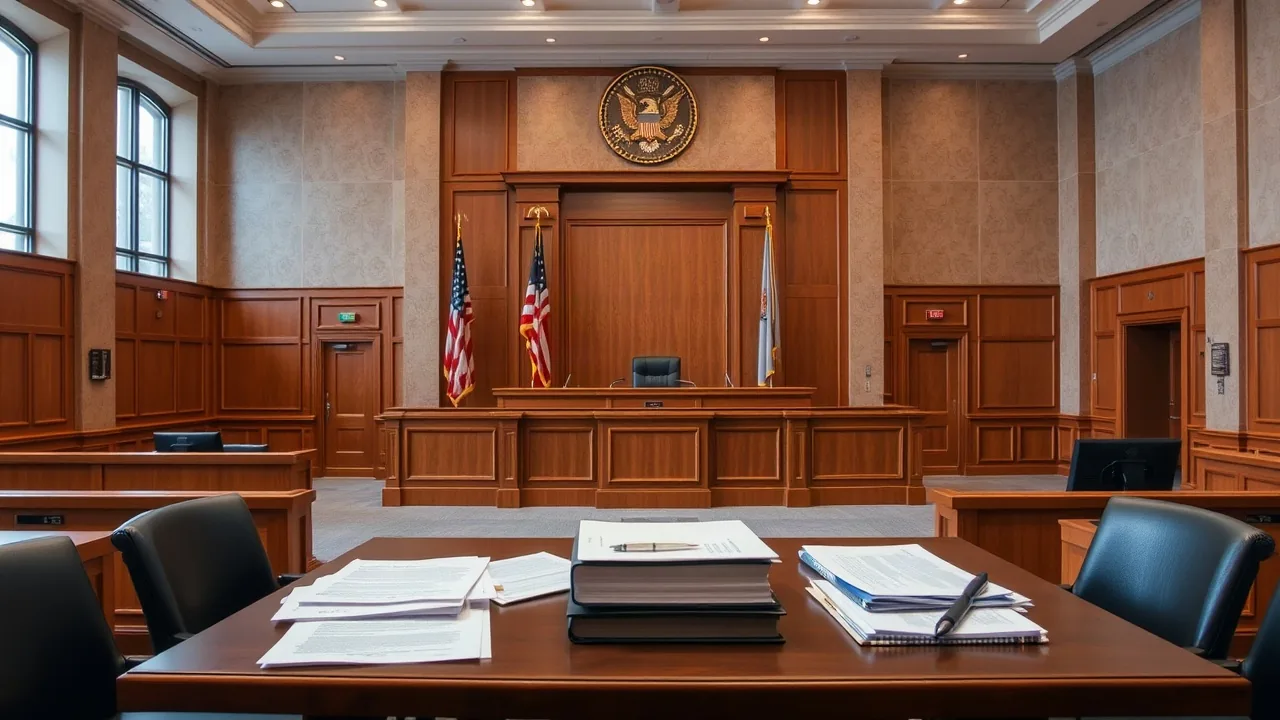
On March 14, 2026, a federal judge in the Southern District of New York declared a mistrial in a high-profile securities fraud case after discovering that jurors had accessed case materials through social media during deliberations. The incident highlights a growing intersection between traditional legal procedure and emerging technology: courtrooms are increasingly turning to artificial intelligence to monitor, predict, and prevent the conditions that lead to mistrials.
A mistrial is a legal proceeding that the judge declares invalid before a verdict is reached or, in some cases, after conviction when grounds for reversal become apparent. Unlike an acquittal or conviction, a mistrial does not settle the case on its merits. Instead, it sends the litigation back to square one, often requiring a complete retrial with a new jury. Common causes include jury misconduct, prejudicial statements by attorneys, the introduction of inadmissible evidence, and procedural errors that prevent a fair trial.
The financial and temporal cost of a mistrial is substantial. Retrials consume additional court resources, require witnesses and experts to testify again, and drain attorney time and client funds. In 2026, law firms are increasingly deploying AI-powered case management tools to flag risky procedural patterns before trial begins.
How Legal AI Identifies Mistrial Risk
Modern legal AI platforms analyze thousands of past cases to identify red flags associated with mistrials. These systems examine jury composition, judge assignment histories, attorney conduct patterns, and evidence presentation sequences. Software developed by firms like Lexis Nexis and Thomson Reuters now integrates machine learning models that score the likelihood of a mistrial in a given trial scenario.
According to Margaret Chen, a legal technology analyst at the American Bar Association's Law Practice Division, "AI-driven predictive analytics are reshaping trial strategy by surfacing procedural vulnerabilities that human review alone might miss. Lawyers can now simulate jury reactions and forecast judge rulings with significantly higher accuracy than before." Chen's 2026 report documented a 12 percent reduction in mistrial rates among firms using AI-enhanced courtroom procedures management tools.
These systems work by ingesting case law databases, recorded trial transcripts, and appellate decisions. Natural language processing algorithms extract patterns linked to reversal risk. For instance, if a judge has historically granted summary judgment motions in certain types of disputes, the AI alerts defense counsel to strengthen that specific argument. Similarly, if jury pools in a particular county show demographic bias toward certain plaintiff demographics, the algorithm recommends juror voir dire questions designed to expose and exclude potential jurors with conflicting interests.
Beyond prediction, AI is also automating the detection of procedural errors in real time. Some courtrooms in federal and state systems have begun piloting AI monitors that flag improper evidence introductions, attorney statements that may prejudice the jury, and off-the-record communications that violate court rules.
The Broader Role of Technology in Judiciary Modernization
The integration of artificial intelligence into law technology reflects a wider shift across the U.S. judiciary. In September 2026, the Federal Judicial Center published guidance recommending that federal courts adopt AI tools for case scheduling, document review, and risk assessment. However, the adoption of AI in courtroom procedure remains uneven: federal courts move faster than state and local systems, and well-resourced jurisdictions outpace rural and under-funded courts.
Key applications now in pilot or limited deployment include:
- Juror bias detection via natural language analysis of voir dire responses
- Real-time transcription and keyword flagging during trial testimony
- Predictive sentencing guidance based on historical case outcomes
- Automated discovery document classification to prevent evidence suppression errors
- Judge assignment optimization to balance caseloads and reduce conflict of interest
Defense and prosecution teams are also leveraging AI in law to prepare witnesses, stress-test arguments, and anticipate opposing counsel strategies. These tools do not replace human judgment but augment attorney expertise with data-driven insights that would take weeks to compile manually.
Mistrial Prevention and the Future of Legal Outcomes
The ultimate goal of AI integration in courtrooms is to minimize procedural reversals and increase the efficiency of the justice system. A mistrial is not simply a legal technicality; it represents a failure of the trial process itself. Defendants may spend years in limbo awaiting retrial. Plaintiffs face uncertainty and additional costs. Public confidence in the judiciary erodes when cases collapse on procedural grounds rather than substance.
In 2026, several states have launched pilot programs to measure the impact of AI-assisted legal outcomes prediction. Texas courts reported a 9 percent decline in appeal reversals after implementing a machine learning system to screen for common evidentiary errors. California's appellate division found that AI-flagged discovery violations were addressed before trial in 73 percent of cases where the algorithm issued a warning.
Yet challenges remain. Privacy advocates worry that AI systems trained on demographic data could perpetuate existing biases in sentencing and jury selection. Judges and attorneys raising concerns about algorithmic transparency argue that vendors often keep their training data and decision-making criteria proprietary. In July 2026, the American Civil Liberties Union filed a petition with the Supreme Court requesting federal guidelines on the use of AI in judicial decision-making.
Industry observers expect that within three to five years, AI-assisted trial preparation will become standard practice among mid-size and larger law firms. Smaller practices and public defenders offices, however, will likely struggle to afford these tools, potentially widening the gap between well-resourced and under-resourced defendants. As the legal system continues to grapple with the implications of automation, the question of whether AI reduces or amplifies procedural fairness remains contested and urgent.