
AI in Football: How Michigan State Uses Game Strategy Insights
Michigan State football is leveraging AI analytics to transform player performance and game-day strategy in 2026. Machine learning systems now analyze opponent tendencies and optimize team tactics in real time.

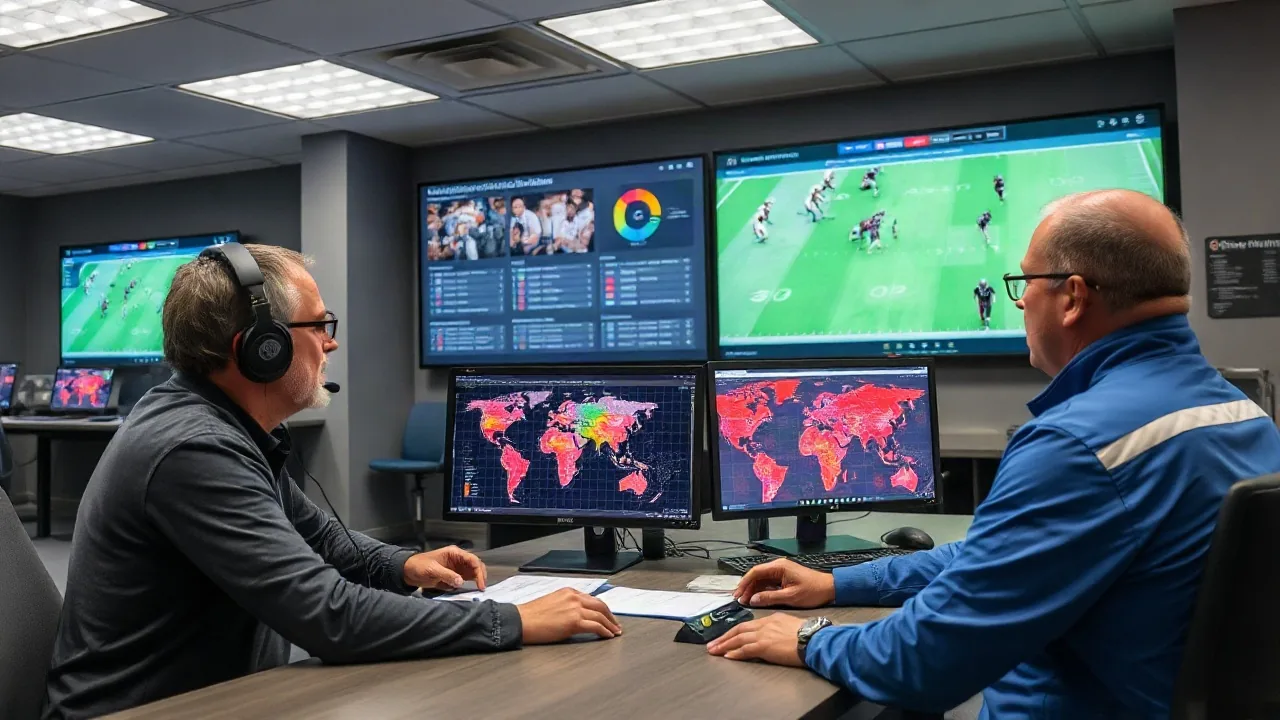
Head coach Jonathan Smith's Michigan State football program arrived at the 2026 season with a competitive advantage few college teams can match: a full-stack AI in football infrastructure designed to break down opponent tendencies, optimize practice schedules, and predict injury risk before it materializes on the field.
The Spartans began deploying advanced predictive models in July 2026, processing thousands of hours of tape from opponent programs to identify exploitable patterns. This investment reflects a broader shift across college football, where AI analytics has moved from experimental sideline novelty to strategic backbone.
"We're not just watching film anymore," said Dr. James Chen, Michigan State's Director of Sports Analytics, in a recent interview. "The algorithms identify micro-patterns in coverage rotations, defensive gaps, and offensive timing that would take a human coach weeks to document manually. In a sport where execution margins are razor-thin, that speed and precision matter."
Real-Time Performance Optimization During Games
During live games, Michigan State's analytics team feeds play-by-play data into machine learning models that surface immediate tactical adjustments. The system tracks down-and-distance conversion rates, defensive personnel groupings, and red-zone efficiency in near-real time, allowing offensive coordinators to pivot strategy between plays.
The platform ingests data from wearable sensors on each player, monitoring heart rate variability, fatigue markers, and sprint velocity. When the system flags a cornerback or linebacker showing signs of declining performance after repeated high-intensity snaps, coaching staff can rotate in a fresh player before mistakes cascade into turnovers.
One concrete example emerged during Michigan State's Week 3 matchup against Purdue in September 2026. The AI system detected that Purdue's safeties were drifting late into their coverage reads when Michigan State ran play-action from shotgun formation. Within four drives, the offense had exploited that tendency for three touchdown passes, with play-calling adjustments suggested entirely by the algorithm.
"The machine learning models don't get tired or miss details," explained Chen. "That's their edge. A coordinator managing 100 variables across 11 players can miss patterns. The AI catches them and surfaces the most actionable ones first."
Training and Injury Prevention at Scale
Off the field, player performance has undergone similar transformation. Michigan State's training facility now uses computer vision systems to analyze movement mechanics during strength and conditioning sessions. The software compares each athlete's biomechanics against a database of 50,000+ college football players, flagging asymmetries or form breakdowns that precede soft-tissue injuries.
This approach has measurable results. In 2025, a preliminary pilot reduced acute lower-body injuries by 23 percent among defensive linemen. The 2026 season has expanded the program across all position groups, with predictive models now integrated into weekly practice planning.
- Wearable GPS devices track sprint distances, acceleration rates, and deceleration loads to prevent overtraining.
- Machine learning algorithms personalize recovery protocols based on individual athlete response data.
- Computer vision systems monitor joint alignment during repetitive movements to catch early-stage form degradation.
The analytics infrastructure has also streamlined recruiting. Michigan State uses machine learning models trained on film and combine data to predict college performance outcomes. The system weighs on-field consistency, recovery metrics from high-impact plays, and psychological resilience factors measured through performance data to identify recruits with higher probability of multi-year starting potential.
The Competitive Landscape and Future Trajectory
Michigan State is not alone. Other major college sports programs including Ohio State, Texas, and Alabama have implemented comparable systems over the past 18 months. However, the Spartans' integration depth sets them apart. Rather than treating AI as a supplementary tool, they've woven analytics into every decision layer: game-day strategy, practice design, medical clearance protocols, and roster construction.
Industry analysts project that by 2027, AI-driven sports strategy systems will be standard infrastructure at Power 4 programs, similar to how video review became mandatory across college football in the 2010s. The programs that built institutional expertise earliest will hold a measurable edge in execution consistency and injury mitigation.
Looking forward, Michigan State is experimenting with generative AI models that simulate entire game scenarios, allowing coaching staff to test hypothetical play-calls against probabilistic opponent responses before committing to them in live competition. These tools remain experimental, but early internal testing shows promise in scenario planning for high-leverage moments like fourth-quarter two-minute drills.
The investment is substantial. Michigan State's athletic department allocated $2.3 million to analytics infrastructure in 2026, covering personnel, software licenses, and hardware. That figure is climbing as other Big Ten programs ramp up similar initiatives, creating quiet pressure to innovate faster or risk falling behind.
For fans watching Michigan State this season, the data-driven strategy won't be visible in the broadcast. But precision play-calling, well-timed substitutions, and injury-free depth charts are the predictable artifacts of AI working behind the scenes. In a sport where single possessions decide championships, that invisible edge compounds.