
Ice Age Arrival: Indigenous Ancestors Reached Americas in Deep Freeze
New genetic and archaeological research indicates that the first humans to populate the Americas arrived during the peak of the last glacial period, facing harsh, frozen conditions.

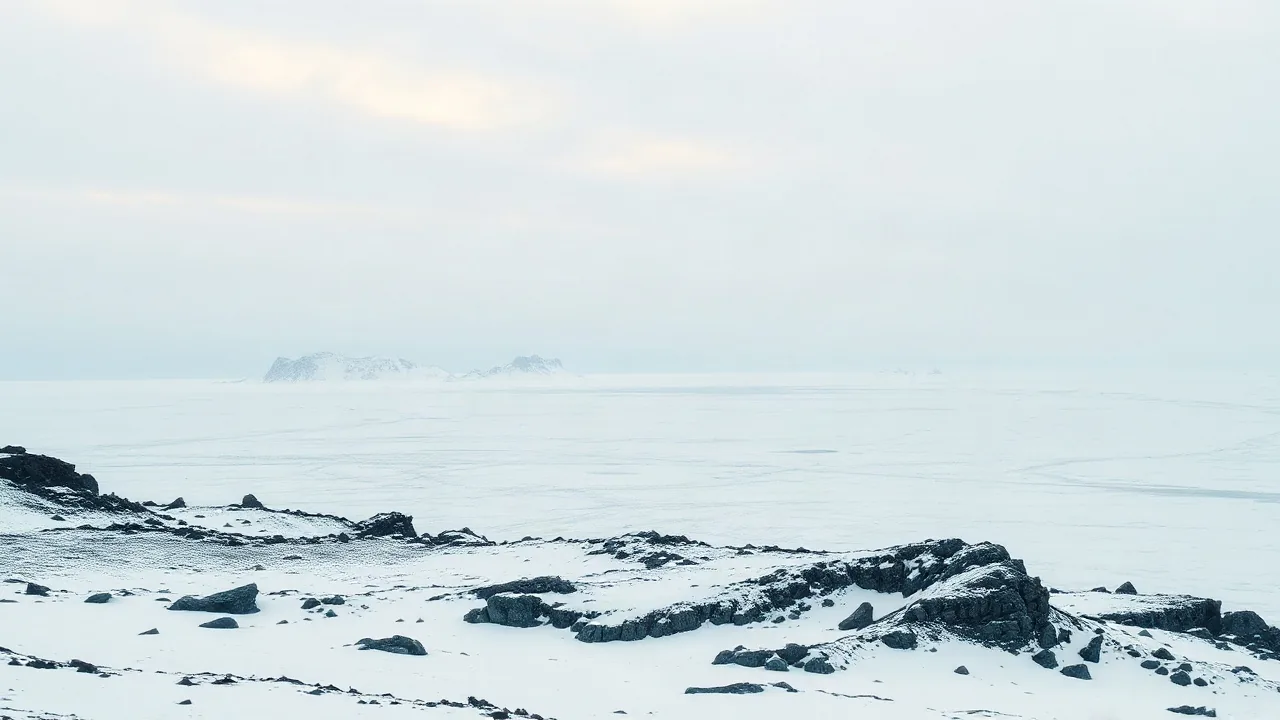
The initial human migration into the Americas occurred during the harshest period of the last ice age, a time of extreme cold and widespread glaciers, according to a comprehensive new study. This finding challenges some previous timelines and suggests that the earliest inhabitants of the continent were remarkably resilient, adapting to a challenging environment during what is known as the Last Glacial Maximum, which peaked approximately 26,500 to 19,000 years ago.
The research, which integrates cutting-edge genetic analysis of ancient and modern Indigenous populations with sophisticated climate modeling and archaeological evidence, paints a detailed picture of migration routes and settlement patterns. Scientists examined mitochondrial DNA from various Indigenous groups across North and South America, comparing it with genetic markers from Siberian populations. The findings suggest a significant ancestral link and a migration event that predates the more widely accepted period following the ice age.
Ancient Migrations and Environmental Challenges
This pivotal migration into the Americas is now understood to have taken place when vast ice sheets covered much of North America, forming an almost impassable barrier. This suggests that early peoples likely utilized coastal migration routes or navigated ice-free corridors that opened intermittently. The study emphasizes that these initial settlers arrived not in a temperate, post-glacial world, but in an environment characterized by frigid temperatures, limited vegetation, and megafauna adapted to glacial conditions.
Dr. Elena Petrova, a lead geneticist on the project, stated, "Our data points to a complex story of survival. These were not people arriving into an empty or easily habitable land; they were pioneers who demonstrated incredible adaptability to extreme cold and resource scarcity." She added that the genetic signatures provide a robust timeline, placing the significant influx of ancestors during this intensely cold period.
Previous theories often posited that migration occurred after the ice sheets began to recede, making passage easier. However, this new research provides strong support for an earlier arrival. The implications are far-reaching, affecting our understanding of the peopling of the Americas, the development of early cultures, and the genetic diversity of Indigenous peoples today. It highlights the capacity of human groups to undertake long-distance migrations under challenging climatic circumstances.
The study also sheds light on the potential routes taken, suggesting that a coastal journey along the Pacific Rim may have been a primary pathway. This would have offered more diverse food sources and less extreme ice cover compared to overland routes through the interior. The resilience of these ancestors in establishing communities across such a vast and climatically diverse continent is a testament to their ingenuity and survival skills. The ongoing analysis of ancient DNA continues to refine our understanding of these foundational migrations.