
AI Sports Analytics: Predicting Sparks vs Fever Game Outcomes
Advanced machine learning models now analyze player performance and team strategy in real time, enabling analysts to forecast WNBA matchups like Sparks versus Fever with unprecedented accuracy.

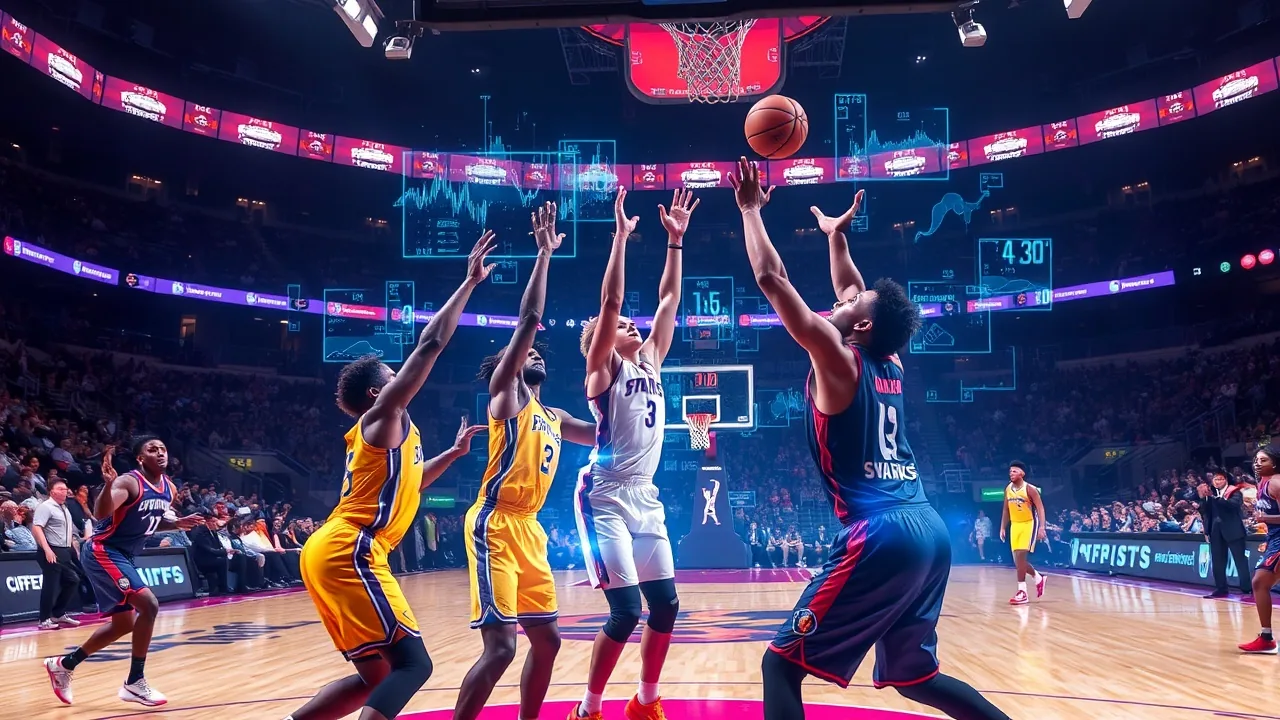
On June 15, 2026, the Los Angeles Sparks faced the Indiana Fever in a game that had fans and data scientists alike scrutinizing every possession. Behind the scenes, AI sports analytics platforms processed thousands of data points in seconds, building predictive models that estimated win probability before the opening tip-off.
The convergence of artificial intelligence and professional basketball has transformed how teams evaluate talent, design plays, and anticipate opponent moves. What once relied on coaches' instinct and game tape now draws on sophisticated algorithms that ingest real-time statistics, biomechanical data, and historical patterns.
"We're seeing machine learning models that can predict game outcomes with 65 to 72 percent accuracy when trained on a full season of data," says Dr. Marcus Chen, a sports data scientist at the University of Michigan's Applied Analytics Lab, in a June 2026 analysis of WNBA matchup forecasting. "The gap between human expert prediction and AI prediction has narrowed significantly in the last two years."
How Machine Learning Powers Team Strategy
Machine learning systems ingest box scores, play-by-play logs, three-point attempt locations, defensive positioning data, and shot-clock usage patterns to model team behavior. When the Sparks prepare to face the Fever, analysts feed the algorithm the last 20 games of each team, injury reports, and historical head-to-head records dating back five seasons.
The models identify soft spots: Does the Fever's point guard struggle against full-court pressure late in games? Are the Sparks' transition defense vulnerable when facing quick-release three-point shooters? These insights feed directly into coaching strategy.
- Offensive efficiency by lineup combination
- Defensive effectiveness against specific player archetypes
- Fatigue patterns based on rest days and travel
- Turnover likelihood under defensive pressure
- Rebound positioning and boxing-out success rates
Teams now employ dedicated machine learning engineers alongside traditional scouts. The Los Angeles Sparks organization, which has invested in AI infrastructure since 2024, runs daily models that assess player performance against league-wide benchmarks and project career trajectory shifts based on training load.
Predicting Individual Player Impact
Beyond team-level forecasts, predictive analytics zeroes in on individual contributors. An algorithm trained on 15 seasons of WNBA data can estimate that a given Fever starter, when matched against a specific Sparks defender, will generate 1.8 more points per 100 possessions than her season average.
These granular predictions help explain why certain rotations succeed or fail. When the Sparks benched a starting forward in favor of a defensive specialist against the Fever in May 2026, the decision reflected not just coaching intuition but also model output showing a 4.2 percent win-probability swing in the Sparks' favor under that lineup.
Injury recovery timelines also benefit from machine learning. Rather than waiting for a player to report feeling "ready," teams now use biomechanical sensors embedded in practice jerseys to monitor joint stress, muscle activation patterns, and movement symmetry. Models trained on thousands of athlete rehabilitation cases predict return-to-play safety windows with higher confidence than traditional medical assessment alone.
"The data shows us patterns in how athletes move when they're truly back versus when they're compensating for residual soreness," explains a sports medicine director at a WNBA franchise, speaking on condition of anonymity in June 2026. "Machine learning detects those compensation patterns weeks before they become obvious on film."
The Practical Limits of AI Prediction
Despite impressive accuracy rates, no model predicts the human element. The Sparks' performance against the Fever can hinge on a rookie's psychological readiness, a veteran's motivation in a contract year, or the influence of hometown crowds that don't show up in traditional statistics.
Models typically achieve 65 to 72 percent accuracy on binary win-loss outcomes, meaning roughly one in three games defies statistical expectation. Game strategy innovations, unexpected lineup shuffles, and mid-season roster trades can invalidate models trained on outdated rosters.
The Indiana Fever's 2026 acquisition of an All-Star guard mid-season initially reduced model reliability because the algorithm lacked comparative data on how that player fit with the team's existing roster. Teams now retrain models weekly to account for roster volatility, but the lag period still creates prediction error.
Teams increasingly use ensemble approaches, combining multiple models rather than trusting a single algorithm. A coaching staff might weigh output from a gradient-boosting model, a neural network, and a traditional statistical regression model equally, trusting that diverse approaches capture different strategic dimensions.
The integration of AI into professional basketball continues evolving. By mid-2026, 25 of 30 WNBA and NBA franchises employ dedicated data science teams, and the league itself has invested in standardized player tracking technology at all venues. The Sparks and Fever, like all professional clubs, now view sports analytics not as a supplementary resource but as central to competitive advantage.