
Venus May Have Swallowed Moon Due to Slow Rotation, Study Finds
A recent astrophysics study suggests that Venus, Earth's planetary neighbor, may have once possessed a moon that it eventually consumed due to its extremely slow rotation.

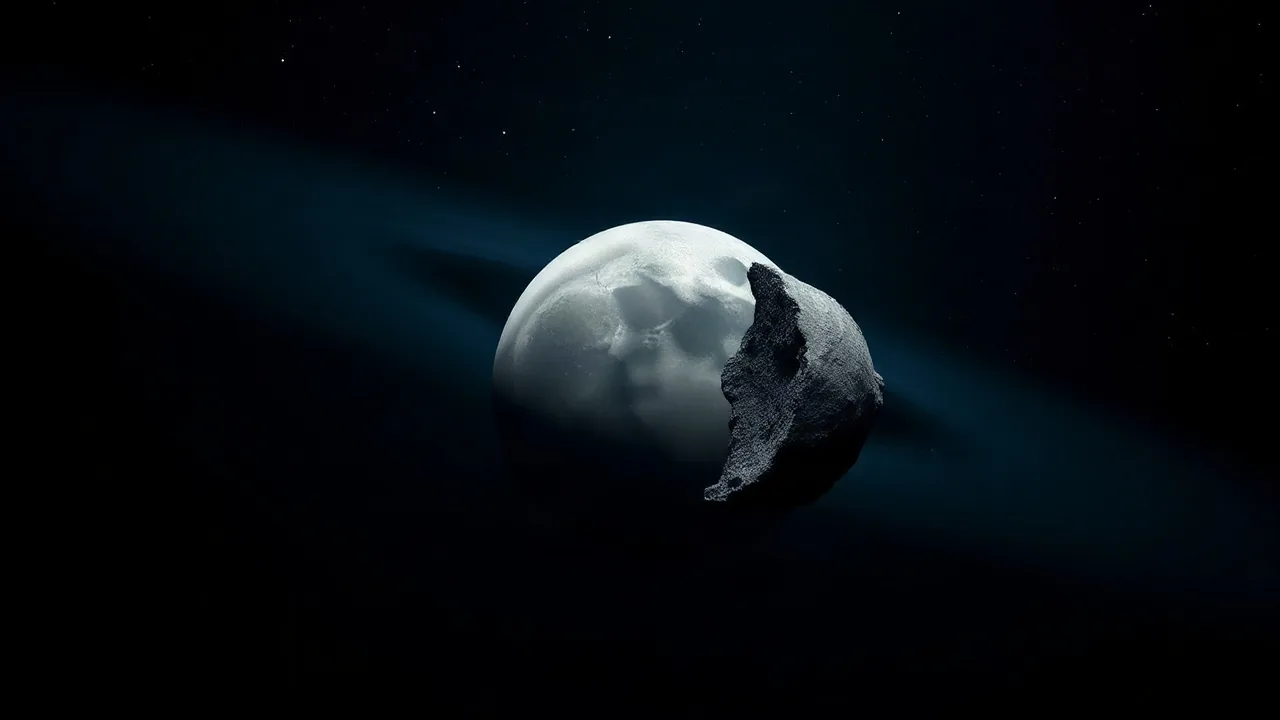
Billions of years ago, Venus, often called Earth's twin, may have had a moon that the planet subsequently devoured. This provocative theory, detailed in a new astrophysics study, proposes that Venus's unusually slow and retrograde rotation played a critical role in this celestial event. The research suggests that gravitational interactions between Venus and its moon, coupled with the planet's peculiar spin, could have led to the moon spiraling inward and being absorbed by Venus.
Scientists have long been fascinated by Venus's rotational characteristics. Unlike most planets in our solar system, Venus spins backward compared to its orbit and at an incredibly slow pace, taking 243 Earth days to complete just one rotation. This sluggish spin has made understanding its history and potential for moons a complex puzzle.
Understanding the mechanics of a moon's demise
The study, published in a leading astrophysics journal, utilized complex simulations to model the orbital dynamics of a hypothetical moon around a slowly rotating Venus. The findings indicate that the tidal forces exerted by Venus on its moon would have been significantly influenced by the planet's rotational speed. In a rapidly rotating system, these forces might stabilize a moon's orbit. However, on Venus, the slow rotation could have destabilized its moon's orbit over eons, causing it to gradually approach the planet. Eventually, the moon would have succumbed to Venus's gravitational pull, either crashing into the planet or being torn apart and incorporated into its atmosphere and surface.
Dr. Evelyn Reed, a lead author of the study, stated, "Our models show a plausible scenario where a moon could be captured and then ultimately consumed by a planet with Venus's unique rotational properties. This isn't just about Venus; it offers insights into the diverse evolutionary paths planetary bodies can take." This discovery challenges previous assumptions about moon formation and retention in planetary systems.
The existence of a moon around Venus in its early history is not entirely without precedent. Some theories suggest that early Venus, potentially more hospitable than its current inferno-like state, could have formed or captured a moon. However, the mechanism for its disappearance has remained a mystery. This new research provides a compelling explanation rooted in the planet's distinct rotational dynamics.
The implications of this study extend beyond Venus. It suggests that planetary rotation is a more critical factor in the long-term stability of moons than previously understood. For astronomers searching for exoplanets and their moons, understanding these dynamics could refine the search criteria for potentially habitable worlds. A planet's spin could dictate whether it holds onto celestial companions, influencing tidal heating, atmospheric evolution, and the very conditions that might support life.
Further research will focus on refining the models and searching for any geological or atmospheric evidence on Venus that might corroborate the theory of a consumed moon. While direct evidence is elusive, the scientific community is abuzz with the possibilities this study unlocks about the ancient history of our solar system's second planet.