
Strawberry Moon Peaks June 29: What to Expect From Lowest Full Moon
June's full Strawberry Moon, the lowest-hanging full moon of 2026, reaches peak illumination on June 29. Skywatchers can anticipate a golden hue and potential moon illusion.

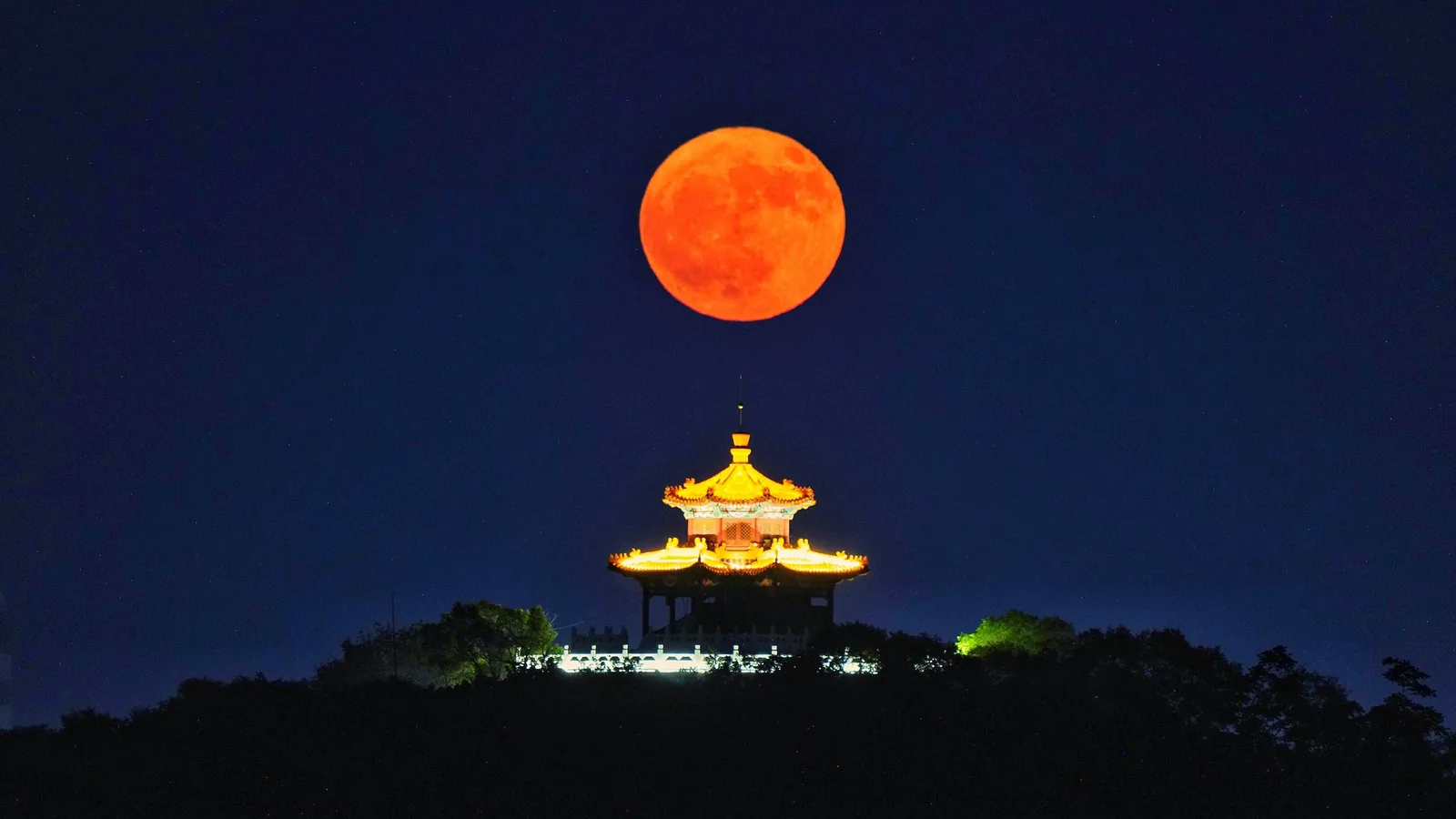
The final full moon of spring, known as the Strawberry Moon, will reach its peak illumination on the evening of June 29, 2026. Occurring at 7:57 p.m. EDT (2357 GMT), this celestial event will see the moon appear fully illuminated as it sits opposite the sun in Earth's sky. While the exact moment of fullness is precisely timed, the moon will maintain a bright and round appearance for a night or two before and after the peak. This particular full moon holds the distinction of being the lowest-hanging full moon of the year. This phenomenon is tied to its proximity to the summer solstice, the longest day of the year, when the sun reaches its highest point in the daytime sky. As a full moon always resides on the opposite side of the sky from the sun, it traces the inverse path, resulting in its unusually low arc across the heavens.
Skygazers hoping to witness the Strawberry Moon should look towards the eastern horizon shortly after sunset. The moon will ascend into the evening sky, emerging among the stars of the constellation Sagittarius. The name "Strawberry Moon" originates from indigenous North American tribes who associated this full moon with the brief strawberry harvesting season. Other historical names for June's full moon include the Rose Moon, Hot Moon, and Mead Moon, according to astronomical data sources. Despite its evocative name, the Strawberry Moon will not appear pink. Instead, it may take on a warm golden or orange hue as it rises above the horizon. This color shift occurs because moonlight travels through a denser portion of Earth's atmosphere when the moon is low in the sky. The atmosphere scatters shorter wavelengths of light, allowing warmer colors to become more prominent.
Observing the Strawberry Moon's Appearance
Additionally, observers might perceive the moon as unusually large when it is near the horizon. This is a well-documented optical illusion, often referred to as the "moon illusion." It's a trick of perception where the moon appears magnified when viewed in proximity to terrestrial objects, such as trees or buildings. The relative size of the moon compared to these foreground elements tricks the brain into seeing it as larger than it is when viewed high in the open sky. The unique positioning of the Strawberry Moon this year, coinciding with the summer solstice, makes its low trajectory a notable astronomical event for 2026. This lunar phase offers a fantastic opportunity for both casual observers and dedicated astronomers to appreciate the night sky. For those seeking to enhance their viewing experience, specialized equipment can make a significant difference. Understanding the astronomy behind these phenomena adds another layer of appreciation to the visual spectacle. The moon's apparent size and color variations provide a dynamic and engaging display. This event reminds us of the predictable yet ever-changing nature of our solar system and the visual wonders it offers. Future lunar events will continue to provide opportunities for observation and learning.