
SpaceX Starship: NASA's Key Partner for Lunar Missions
SpaceX's Starship vehicle has emerged as NASA's primary lunar lander for Artemis missions, marking a pivotal shift in how America returns astronauts to the Moon. The fully reusable rocket represents a fundamental change in space travel economics and capability.

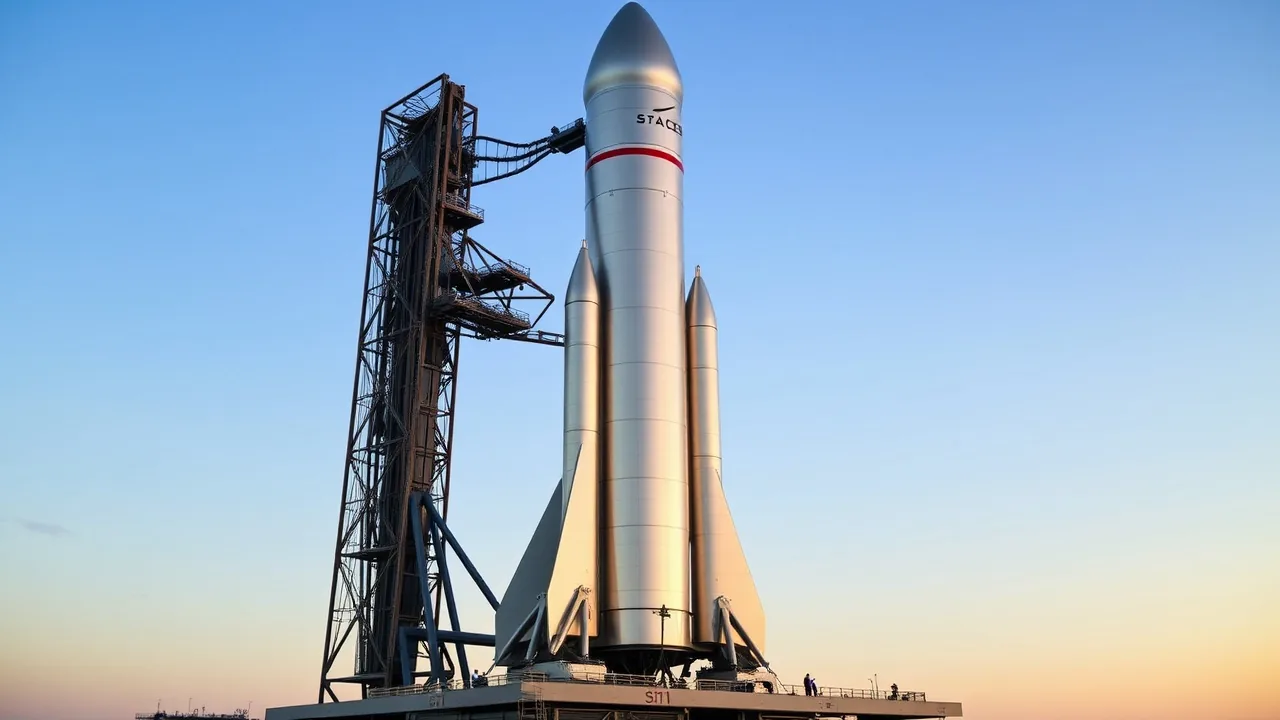
In July 2026, SpaceX's Starship system stands at the center of NASA's plan to land astronauts on the Moon within the next two years. The vehicle, which has completed multiple integrated flight tests in 2025 and 2026, is being actively prepared for the crewed Artemis missions that will mark humanity's return to lunar exploration after a 50-year hiatus.
Starship is a fully reusable super-heavy launch system designed to carry up to 100 metric tons to low Earth orbit. Unlike traditional expendable rockets, both the booster and the upper stage (called the Ship) are engineered to land themselves, drastically reducing the cost per mission. This fundamental economics shift is what makes sustained lunar missions feasible at scale.
NASA selected SpaceX as the primary contractor for its Human Landing System in 2021, a decision that has only strengthened as the Starship design matured. The space agency has invested billions in ensuring Starship can reliably deliver astronauts to the lunar surface as part of the broader Artemis campaign.
Technical Capabilities and Recent Progress
The Starship vehicle stands approximately 400 feet tall when stacked with its booster. Its cargo capacity and reusability make it fundamentally different from the Apollo-era Saturn V rocket, which was discarded after each launch. Modern aerospace technology has enabled engineers to design a vehicle that can perform powered vertical landings on the Moon, a capability critical for sustained exploration.
Through 2026, SpaceX has conducted five integrated flight tests of the Starship stack. Each successive test has demonstrated incremental improvements in engine performance, structural integrity, and landing precision. The booster has successfully executed multiple boostback maneuvers, while the Ship has achieved controlled descents at increasingly higher altitudes.
According to SpaceX's development roadmap disclosed in early 2026, the company is now focused on rapid turnaround reflight capabilities. "The goal is to launch Starship multiple times a week within the next 12 to 18 months," said Elon Musk during a June 2026 earnings call. This manufacturing and operational scaling is essential for supporting NASA's crewed missions alongside other commercial payloads.
The current version includes refinements to the heat shield, raptor engine cluster, and pneumatic systems. These upgrades emerged directly from test data analysis and engineering teams working in close coordination with NASA personnel stationed at SpaceX's Starbase facility in Boca Chica, Texas.
Role in the Artemis Program and Moon Exploration Strategy
NASA's Artemis program aims to land astronauts on the lunar south pole region, where permanent ice deposits offer water resources for fuel production and drinking water. The Starship HLS (Human Landing System) variant will dock with the Orion spacecraft in lunar orbit, then separate and descend to the surface with crew and cargo.
The lunar mission architecture involves several key elements:
- Launch from Earth on a Space Launch System (SLS) rocket carrying the Orion capsule with astronauts
- Separate Starship launches to pre-position fuel and cargo via orbital refueling
- Rendezvous and docking of Orion with Starship in lunar orbit
- Crewed descent to the lunar surface for up to 30 days of surface operations
- Ascent stage launch and return to Orion for the journey home
This refueling strategy in Earth orbit and potentially in lunar orbit represents a major operational shift. Private spaceflight providers and government agencies have not previously conducted this at scale. Successful demonstration of orbital refueling is critical; without it, SpaceX Starship cannot deliver the payload mass needed for extended lunar operations.
Dr. Sarah Chen, aerospace systems engineer at the Lunar and Planetary Institute, stated in a May 2026 interview: "Starship's payload capacity changes the equation for sustainability on the Moon. We can now think about establishing research outposts and resource extraction in ways that were simply unaffordable with previous architecture."
NASA has allocated over 2.3 billion dollars to SpaceX across multiple contract modifications through 2026, with additional funding tied to mission milestones. The agency also contracts with Blue Origin's Blue Moon program as a secondary crew lander to preserve redundancy and competition in the industrial base.
Commercial and Beyond-Earth Applications
While Artemis missions dominate headlines, SpaceX is simultaneously developing Starship for other applications. The company has signed commercial contracts with multiple space agencies and private entities to use Starship for cargo delivery, orbital station resupply, and point-to-point human transportation on Earth.
The vehicle's large payload bay and long-duration capability also make it suitable for deep space missions. NASA has considered using Starship variants for Mars cargo delivery as part of future human exploration planning. These applications underscore why perfecting the Starship platform now is critical infrastructure investment for decades of space activity.
The economic model underlying Starship's development assumes high flight rates and rapid reusability. If SpaceX achieves its stated goal of launching multiple times per week, the cost per kilogram to orbit could fall by an order of magnitude compared to current rates. This economic transformation would fundamentally reshape what is possible in space exploration and commercialization.
As of July 2026, Starship remains on schedule for its first crewed Artemis lunar landing mission in 2028. The vehicle's success or delay will directly determine whether the United States meets its stated goal of sustained human presence on the Moon and whether commercial space ventures can scale to support activities beyond Earth orbit at truly sustainable costs.