
SpaceX Rocket's Lunar Collision: What to Expect from Moon Impact
A discarded SpaceX rocket stage is set to collide with the Moon on Wednesday, creating a new crater. The event offers scientists a unique opportunity to study debris impact and lunar geology.

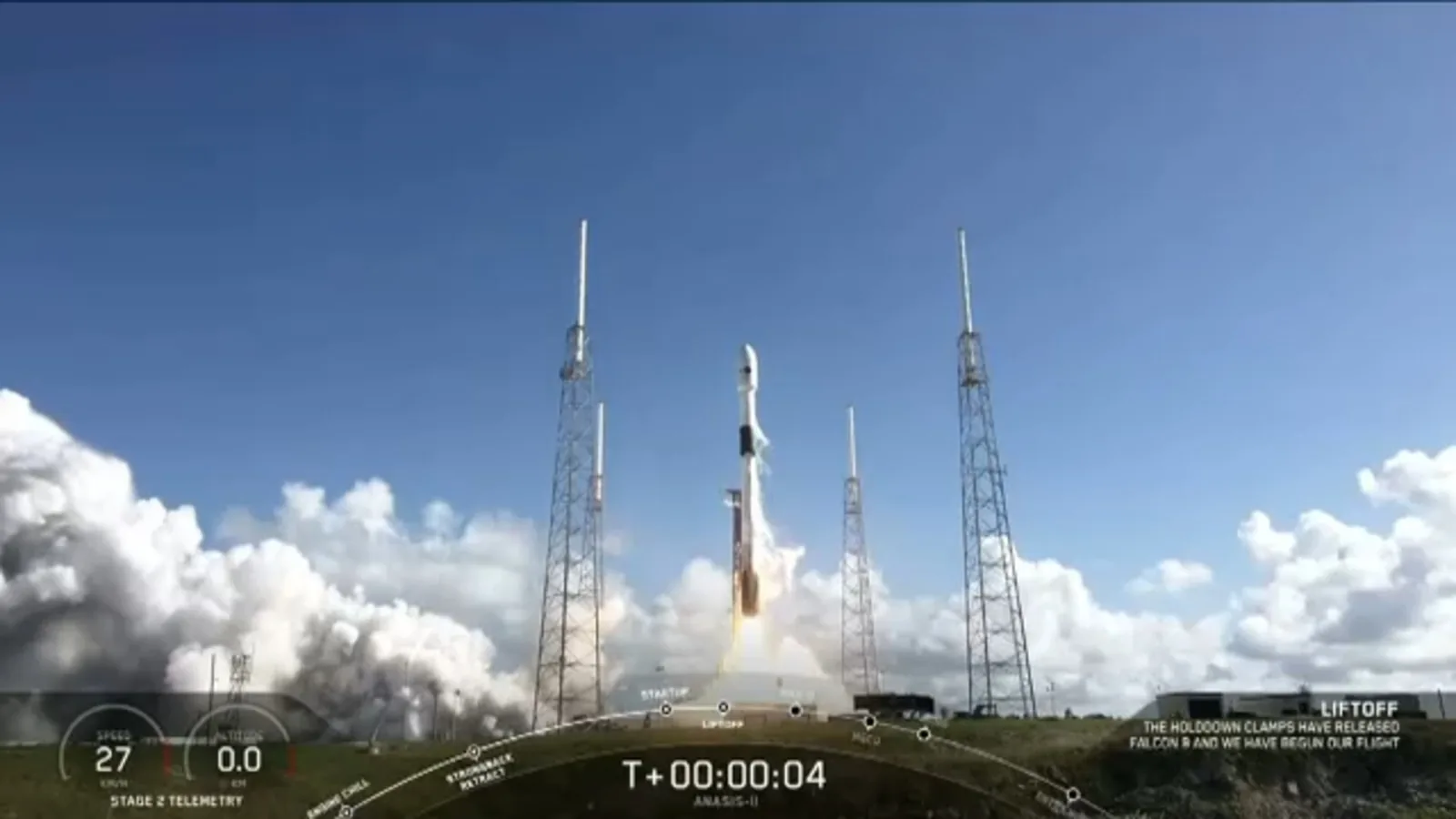
A defunct SpaceX rocket's upper stage is on an unavoidable collision course with the Moon, with impact expected on Wednesday. The incident, a year after the rocket launched lunar landers, will carve out a new crater and eject a plume of lunar dust and debris. Space tracking expert Bill Gray forecasts the impact at approximately 5,400 mph, near Einstein Crater on the Moon's western side. This event provides a rare chance for scientists and skygazers to observe the effects of a high-speed human-made object striking the lunar surface.
While this particular piece of space junk is not considered a significant threat, its impending collision highlights a growing concern about orbital debris. "Things are getting crowded up there," Gray commented, underscoring the need for better space traffic management. The upper stage's trajectory was not intentional; experts suggest it could have been nudged into a solar orbit to prevent the lunar impact. This marks the second known instance of a discarded rocket crashing onto the Moon, following a Chinese rocket segment that created two craters on the far side in 2022.
Observing the Lunar Impact
Fortunately, this upcoming crash will occur on the Moon's near side, making it more accessible for observation. The impact's energy is comparable to that of three tons of TNT. Although the immediate impact flash is predicted to be too brief and dim for direct visual observation from Earth, the resulting stream of ejected material could extend for miles and remain visible to telescopes for extended periods. "The gravity on the moon is low and there is no wind to blow the dust away," explained Benjamin Fernando of Los Alamos National Laboratory. "Part of the reason for our interest in this event is to figure out how much of a hazard debris impacts pose to future astronauts." Fernando anticipates the creation of a crater roughly 90 feet wide and 16 feet deep, too small to be seen from Earth but potentially observable by lunar orbiters.
NASA's Lunar Reconnaissance Orbiter and South Korea's Danuri lunar orbiter are positioned to capture pre- and post-impact imagery of the crash site. Danuri is scheduled to pass within a few miles of the impact zone just minutes before the collision. The abandoned rocket segment, measuring approximately 40 feet long and weighing around 10,000 pounds, was responsible for carrying two private lunar landers into space on January 15, 2025. One of these landers, Firefly Aerospace's Blue Ghost, successfully touched down on the Moon, marking a significant achievement for private spaceflight. The other, an ispace lander from Japan, unfortunately, did not survive its landing attempt.
Scientists emphasize that observing such well-tracked human-made impacts is invaluable, particularly as the Moon becomes a more frequented destination. Unlike natural meteoroid strikes, which offer little to no warning, this event provides a controlled study opportunity. Historically, NASA itself has intentionally impacted lunar modules and rocket sections on the Moon for scientific purposes, including seismic measurements during the Apollo era and a search for ice near the south pole with the LCROSS spacecraft in 2009. With both the United States and China aiming to land astronauts on the Moon in the coming years, and companies like SpaceX and Blue Origin competing to provide lunar landers for NASA's Artemis IV mission, the importance of improved debris monitoring and traffic control is paramount. "This impact will not be a problem," stated retired astrophysicist Jonathan McDowell. "But in a future where there are long-term bases on the moon, similar impacts would be an issue and we need not to leave rocket stages in chaotic orbits of this kind."