
SpaceX Achieves Record-Breaking NASA Mission Duration
SpaceX's Crew-13 mission has set a new NASA record for the longest continuous operation by a U.S. spacecraft. The milestone highlights the reliability and longevity of the company's Dragon capsule.

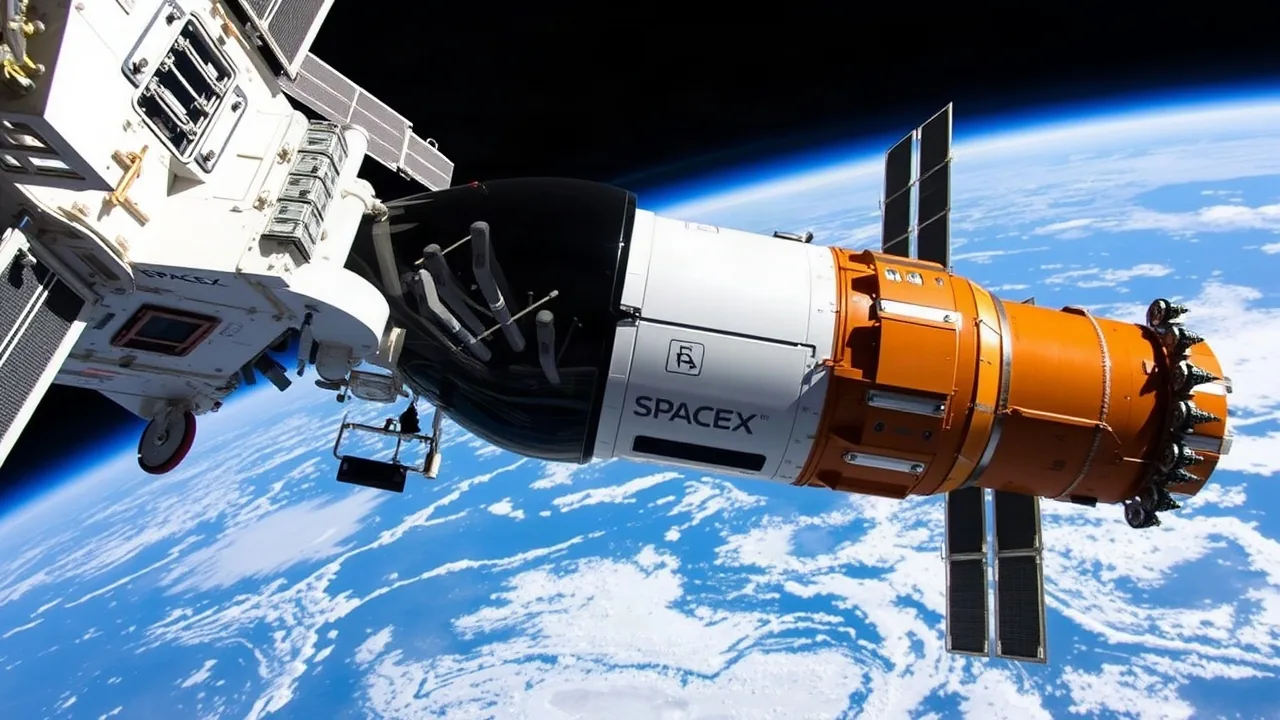
SpaceX has achieved a significant milestone, with its Crew-13 mission logging the longest duration of any U.S.-manufactured spacecraft in orbit, surpassing previous records for sustained operation. The mission, commanded by astronaut Jessica Watkins, successfully launched and docked with the International Space Station (ISS) earlier this year, marking a new era for American spaceflight longevity.
The Crew Dragon capsule, a cornerstone of NASA's Commercial Crew Program, has demonstrated exceptional reliability and endurance, enabling extended stays for astronauts aboard the ISS. This record underscores the technological advancements SpaceX has brought to human spaceflight, moving beyond the Apollo and Space Shuttle eras. The specific duration record, while continuously updated, signifies a substantial leap in mission capability for spacecraft designed for long-duration missions.
Record Endurance in Orbit
The previous record was held by a venerable U.S. spacecraft, but the Crew Dragon's sustained performance on the Crew-13 mission has now redefined what is possible for orbital endurance. This achievement is not just a statistical win; it represents a crucial capability for future deep-space exploration and prolonged scientific research on the ISS. The ability of U.S. spacecraft to remain operational and reliable for extended periods is vital for NASA's ambitious plans, including potential missions to the Moon and Mars.
Jessica Watkins, a Stanford alumna commanding the mission, expressed pride in the crew's performance and the spacecraft's capabilities. "This mission is a testament to the dedication of thousands of people at NASA and SpaceX who have worked tirelessly to make long-duration spaceflight safe and routine," Watkins stated. "We are pushing the boundaries of what humans can achieve in space, and this spacecraft is enabling us to do just that."
The longevity of the Crew Dragon capsule is attributed to its robust design, advanced life support systems, and the meticulous maintenance and operational strategies employed by SpaceX and NASA flight controllers. This success comes as SpaceX continues to expand its launch cadence, further solidifying its role as a critical partner for NASA's human spaceflight endeavors. The company's Falcon 9 rocket, which provides the launch vehicle for the Crew Dragon, has also achieved a remarkable flight record, underscoring the integrated success of SpaceX's spaceflight systems.
This record-breaking mission is more than just a point of pride; it directly impacts NASA's scientific objectives. Longer mission durations allow astronauts to conduct more comprehensive experiments, observe long-term effects of space on the human body, and undertake complex research that requires sustained periods in microgravity. The data gathered during these extended stays is invaluable for both scientific understanding and the development of technologies needed for future human voyages beyond Earth orbit. The success of SpaceX's long-duration missions sets a new benchmark for the entire aerospace industry.