
Spacecraft Witnessed August 12 Total Solar Eclipse
Space agencies and astronauts captured stunning views of the August 12 total solar eclipse from orbit, showcasing the moon's shadow on Earth and the sun's atmosphere.

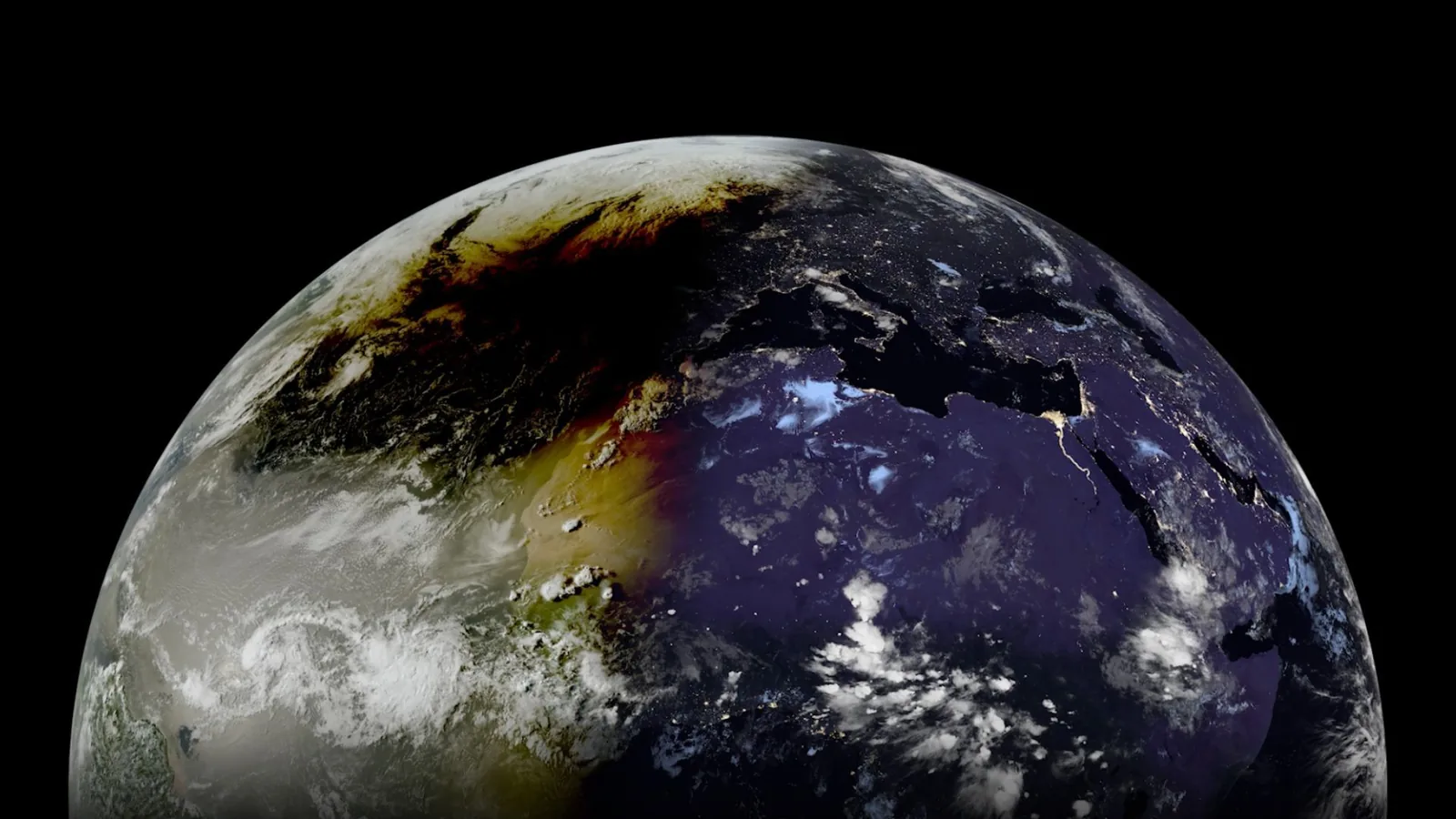
Millions on Earth witnessed the dramatic spectacle of the total solar eclipse on August 12, but orbiting spacecraft also captured breathtaking perspectives of the celestial event. From the International Space Station to specialized European Space Agency (ESA) satellites, a fleet of instruments provided unique views of the moon obscuring the sun and its shadow traversing the planet.
NASA astronaut Jessica Meir shared images from the International Space Station (ISS) showing a partial eclipse, noting about 18% sun coverage from her vantage point. "Given the location of the @Space_Station at the time of the total solar eclipse today, we saw only a partial eclipse, with a peak of around 18% sun coverage," Meir posted on X. Simultaneously, photographer Joel Kowsky captured a striking image of the ISS transiting the face of the sun during the eclipse from Hodgdon, Maine.
Advanced Spacecraft Observe Solar Phenomenon
The ESA's Proba-3 mission, comprising two spacecraft flying in precise formation, offered an even more specialized view. The mission's "Occulter" spacecraft, positioned closest to the sun, utilized a large sunshield to block the sun's disk. This allowed the trailing spacecraft to image the sun's faint outer atmosphere, or corona, in exceptional detail. For a brief period on August 12, the Proba-3 formation effectively created a double eclipse, with both the moon and the spacecraft's coronagraph simultaneously hiding the sun.
The phenomenon of the moon's shadow falling upon Earth was also vividly captured. ESA's Meteosat Third Generation Imager Satellite (MGT-I1), positioned approximately 22,370 miles above the planet, documented the moon's shadow as it swept across the globe, merging with the terminator line that marks the transition from day to night. The U.S. National Oceanic and Atmospheric Administration's GOES-19 satellite, also in geostationary orbit, provided further crucial observations of the shadow's path over Earth.
These observations from space highlight the multifaceted nature of solar eclipses. While ground-based viewers experience the awe of the moon progressively covering the sun, orbital perspectives reveal the vast scale of the phenomenon, including the moon's shadow as a tangible darkness on our planet. Such events offer invaluable opportunities for scientific observation, allowing researchers to study the sun's corona and atmospheric effects with instruments like those on the Proba-3 mission and geostationary satellites. The data gathered contributes to our ongoing understanding of solar activity and its influence on Earth.