
Perseids Meteor Shower & Solar Eclipse Light Up August Sky
A partial solar eclipse will be visible across parts of the U.S. on August 12, followed by the peak of the annual Perseids meteor shower. The new moon phase promises dark skies for optimal viewing.

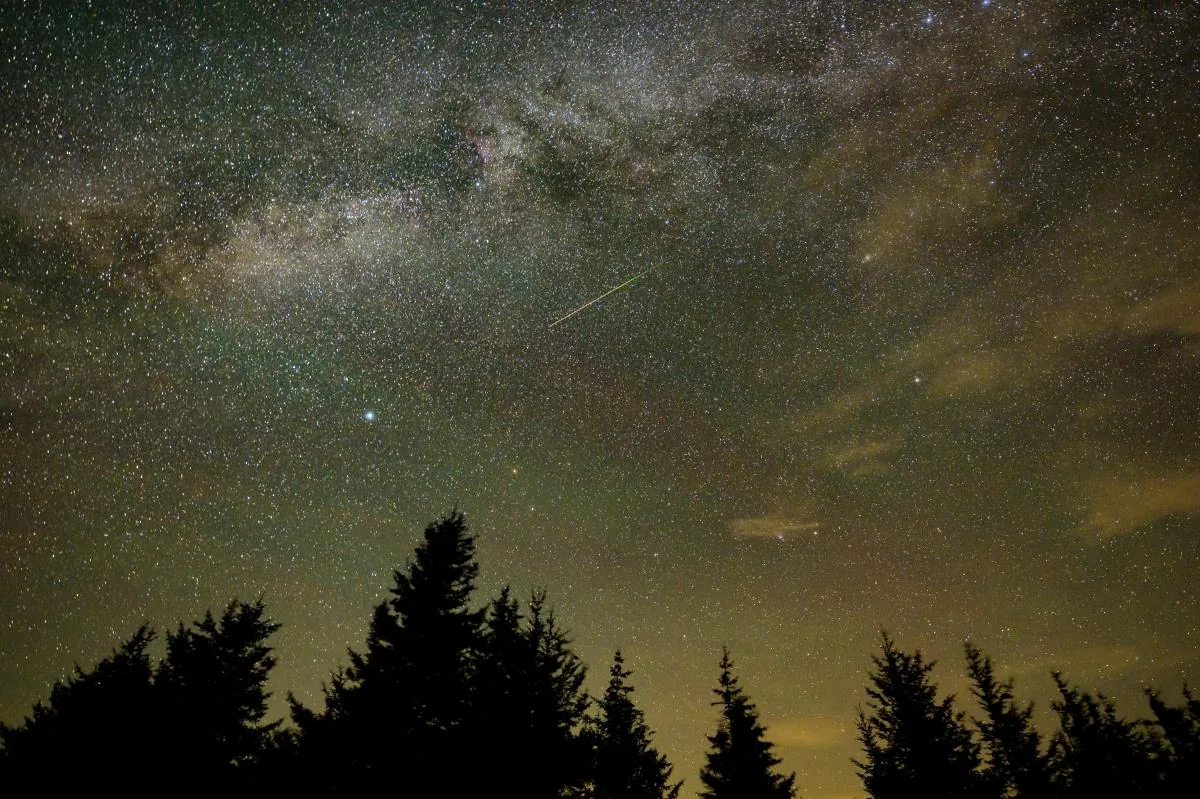
A celestial double-feature is set to captivate skywatchers across the United States on August 12 and into the early morning of August 13. A partial solar eclipse will offer a glimpse of the moon briefly obscuring the sun, followed by the peak of the famed Perseids meteor shower. This alignment promises dark viewing conditions thanks to the new moon phase occurring on August 12.
The solar eclipse, described by NASA as taking a "small bite out of the Sun," will be visible with varying degrees of coverage from North Carolina to Alaska. While not a total eclipse for any U.S. location, the event sets the stage for the astronomical spectacle to follow. The Perseids meteor shower, renowned for its consistent brilliance and frequent "fireballs," will reach its zenith on the evening of August 12 and into the pre-dawn hours of August 13.
Peak Viewing Conditions Expected
Earth's annual journey through the debris trail left by Comet Swift-Tuttle is responsible for the Perseids. As minuscule particles from the comet enter Earth's atmosphere at tremendous speeds, they ignite, creating the brilliant streaks of light we know as meteors. Astronomers anticipate observing between 50 to 100 meteors per hour during the shower's peak, making it one of the most prolific annual celestial events, alongside the frequent appearance of exceptionally bright meteors known as fireballs.
Fireballs, often mistaken for shooting stars, are meteors that outshine even the planet Venus. Their intense luminosity is attributed to larger fragments of cometary or asteroidal material impacting our atmosphere at high velocities. The new moon on August 12 is a crucial element for optimal viewing, providing the exceptionally dark skies necessary to distinguish these faint streaks of light against the cosmos. Without significant moonlight interference, observers are more likely to witness the full extent of the meteor shower's activity.
According to NASA guidance, observers should direct their gaze towards the northeast. The meteors appear to radiate from the vicinity of the Perseus constellation, though they can manifest anywhere in the sky. While the meteor shower's path of totality will be observable over Greenland, Iceland, and Spain, the Perseids themselves will be visible across a much wider geographical area, including much of North America.
This convergence of a solar eclipse and a major meteor shower offers a unique opportunity for both casual observers and dedicated stargazers. The preceding solar event primes the atmosphere with a sense of celestial wonder, immediately followed by the dazzling display of the Perseids. For those equipped with telescopes or binoculars, enhanced views of the night sky's phenomena are possible, though the meteors themselves are best appreciated with the naked eye to capture their expansive presence.