
Partial Solar Eclipse Viewable Across U.S. Aug. 12
A partial solar eclipse will be visible across most of the United States on August 12, 2026. Viewers from Alaska to North Carolina can expect to see the moon partially obscure the sun, with coverage varying by location.

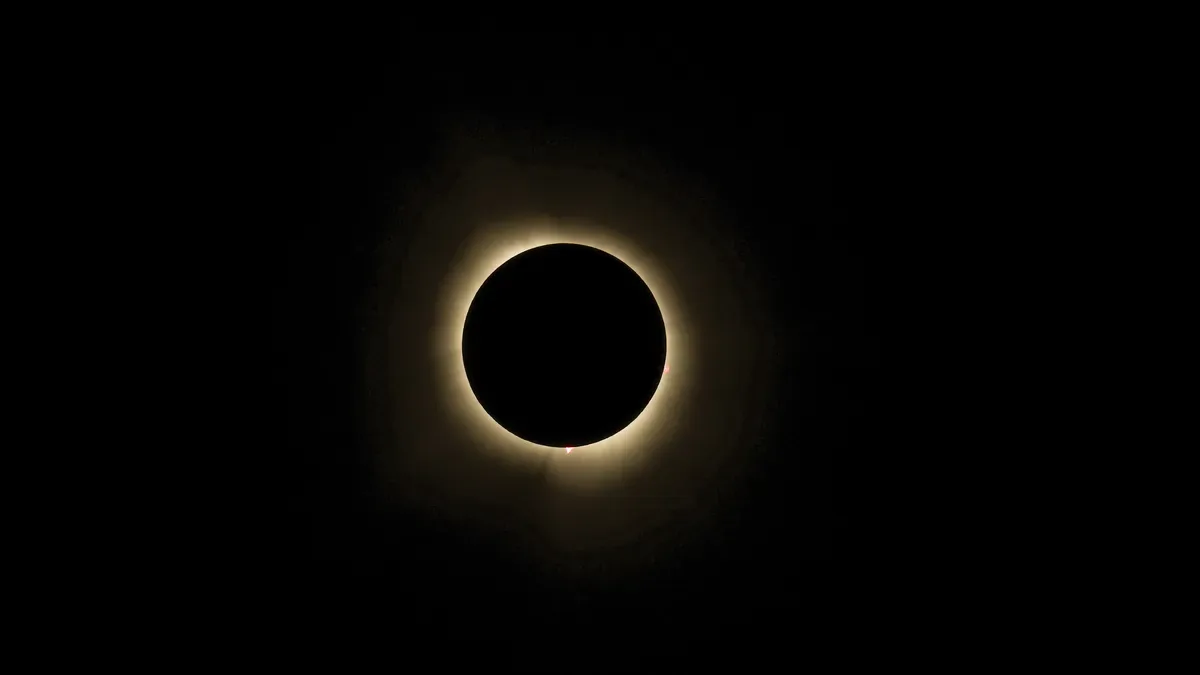
A partial solar eclipse is set to grace the skies on August 12, 2026, offering a celestial spectacle for viewers across a wide swath of the United States. While not a total eclipse for U.S. observers, the event will allow a significant portion of the sun to be obscured by the moon, providing a notable astronomical display from Alaska down to North Carolina. Residents in Washington, D.C., will also have a chance to witness the phenomenon.
The timing and intensity of the eclipse will vary depending on geographical location. In Alaska, the event will begin in the morning hours, while those in the contiguous U.S. can expect to see the partial eclipse unfold between midday and mid-afternoon. NASA guidance indicates that for most viewers, the maximum coverage of the sun by the moon will last less than two minutes.
Understanding Eclipse Safety and Viewing
A solar eclipse occurs when the moon passes directly between the sun and Earth, casting a shadow. The path where the moon completely blocks the sun is known as the path of totality. However, for the August 12 event, most of the U.S. will experience a partial eclipse, meaning the moon will only cover a fraction of the sun’s surface.
NASA strongly advises using certified solar viewing glasses, also known as eclipse glasses, or other specialized solar filters when observing any part of the sun during an eclipse. Direct, unfiltered viewing, even of a partial eclipse, can cause severe and permanent eye damage. The only exception is during the brief moments of totality in a total solar eclipse, when the moon fully covers the sun's bright face. For this upcoming partial eclipse, eye protection is essential throughout the viewing period.
Alternatively, viewers can construct a simple pinhole projector using common household items such as a cardboard box, aluminum foil, and tape. This method projects an image of the sun onto a surface, allowing safe observation without looking directly at the sun.
Scientists measure the extent of an eclipse by the percentage of the sun's area that is covered. For the August 12 eclipse, significant coverage is anticipated in several U.S. cities. Fairbanks, Alaska, is projected to see approximately 37% coverage, with Anchorage, Alaska, at 28% and Bangor, Maine, at 24%. Other cities offering views include Portland, Maine (19%), Juneau, Alaska (17%), Boston, Massachusetts (16%), New York City (9%), Philadelphia (7%), Washington, D.C. (4%), and Detroit, Michigan (3%).
The specific visibility times are also location-dependent. In Fairbanks, Alaska, the eclipse will be visible from approximately 7:37 a.m. to 9:18 a.m. local time, with maximum coverage occurring around 8:27 a.m. Meanwhile, in Boston, Massachusetts, viewing will take place from roughly 1:01 p.m. to 2:46 p.m. ET, with peak coverage at 1:55 p.m. Similar timeframes and coverage percentages are available for other listed cities, enabling skywatchers to plan their observation.
For those unable to witness the eclipse firsthand, NASA will provide a live broadcast. The stream is scheduled to begin at 1:15 p.m. ET on August 12 and will be available on multiple platforms, including Amazon Prime, Facebook, Instagram, NASA+, Twitch, X, and YouTube. This ensures that the partial solar eclipse can be experienced by a global audience, even those outside the direct viewing path.