
Partial Lunar Eclipse Dazzles Stargazers Across US Skies
Stargazers in the US and beyond witnessed a partial lunar eclipse overnight, a celestial event where the moon passed into Earth's shadow, casting an eerie red glow.

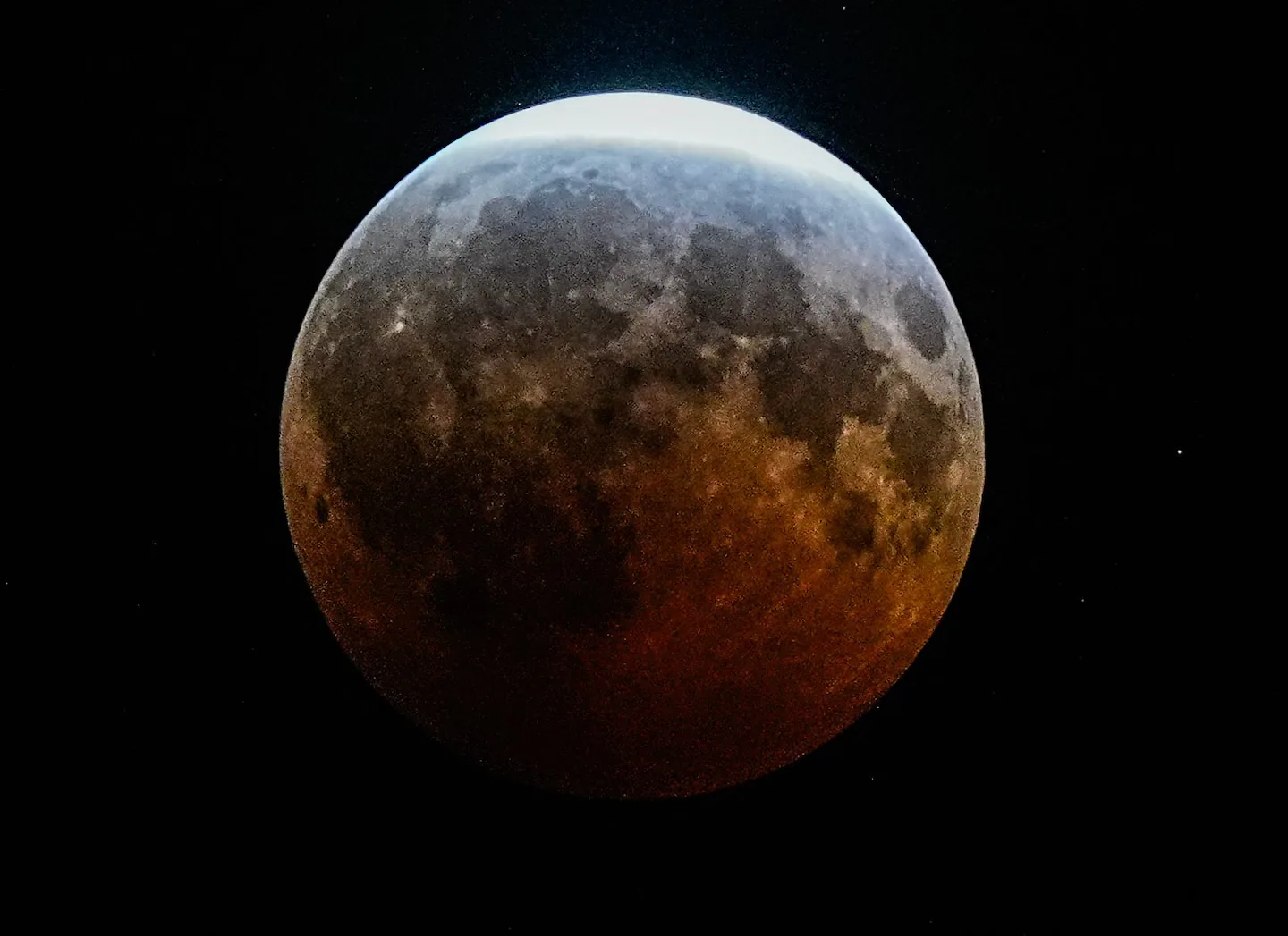
Millions of skywatchers across North America and other parts of the globe were treated to a captivating celestial display overnight as a partial lunar eclipse unfolded, painting the moon with a dramatic, reddish hue. The event, which began in the late evening hours of August 27th and peaked in the early morning of August 28th, saw the Earth's shadow gradually obscure a portion of the lunar surface.
At its peak, the eclipse bathed the moon in an ethereal red light, a phenomenon often referred to as a "blood moon." This striking color occurs because Earth's atmosphere filters and refracts sunlight, scattering shorter blue wavelengths while allowing longer red wavelengths to pass through and illuminate the moon. The exact shade of red can vary depending on the atmospheric conditions on Earth at the time of the eclipse.
Atmospheric Conditions Influence the View
Astronomers noted that the visibility and intensity of the red color were influenced by the transparency of the Earth's atmosphere. Dust or clouds in the atmosphere can lead to a darker, more subdued eclipse, while clearer conditions can result in a brighter, more vibrant red. For those in regions with clear skies, the spectacle offered a memorable glimpse into the mechanics of our solar system. The partial nature of the eclipse meant that only a section of the moon entered the darkest part of Earth's shadow, known as the umbra, resulting in a visible 'bite' taken out of the lunar disc.
The phenomenon is a regular occurrence in the astronomical calendar, with partial lunar eclipses happening more frequently than total ones. However, each eclipse offers a unique visual experience. This particular event was widely anticipated and shared across social media platforms, with amateur astronomers and casual observers alike posting photos and observations. The lunar eclipse provided an accessible opportunity for many to connect with a significant astronomical event without requiring specialized equipment, though telescopes and binoculars undoubtedly enhanced the viewing experience.
In addition to the visual spectacle, the eclipse served as a reminder of Earth's place in the cosmos and the predictable, yet awe-inspiring, movements of celestial bodies. Such events have captivated human imagination for millennia, influencing cultures, mythologies, and scientific inquiry. Understanding eclipses is fundamental to astrophysics and has contributed to our knowledge of orbital mechanics and the composition of planetary atmospheres.
While the most dramatic phase of the eclipse has passed, skywatchers can look forward to future astronomical events. The frequency of lunar eclipses is governed by the orbital paths of the Earth and Moon, and the alignment of the Sun, Earth, and Moon. The next significant lunar event anticipated by astronomers is a total lunar eclipse scheduled for early 2027, which promises an even more profound visual experience.