
Northern Lights Visible in 9 US States Friday Night
A forecast from NOAA indicates that the aurora borealis could be visible in up to nine U.S. states Friday night. Clear skies and low light pollution will offer the best viewing opportunities.

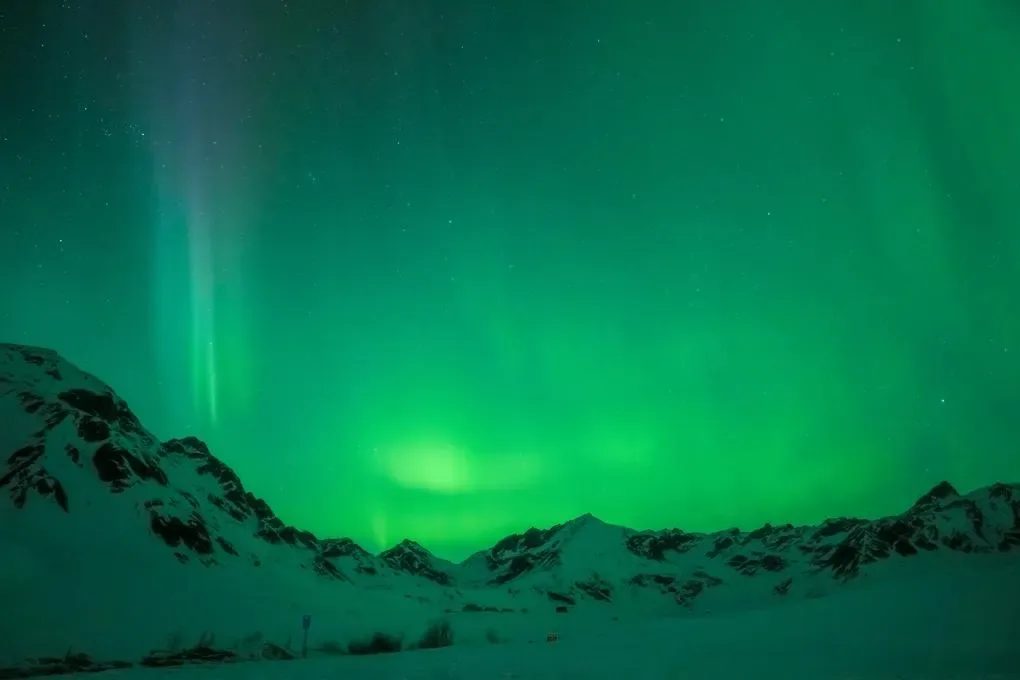
The aurora borealis, commonly known as the Northern Lights, may offer a celestial display in as many as nine U.S. states on Friday night. The National Oceanic and Atmospheric Administration (NOAA) has forecast mild auroral activity that could extend into lower latitudes than typically observed. Areas included in Friday night’s potential viewing zone span from the Pacific Northwest to the Great Lakes region.
States that could experience the aurora include northeastern Washington, the northern tip of Idaho, northeastern Montana, North Dakota, the northernmost stretches of South Dakota, northern Minnesota, the northern tip of Wisconsin, and the Upper Peninsula of Michigan. As always, Alaska is expected to have the most prominent chance of viewing the spectacular light show. The visibility of the aurora is dependent on a variety of factors, including clear skies and minimal light pollution.
Optimizing Your Aurora Viewing Experience
For those hoping to catch a glimpse of the aurora borealis, experts suggest that the hours between 10 p.m. and 2 a.m. local time often provide the best viewing conditions. High vantage points, such as hilltops or elevated terrain, and locations far from urban light pollution significantly increase the chances of a clear view. Many amateur astronomers and photographers plan trips to remote areas specifically for these events, often checking NOAA's space weather predictions.
Capturing the aurora on camera can be a rewarding experience. For smartphone users, it is crucial to avoid using the flash and to enable night mode if the device offers it. Advanced photographers can achieve better results using cameras with manual settings, focusing on low apertures, wide-angle lenses, and employing tripods to prevent camera shake during long exposures. These techniques help to gather enough light to showcase the aurora's subtle colors and movements.
The phenomenon of the Northern Lights is caused by charged particles originating from the sun interacting with Earth's magnetic field and upper atmosphere. These interactions excite atmospheric gases, causing them to emit light. While solar activity was high in 2024, reaching the peak of the sun's 11-year solar cycle and leading to a surge in auroral displays not seen in 500 years, activity is expected to gradually decrease as the cycle wanes. However, even during periods of lower solar activity, geomagnetic storms can still produce stunning auroral events.
Understanding the solar flares and space weather patterns is key to predicting these events. While the peak activity of the solar cycle has passed, the sun remains a dynamic source of energy, and occasional bursts can still trigger visible auroras at lower latitudes. The current forecast from National Oceanic and Atmospheric Administration highlights the ongoing potential for these displays, reminding enthusiasts to stay informed about space weather updates. The intricate dance of solar particles and Earth's atmosphere continues to provide breathtaking natural spectacles for those in the right place at the right time.