
New Jersey Fossil Site Reveals Secrets of Dinosaur Extinction
A New Jersey quarry, once a simple dirt pit, has become a crucial fossil site revealing details of the asteroid impact that ended the age of dinosaurs 66 million years ago.

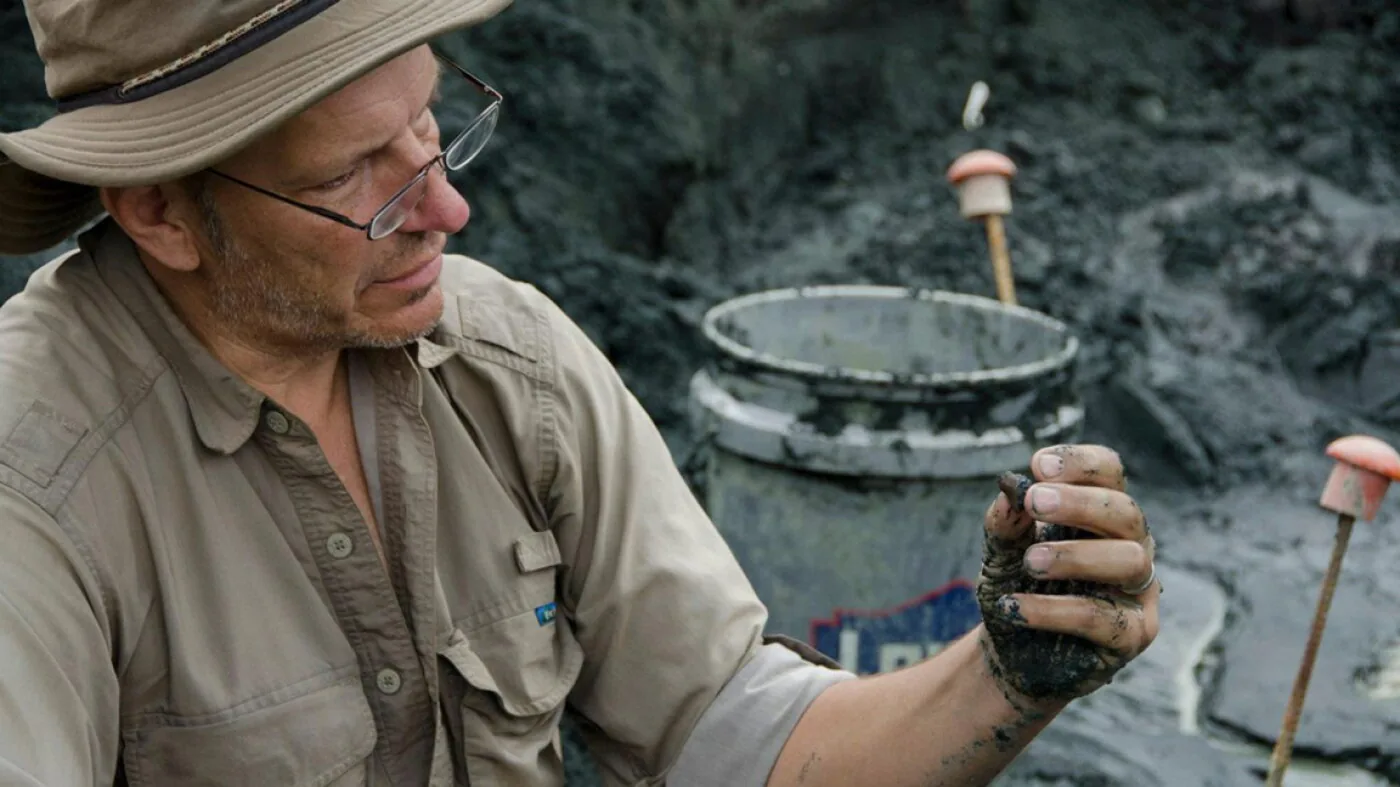
What began as a dirt pit behind a strip mall in Mantua Township, New Jersey, has transformed into the Edelman Fossil Park & Museum, a globally significant paleontological site offering unprecedented insights into the moments following the asteroid impact that triggered the 5th mass extinction 66 million years ago. Paleontologist Ken Lacovara, renowned for his discovery of the Dreadnoughtus dinosaur, now leads research at this unexpected location, which has yielded over 100,000 fossils and critical geological evidence.
Lacovara, who has conducted excavations in remote locations worldwide, initially viewed the New Jersey quarry as merely a convenient spot for university students to practice fossil digging. "And I was very, very wrong about that," he admitted. His perspective shifted as he realized the quarry's immense scientific value, particularly a distinct sediment layer that chronicles the immediate aftermath of the Chicxulub asteroid impact.
This layer, rich with iridium—an element commonly found in asteroids—provides a detailed record of Earth's catastrophic events. According to Lacovara, the asteroid strike near the Yucatan Peninsula generated a magnitude 10.3 earthquake across North America, followed by a second shockwave minutes later. Within an hour, global temperatures soared dramatically, creating conditions survivors likened to being between a "toaster oven and pizza oven." Smaller mammals, ancestors to modern humans, likely sought refuge underground, but the dominant dinosaurs, rulers of Earth for 165 million years, had no such escape, leading to their functional extinction within hours.
The devastation was compounded by a massive tsunami, estimated to be 130 feet high, that struck the North American coast. This wave swept dinosaur carcasses out to sea, where they eventually settled on the ocean floor, forming the bonebed that Lacovara's team now meticulously studies. "So this makes this the best window on the planet at that pivotal calamitous moment that wiped out the dinosaurs and really made the modern world as we know it," Lacovara stated.
A Window into Earth's History
The Edelman Fossil Park & Museum aims to educate the public about this pivotal moment in Earth's history, offering visitors a chance to learn about dinosaurs and even participate in fossil digs. Lacovara emphasized the park's unique combination of a world-class museum and an active excavation site. "There's no place like this," he said, highlighting its accessibility and educational potential for the local New Jersey community and beyond.
Beyond the excitement of discovering ancient life, Lacovara stresses the importance of drawing lessons from the dinosaur extinction event, particularly through a climate lens. He pointed out that all five previous mass extinctions were linked to climate crises. "This world really isn't all about us, and we can see now through the lens of deep time, through the lens of geology, that things can go off the rails," he explained. Comparing humanity's current impact to the asteroid's destructive force, he added, "we are now the asteroid of our age. But we don't have to be, and it's not too late to turn the tide."
The park actively promotes this message, providing visitors with resources on climate action and adopting the motto, "Discover the past, protect the future." This approach underscores the park's mission to connect paleontological discovery with contemporary environmental stewardship, making the lessons from dinosaur extinction directly relevant to current climate challenges.