
New 210-Million-Year-Old Dinosaur Unearthed in Zimbabwe
Paleontologists in Zimbabwe have discovered Musango matusadonaensis, a new dinosaur species that lived 210 million years ago. The find offers new insights into dinosaur diversification and prehistoric ecosystems in southern Africa.

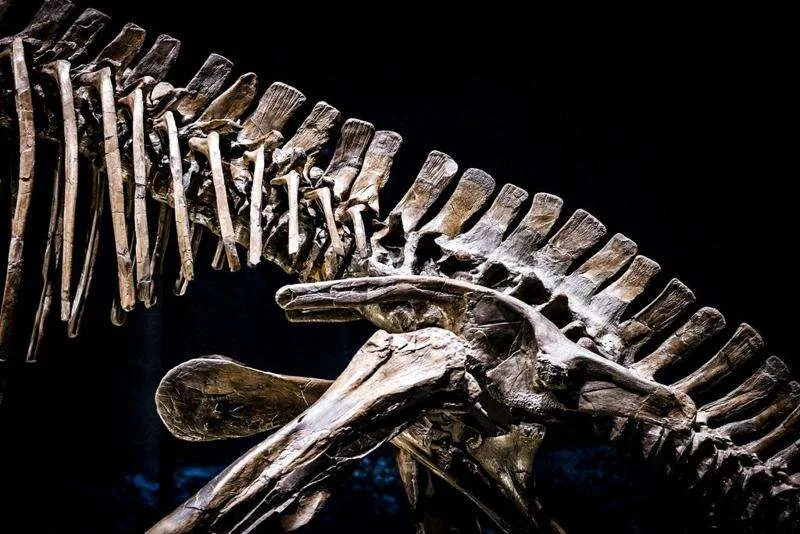
Scientists have announced the discovery of a new dinosaur species, Musango matusadonaensis, unearthed in Zimbabwe, providing significant new insights into how dinosaurs diversified and spread across southern Africa approximately 210 million years ago. The find is based on a remarkably complete skeleton excavated near Lake Kariba in northern Zimbabwe in 2018. This marks the fifth distinct dinosaur species identified within the country.
The creature roamed the Earth during the Late Triassic period, a critical time when dinosaurs were beginning their global expansion but had not yet become the planet's dominant land animals. Unlike the colossal, long-necked sauropods that would evolve millions of years later, Musango was a relatively lightly built dinosaur. It measured approximately 4.5 meters (15 feet) in length and is estimated to have weighed around 222 kilograms (490 pounds), comparable to the weight of a mature pig. The species name draws from the local Shona word "musango," meaning "living in the bush," reflecting its habitat.
The discovery challenges previous assumptions about dinosaur populations in the region. "Until recently, it was assumed that the dinosaurs living across southern Africa were largely the same," explained Paul Barrett, a researcher at the Natural History Museum in London and part of the international team behind the discovery. "The discovery suggests the region was instead made up of several distinct ecosystems, each home to different dinosaur species." Barrett added in a statement, "It suggests that what we’ve found so far is only the tip of the iceberg." The team's findings detailing this significant paleontology discovery were published in the Journal of Systematic Palaeontology.
New insights into dinosaur evolution
The fossil skeleton of Musango matusadonaensis is one of the most complete dinosaur specimens from its era found in Zimbabwe. Preserved bones include those from its spine, ribs, arms, legs, and feet, offering a detailed look at its anatomy. Researchers have estimated that Musango was approximately eight years old and near full growth when it died. Analysis of the bones also revealed evidence of a severe past injury or infection, indicating the animal had survived a significant health challenge during its life.
While the skull of Musango has not been recovered, paleontologists have inferred its likely diet. Based on skeletal structure and the fossil context, they believe it was likely a herbivore or an omnivore. Its diet probably consisted of plants found along riverbanks and streams, environments that would have supported such an animal during the Late Triassic.
This discovery adds to a growing body of work in Zimbabwe that is reshaping our understanding of prehistoric life on the continent. In 2022, scientists announced the identification of Africa's oldest known dinosaur, Mbiresaurus raathi, also found in Zimbabwe. That ancient creature lived around 230 million years ago and was significantly smaller, standing about one meter tall with a long tail, and weighing up to 30 kilograms. The contrasting sizes and potential ecological niches of these finds underscore the complex paleontology landscape of ancient Africa and highlight how much more there is to learn about the early diversification of dinosaurs.