
NASA 'Big Bang' Maneuver Extends Voyager 2 Power, Aims to Save Voyager 1
NASA successfully used a "Big Bang" power-saving maneuver on the Voyager 2 probe, extending its operational life by at least a year. The strategy will now be attempted on the aging Voyager 1 spacecraft.

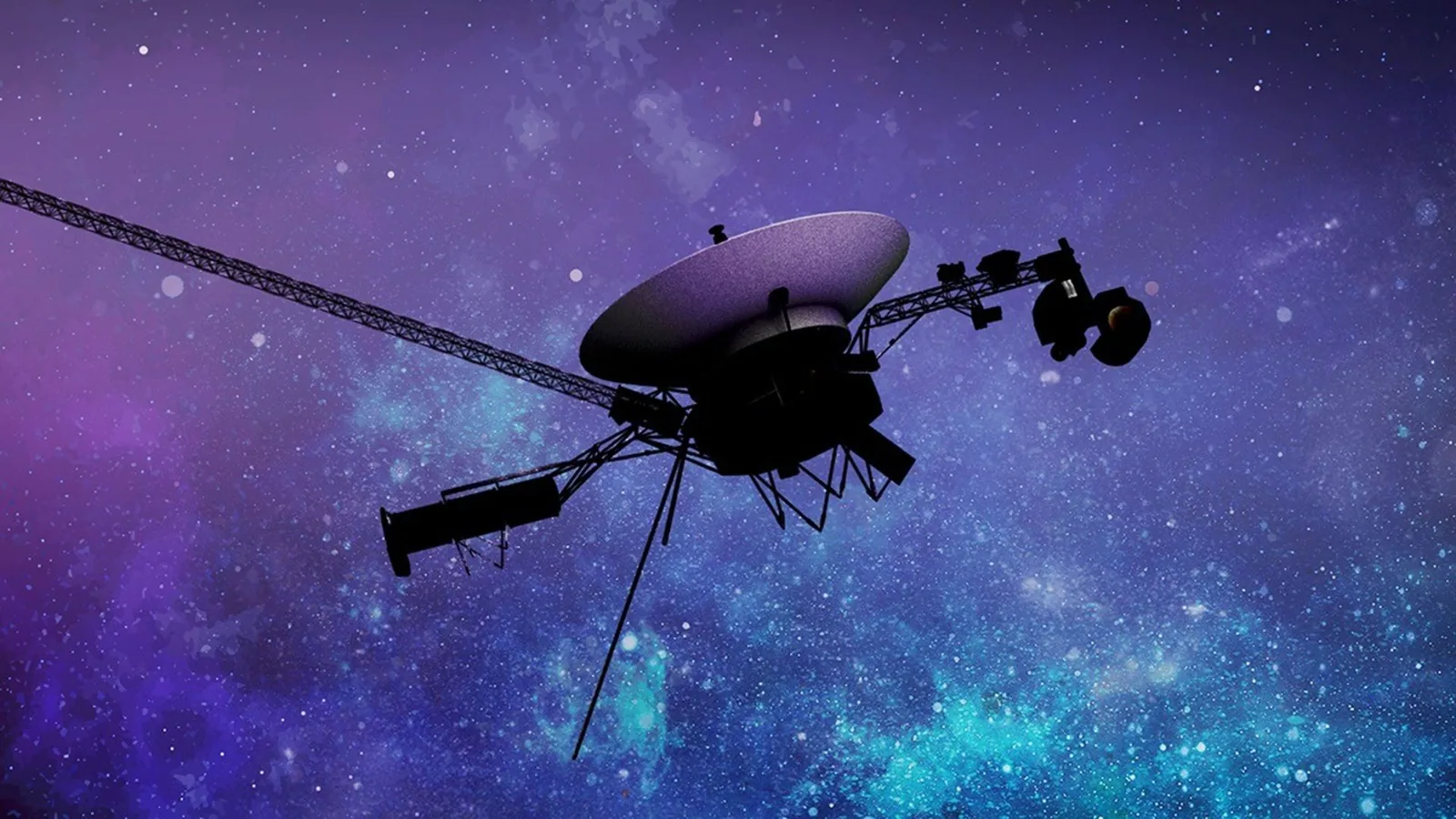
NASA scientists have successfully extended the operational life of the aging Voyager 2 spacecraft by employing a novel power-saving technique nicknamed the "Big Bang." This intricate maneuver, designed to conserve dwindling energy reserves, is now being considered for its twin, Voyager 1, which faces similar power challenges billions of miles from Earth.
The "Big Bang" procedure involves the strategic deactivation of several high-power scientific instruments, coupled with the activation of lower-power alternatives. This delicate balance aims to maintain sufficient internal warmth for the spacecraft to continue gathering vital scientific data in the frigid vacuum of interstellar space. "The idea is to swap out a group of powered devices all at once — hence the nickname — turning some things off, and replacing them with lower-power alternatives, to keep the spacecraft warm enough to continue gathering science data," explained representatives from NASA's Jet Propulsion Laboratory (JPL), which oversees the Voyager missions. Rigorous testing of the maneuver on Voyager 2 was conducted by NASA in May and June before its implementation. The agency announced the success of this power transfer on August 4, confirming that the saved power should enable Voyager 2's three remaining instruments to function for at least an additional year.
Interstellar Voyagers Face Power Scarcity
While the "Big Bang" offers a temporary reprieve, both nuclear-powered spacecraft are experiencing significant power depletion. Mission control was compelled to deactivate one of Voyager 1's last functioning instruments in April due to these limitations. Agency officials have indicated that Voyager 1's own "Big Bang" maneuver is slated to occur within the next few months, a critical step to prolong its scientific data collection as much as possible.
The decision to prioritize Voyager 2 for the initial "Big Bang" operation was based on its comparatively better health and closer proximity to Earth. Voyager 1 currently resides approximately 171 astronomical units (AU) away, while Voyager 2 is positioned at about 143 AU. For perspective, one AU represents the average distance between the Earth and the Sun. Both probes represent humanity's sole functional emissaries in the vast region beyond the heliopause, the boundary where the Sun's influence wanes significantly. This immense distance presents substantial communication challenges; by November 2026, Voyager 1 will achieve a milestone "light day" from Earth, meaning it will take a full 24 hours for a radio signal to traverse the distance one way. Remarkably, both probes are slated to celebrate their 50th anniversaries in 2027, provided they continue their groundbreaking journeys.
Launched in 1977, the Voyager 2 probe embarked on an unprecedented "grand tour" of the outer solar system. A rare planetary alignment, occurring only once every 176 years, allowed both Voyager probes to navigate between Jupiter, Saturn, Uranus, and Neptune with minimal propellant expenditure. Voyager 2 completed its flybys of all four gas giants, concluding its encounter with Neptune in 1989. Its sibling, Voyager 1, took a different trajectory after its Saturn encounter in 1981, ascending above the solar system's ecliptic plane. As each spacecraft concluded its planetary close-up observations, instruments were systematically powered down to conserve energy and extend their mission lifespan. However, as these pioneering spacecraft age, the necessity to retire more instruments becomes an ongoing challenge for mission scientists.