
NASA Roman Space Telescope Set for August 2026 Launch
NASA's Nancy Grace Roman Space Telescope is poised for launch this month, marking a pivotal moment in deep space astronomy. The mission will rival Hubble's capabilities while searching for exoplanets and dark matter across the universe.

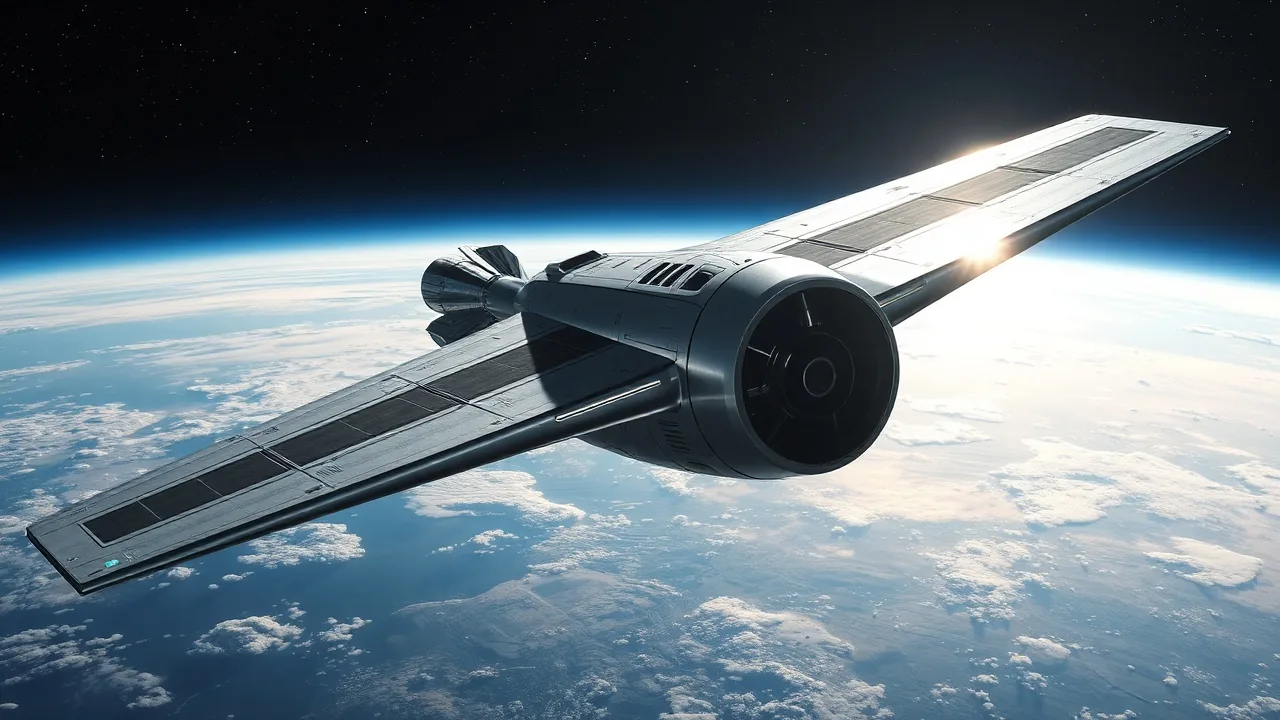
Engineers at NASA's Goddard Space Flight Center in Greenbelt, Maryland completed final assembly of the Nancy Grace Roman Space Telescope in July 2026, clearing the way for the spacecraft's scheduled August launch aboard a SpaceX Falcon Heavy rocket. The $2.4 billion observatory represents the agency's most ambitious infrared astronomy mission since the James Webb Space Telescope began operations in 2022.
Roman will orbit Earth at a distance of 1 million miles, the same gravitational balance point where Webb operates. From this vantage point, the telescope's 2.4-meter primary mirror will observe distant galaxies, search for habitable exoplanets, and map the invisible structure of dark matter across billions of light-years.
"Roman represents the next generation of space-based infrared astronomy," said Dr. Kathryn Shanks, the mission's chief scientist at NASA headquarters, during a briefing on July 28, 2026. "With capabilities exceeding those of previous missions, we expect discoveries that will reshape our understanding of the universe's composition and origins."
Mission Goals and Scientific Instruments
The Roman Space Telescope carries two primary scientific instruments designed to work in infrared wavelengths invisible to the human eye. The Wide Field Instrument captures sweeping views of space across an area 100 times larger than the Hubble Space Telescope's field of view. The Coronagraph Instrument blocks out starlight to reveal faint planets orbiting distant stars.
Roman's mission objectives include four major research areas:
- Detecting and characterizing deep space exoplanets through direct imaging
- Mapping cosmic distance and expansion using supernovae and gravitational lensing
- Studying the distribution and effects of dark matter on galaxy formation
- Observing the earliest galaxies formed within 100 million years after the Big Bang
The telescope's sensitivity to infrared radiation allows it to penetrate cosmic dust clouds where stars and planets form, revealing processes hidden from visible-light telescopes. NASA scientists expect Roman to identify thousands of previously unknown exoplanet candidates in its first five years of operation.
Timeline and Launch Preparations
SpaceX has designated a launch window beginning August 15, 2026 from Kennedy Space Center in Florida. The Falcon Heavy rocket will carry Roman to its L2 Lagrange point destination over approximately 30 days of solar-powered travel. Mission control teams at Goddard have completed more than 2,000 pre-launch tests over the past 18 months.
The launch window extends through September 30, 2026, providing flexibility for weather delays or technical issues. Once Roman reaches L2 and deploys its sunshield and mirror, a commissioning phase lasting 5 to 6 months will precede the start of full-time scientific observations in early 2027.
NASA news updates released August 3, 2026 confirmed that all major subsystems passed final validation testing. The spacecraft's reaction wheels, infrared detectors, and communication arrays are operating within expected parameters.
Scientific Impact and Future Discoveries
Astronomers worldwide anticipate Roman's contributions to three critical questions in modern physics. First, the nature of dark energy and its role in the universe's accelerating expansion. Second, the frequency and characteristics of Earth-sized planets in habitable zones around nearby stars. Third, the mechanisms driving galaxy evolution from the earliest epochs to the present day.
Dr. James Marshall, an exoplanet researcher at Princeton University, noted that Roman's direct imaging capability fills a gap between current survey missions and individual telescope observations. "We'll move from statistical predictions to direct detection and measurement," Marshall said in an interview conducted July 25, 2026. "That shift changes everything about how we search for potentially habitable worlds."
The mission represents a collaborative effort involving more than 1,200 scientists and engineers from NASA centers, universities, and international partners across 15 countries. Contributions from contractors including Ball Aerospace, Lockheed Martin, and Princeton University's Space Telescope Science Institute have been essential to Roman's development.
Historical context underscores the significance of this launch. The Hubble Space Telescope, launched in 1990, revolutionized astronomy but operates primarily in visible and ultraviolet wavelengths. Roman's infrared capabilities will extend observational reach into regions of space and time inaccessible to Hubble. Combined with other space exploration assets including the James Webb Space Telescope and ground-based observatories, Roman will form part of a comprehensive observing network.
Missions of Roman's scale typically operate for 5 to 10 years, with potential extensions based on fuel and component performance. NASA's budget allocation for Roman operations through 2032 totals $1.8 billion, supporting ongoing data analysis and new observations as scientific priorities evolve.
The August 2026 launch window marks a convergence of decades of technological development, scientific planning, and international cooperation. As Roman prepares for its journey to L2, the astronomical community stands ready to receive the first data from what may become the defining observatory of the 2030s.