
NASA Extends Voyager 2 Probe's Mission with Ingenious Power Saving
NASA has implemented an "interstellar tweak" to conserve power on the 48-year-old Voyager 2 spacecraft, enabling its remaining instruments to operate for at least another year. This maneuver will also be applied to Voyager 1.

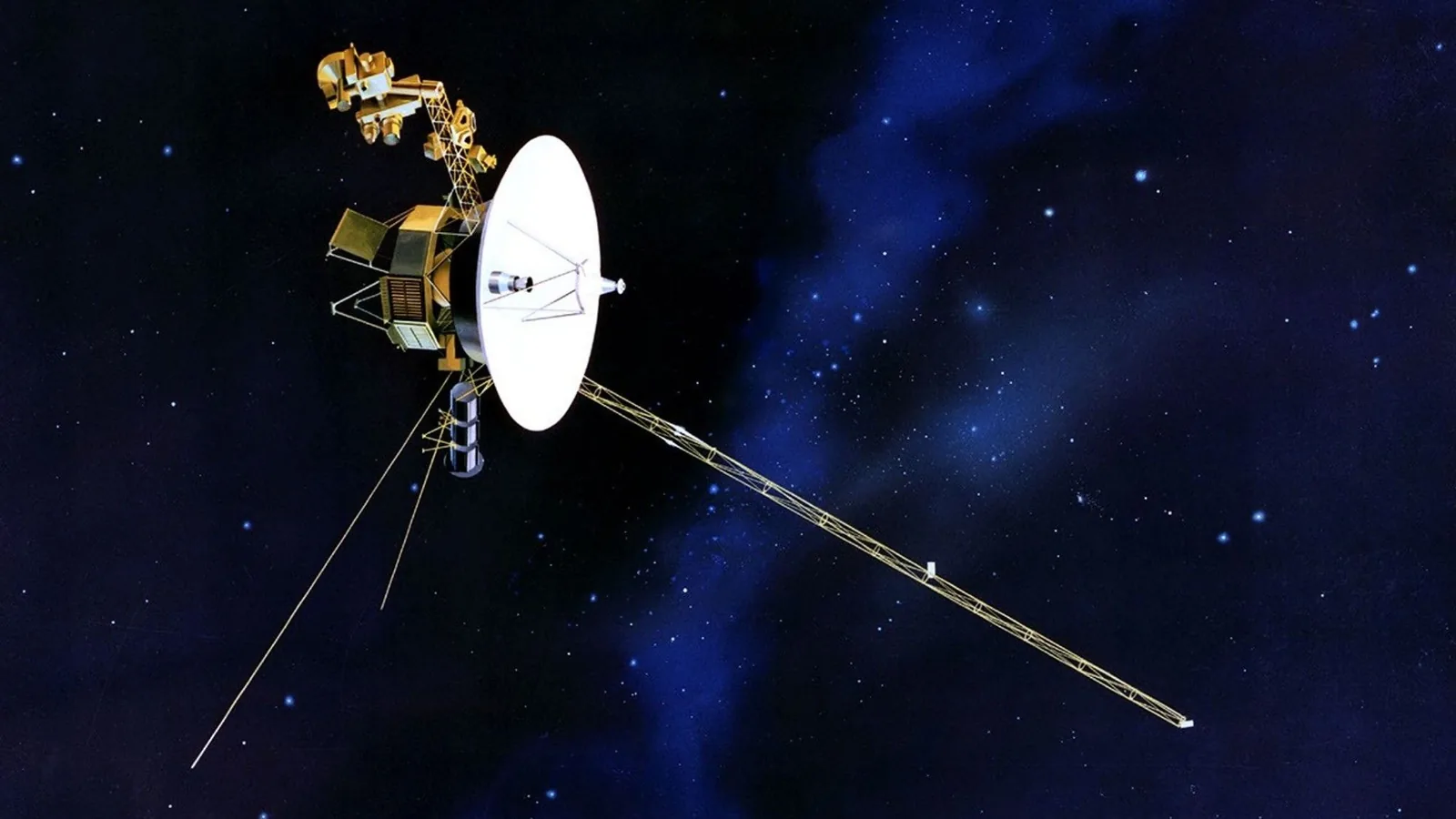
NASA engineers have successfully devised a method to extend the operational life of the venerable Voyager 2 spacecraft, enabling its crucial science instruments to continue functioning for at least another year. The initiative, described as an "interstellar tweak," addresses the dwindling power supply on the 48-year-old probe, which, along with its twin Voyager 1, launched in 1977.
Both spacecraft rely on radioisotope thermoelectric generators (RTGs) for power, which utilize the heat generated by the decay of plutonium. However, the plutonium supply on each probe diminishes by approximately four watts annually. To counteract this power loss, the team recently reduced Voyager 2's energy demands by deactivating non-essential devices and employing lower-power alternatives that are still sufficient to maintain the spacecraft's warmth, given its immense distance from the sun. Officials from the mission, managed by NASA's Jet Propulsion Laboratory, stated, "The spacecraft power margins have grown razor thin, requiring the team to conserve energy by shutting off non-essential devices and systems."
The gradual decrease in power has had a measurable impact on the scientific capabilities of both probes. Since 2024, each spacecraft has had to power down two of its science instruments. While some of these instruments were turned off after completing their primary scientific objectives decades ago, others were decommissioned due to their significant power requirements. Each Voyager spacecraft initially carried 10 instruments, but Voyager 2 is now operating with only three.
Voyager 1 to Undergo Similar Power Conservation
The recent power conservation measures for Voyager 2 were implemented to prevent the shutdown of a critical instrument later this year. NASA confirmed that these adjustments will allow all three of its remaining instruments to operate for "at least another year." Following Voyager 2's success, NASA plans to implement a similar "Big Bang" power-saving maneuver for Voyager 1 in the coming months. The significant distance of these probes means a one-way signal takes nearly 24 hours to reach Earth. Voyager 1 is currently further from Earth than its twin, situated at approximately 171 astronomical units (AU), while Voyager 2 is about 142 AU away.
The Voyager mission revolutionized our understanding of the outer solar system. The twin spacecraft were launched during a rare planetary alignment that allowed them to visit Jupiter, Saturn, Uranus, and Neptune. Voyager 1 first conducted flybys of Jupiter and Saturn, capturing unprecedented images. It was then directed on a trajectory above the solar system's plane, the ecliptic. Meanwhile, Voyager 2 proceeded to Uranus and Neptune, becoming the first spacecraft to provide close-up views of these ice giants and their moons. Voyager 2's final planetary encounter was with Neptune in 1989, marking the end of its historic planetary tour.
These enduring missions, launched in 1977, continue to send back valuable data from interstellar space. The ingenuity of NASA engineers in finding ways to keep these 46-year-old probes operational highlights the enduring legacy and scientific importance of the Voyager program. By implementing these power-saving measures, NASA ensures that these pioneering spacecraft can continue to explore the unknown for as long as possible, pushing the boundaries of human knowledge further into the cosmos. The extended operational lifespan allows for potential new discoveries about the heliosphere and interstellar medium, areas that these spacecraft are uniquely positioned to study.
The challenges of maintaining communication and power for spacecraft operating billions of miles from Earth are immense. The RTG power sources, while robust, have a finite lifespan, and the continuous decay of plutonium means a constant reduction in available energy. This latest effort by the NASA team underscores their dedication and innovative problem-solving skills. The successful implementation on Voyager 2 provides a roadmap for similar adjustments on Voyager 1, ensuring that both probes can continue their groundbreaking scientific work for the foreseeable future. The data collected by these spacecraft are invaluable for understanding planetary formation, the heliosphere's boundary, and the nature of interstellar space.