
Rare Nanotyrannus Dinosaur Fossil Fetches $47.3M at NYC Auction
A remarkably complete Nanotyrannus dinosaur skeleton, nicknamed 'Jodi,' sold for $47.3 million at a New York auction, making it the second most expensive fossil ever sold.

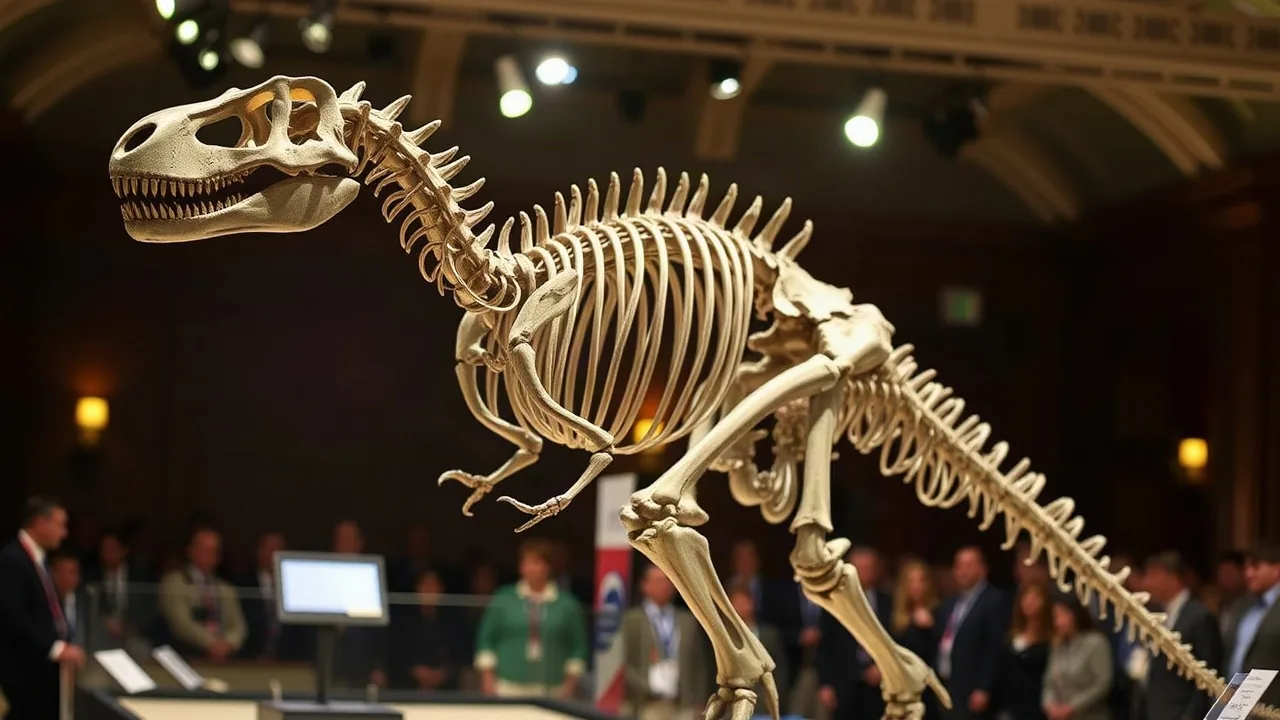
A rare and remarkably complete fossil skeleton of a Nanotyrannus, a dinosaur often described as a miniature Tyrannosaurus rex, fetched an astonishing $47.3 million at a New York auction on Tuesday. The sale, held at Christie's, saw the specimen, affectionately nicknamed 'Jodi,' become the second most valuable fossil ever sold at auction, underscoring the immense market for significant paleontological finds.
The Nanotyrannus, which lived approximately 67 million years ago during the Late Cretaceous period, is estimated to have been about 15 feet long. The skeleton, standing at 98% complete, offers an unprecedented look at the anatomy of this elusive species. Its sale price far exceeded initial expectations, highlighting the global demand and competitive bidding among private collectors and institutions alike.
A New Era for Private Fossil Collections
The auction's success signals a growing trend in the private acquisition of scientifically significant fossils. While some paleontologists express concerns about specimens being removed from public research institutions, others argue that private sales can fund further exploration and conservation efforts. 'Jodi' was previously displayed at a private museum in Montana, but its new owner's identity has not yet been revealed.
Paleontological debates continue to surround the Nanotyrannus. Some scientists classify it as a distinct genus, while others propose it represents a juvenile specimen of the more well-known Tyrannosaurus rex. The exceptional preservation of this particular fossil, however, provides crucial data for ongoing research into dinosaur growth and evolution. The skeleton's small, serrated teeth and relatively long arms are key features distinguishing it from T. rex.
The sale also places 'Jodi' among the most prized paleontological specimens in private hands. The record for the most expensive fossil ever sold at auction is held by a *Tyrannosaurus rex* skeleton named 'Stan,' which achieved $31.8 million in 2020. The Nanotyrannus sale significantly surpasses that figure, indicating a potential shift in market valuation for other rare dinosaur species. Experts suggest that the provenance and completeness of a fossil are major drivers of its market value, alongside its rarity.
The auction house noted that the Nanotyrannus skeleton was discovered in the Hell Creek Formation in Montana, a region renowned for its rich dinosaur fossil beds. The strata there date back to the last million years of the Cretaceous period, making it a treasure trove for understanding the ecosystem just before the catastrophic asteroid impact that ended the reign of the dinosaurs. The specific find date for 'Jodi' was not disclosed.
The unprecedented sale price of 'Jodi' raises questions about the future accessibility of such invaluable scientific resources. The scientific community is watching closely to see if the new owner will allow for continued study and public exhibition of the specimen. The $47.3 million sum represents a significant investment, and the hope is that it will contribute to, rather than detract from, the advancement of paleontological knowledge. This remarkable find continues to fuel public fascination with prehistoric life and the enduring allure of the dinosaur age.