
Nancy Grace Roman Telescope Launch Nears: NASA's Next Great Observatory
NASA's Nancy Grace Roman Space Telescope is set to launch Aug. 30 on a SpaceX Falcon Heavy rocket from Kennedy Space Center. The mission will explore dark energy, exoplanets, and distant stars.

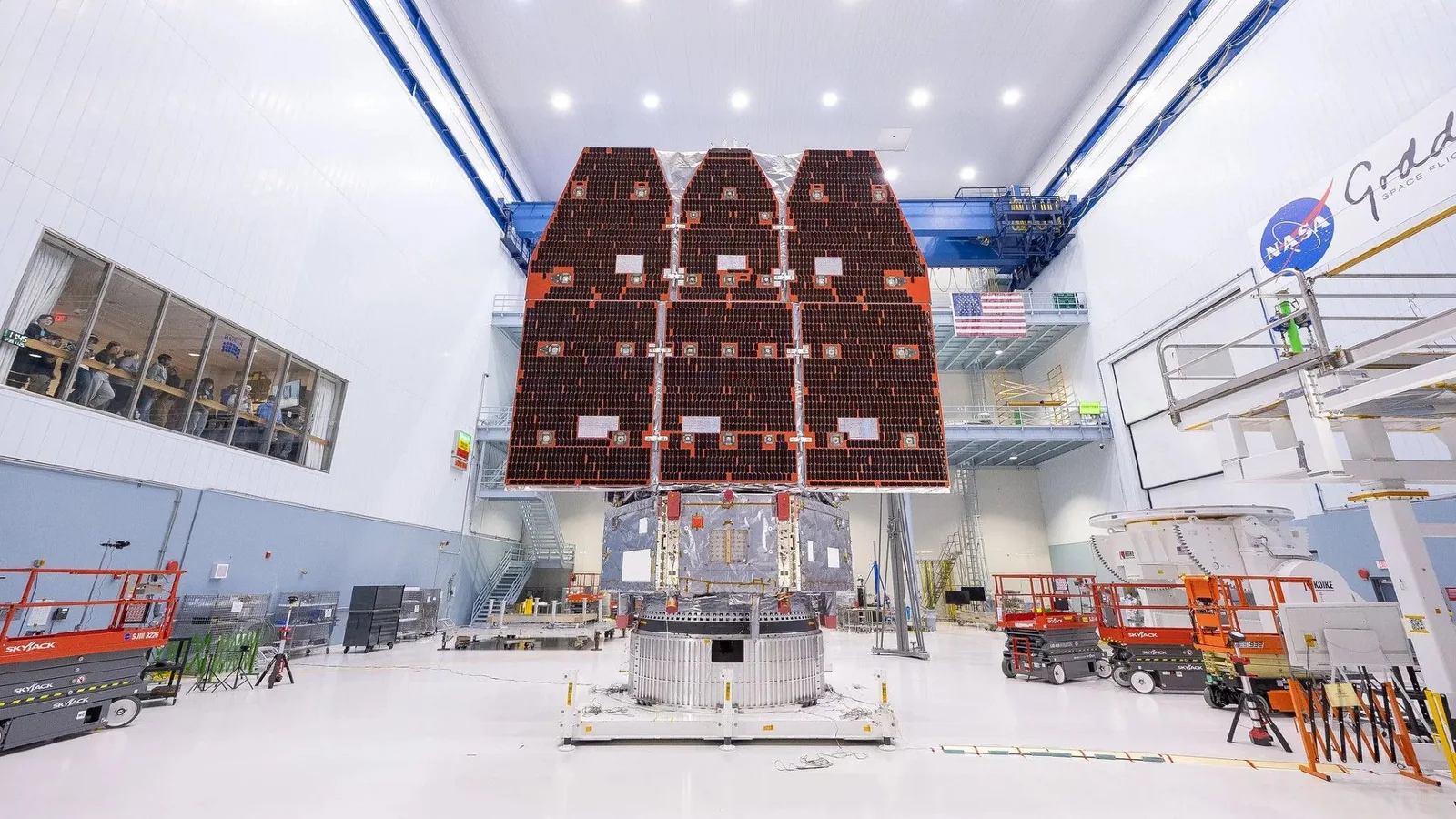
NASA's Nancy Grace Roman Space Telescope is on the cusp of launch, with preparations nearing completion for its ambitious mission to unravel cosmic mysteries. The bus-sized observatory is slated to lift off Sunday, August 30, no earlier than 7:26 a.m. EDT, atop a SpaceX Falcon Heavy rocket from Launch Complex 39A at NASA's Kennedy Space Center in Florida. This marks the next chapter in space-based astronomy, with Roman poised to investigate dark energy, search for exoplanets, and probe the physics of distant galaxies.
The final stages of pre-launch operations have been intensive. On July 25, technicians carefully loaded the observatory with 290 gallons of hydrazine fuel, essential for its thrusters. In early August, it was attached to its payload adapter, a critical step connecting it to the rocket. A full launch-day dress rehearsal occurred on August 20, simulating all procedures leading up to liftoff. Following these preparations, NASA and SpaceX mission managers completed the Flight Readiness Review on August 21, officially giving the green light for the telescope's journey into space.
Journey to Deep Space
Once safely in orbit, the Nancy Grace Roman Space Telescope will embark on a significant journey. It will take approximately 30 days to reach its final destination: the sun-earth Lagrange Point 2 (L2). This gravitationally stable point is located about 930,000 miles (1.5 million kilometers) from Earth, in the direction of Mars. After arriving at L2, the telescope will undergo a roughly three-month checkout period to ensure all its sophisticated instruments are functioning optimally. Following this calibration phase, Roman will commence its scientific operations, beginning its quest to expand humanity's understanding of the universe.
The Roman telescope carries the legacy of Nancy Grace Roman, NASA's pioneering chief of astronomy, often called the "Mother of Hubble." This new observatory is designed with a wide-field instrument that will capture images far larger than the Hubble Space Telescope, allowing astronomers to survey vast swathes of the sky more efficiently. Its primary science goals include studying the expansion of the dark energy, a mysterious force accelerating the universe's expansion; characterizing a wide range of exoplanets, including those potentially habitable; and observing phenomena like supernova explosions to better understand cosmic evolution.
The collaboration between NASA and SpaceX is crucial for missions of this magnitude. SpaceX's Falcon Heavy rocket provides the significant thrust required to deliver the large and heavy Roman observatory to its distant orbital destination. This partnership underscores the evolving landscape of space exploration, where commercial providers play an increasingly vital role in NASA's ambitious scientific endeavors. The successful deployment of Roman is anticipated to yield groundbreaking data for years to come, revolutionizing fields from cosmology to planetary science.