
Earth Microbes Could Survive on Moon's Surface, Study Suggests
New research indicates common Earth microbes might endure the Moon's harsh environment, potentially in a dormant state. Lunar poles offer promising conditions, hinting at life's resilience.

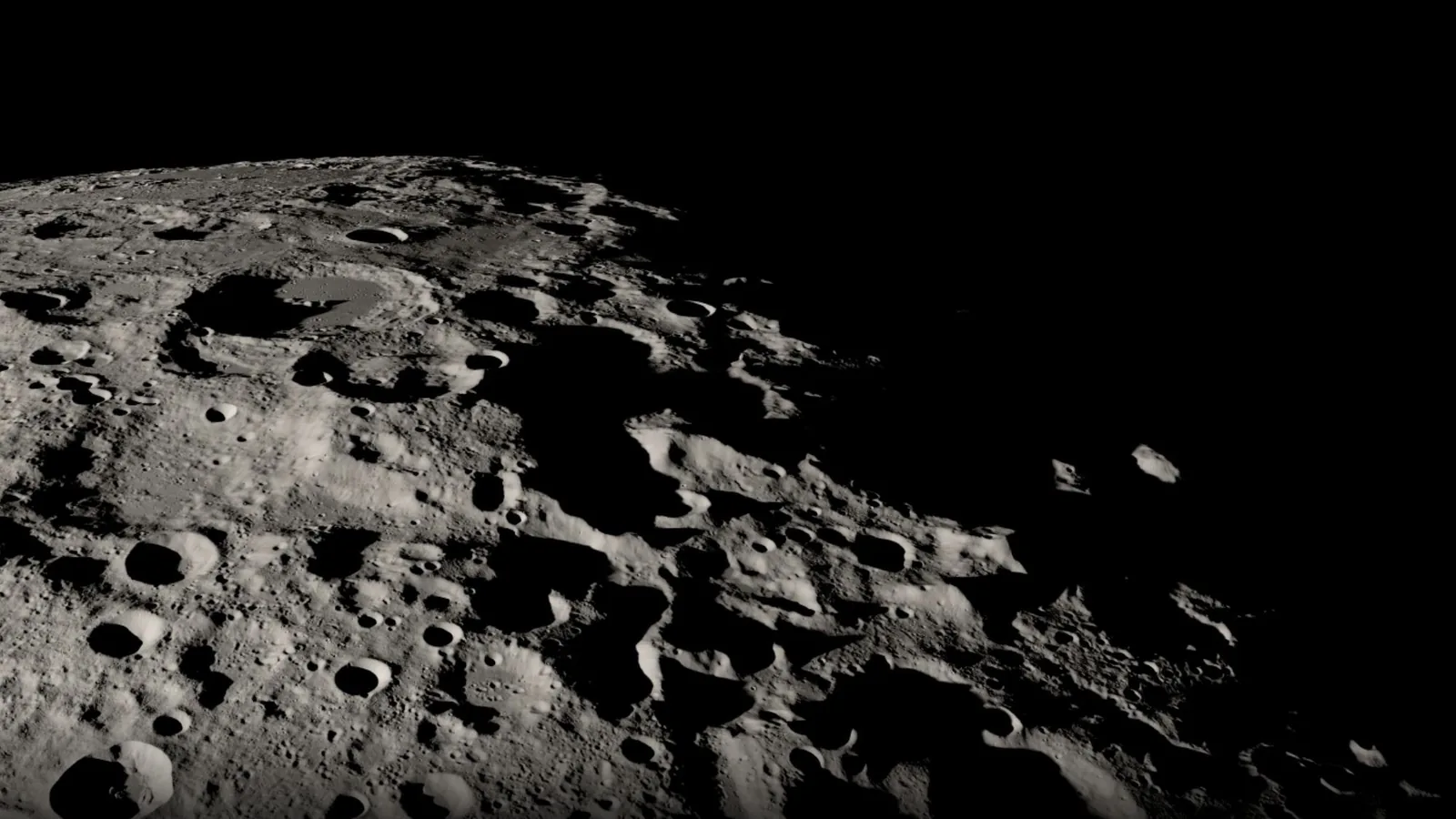
Scientists have discovered that microbes originating from Earth could potentially survive on the Moon's surface, albeit in a state of suspended animation. This finding challenges previous assumptions that the lunar environment is too extreme for microbial life, suggesting that even common bacteria and fungi might endure the harsh conditions.
A 2019 study had posited that the Moon's surface, bombarded by ultraviolet rays and extreme heat from the sun, was largely inhospitable. However, the new research, published in 2026, highlights the protective capabilities of lunar topography, such as craters and valleys. These features, particularly at the lunar poles, could offer refuge for microorganisms.
The study analyzed three types of bacteria and two types of fungus, all known to be present on crewed space missions and previously identified as highly resilient to the vacuum, cold, and radiation of space. Researchers cross-referenced existing data on the survivability of these organisms with detailed lunar surface maps, focusing on ultraviolet and heat readings. The analysis suggests that specific areas at the lunar poles could indeed harbor microbial life in a state of cryptobiosis, a form of suspended animation where metabolic activity is virtually undetectable.
Lunar Poles as Potential Havens
The lunar poles, characterized by permanently shadowed regions where sunlight rarely penetrates, are of particular interest. These areas are known to preserve volatile compounds, including water ice, and now, possibly, dormant microbial life. The research even suggests that relatively minor geological features, such as a bootprint from an astronaut or a track from a lunar rover, could create sufficiently sheltered microhabitats for survival.
Prabal Saxena, a planetary scientist at NASA's Goddard Space Flight Center and co-author of the study, commented on the potential impact. "Even a bootprint or a rover's tread may create a habitable area," Saxena told Space.com. This observation is particularly relevant as NASA's Artemis III mission is slated to be the first human expedition to explore the lunar south pole.
The implications extend beyond just understanding lunar habitability. Heather Graham, an organic geochemist also at NASA Goddard and a co-author, emphasized the need for caution regarding extraterrestrial contamination. "Our findings show that we need to be even more thoughtful about the materials that we might unintentionally take with us when we are exploring space, and the impacts that we might have," Graham stated.
Beyond the prospect of Earth microbes traveling to the Moon via spacecraft, the study also considers a more ancient possibility: that cosmic impacts could have ejected rocks bearing microbes from Earth, which then traveled to the Moon. Saxena noted this intriguing idea: "The moon might be like Earth's freezer, preserving really interesting bits of evidence of Earth's past if they landed at the moon's poles." This suggests the Moon could serve as a repository for ancient terrestrial biological samples.
Future research aims to conduct direct experiments to confirm the survival rates of various microbial species under simulated lunar conditions. "We have this great opportunity to really think about the limits of life and how resilient it is even in incredibly extreme environments," Saxena added. The Moon, especially its polar regions, is increasingly seen not just as a barren satellite but as a dynamic and scientifically rich celestial body with the potential to harbor and preserve diverse forms of life, or evidence thereof.