
Citizen Scientists Track Sun's Corona in Upcoming Aug. 12 Solar Eclipse
The Dynamic Eclipse Broadcast Initiative (DEB) is mobilizing citizen scientists for the Aug. 12 total solar eclipse, capturing crucial data on the sun's corona. The project, partly funded by NASA, utilizes a network of affordable telescopes.

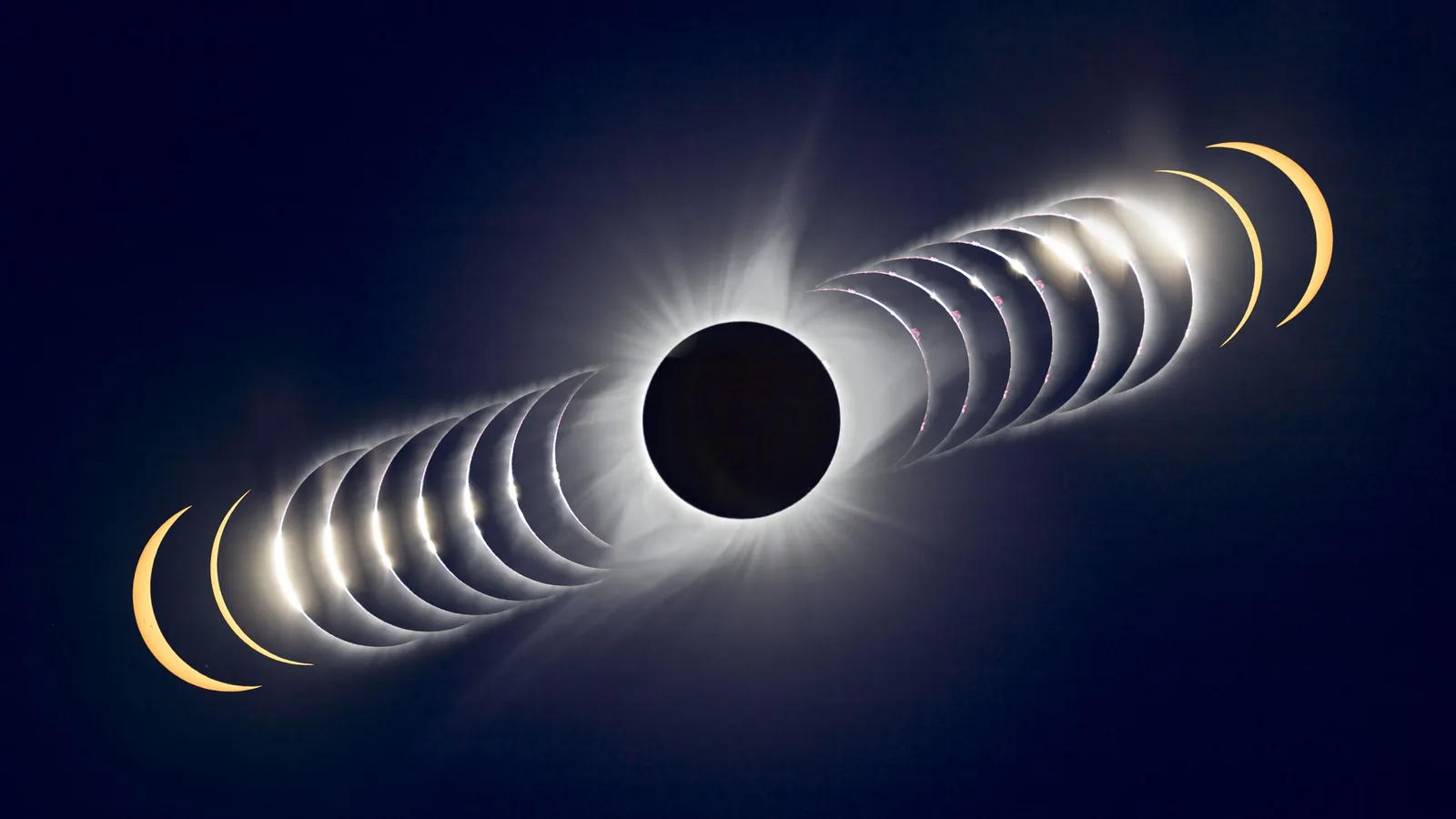
On August 12, 2026, a total solar eclipse will briefly cast a shadow across parts of Greenland, Iceland, and Spain. Amidst this celestial spectacle, a dedicated group of citizen scientists from the Dynamic Eclipse Broadcast Initiative (DEB) will be actively engaged, capturing valuable data about the sun's outer atmosphere, known as the corona. This collaborative effort, coordinated by professional astronomers at Southern Illinois University Carbondale and supported by funding from NASA and the National Science Foundation, aims to unravel lingering mysteries about our star.
The DEB Initiative utilizes a network of volunteer observers equipped with identical, relatively inexpensive telescope setups. Associate Scientist Bob Baer of Southern Illinois University Carbondale, a co-principal investigator for the DEB, explained the project's accessibility. "We came up with a setup that's portable, that's relatively cheap," Baer stated in an interview. "They're about $1,800 once you factor in everything, like the computer, the mount, the telescope, the camera." This strategic approach has enabled widespread participation, as demonstrated during the 2024 Great American Eclipse, where over 80 DEB teams were positioned across the contiguous United States.
During that 2024 event, these trained volunteers focused on the critical phase of totality, documenting the sun's ethereal corona as the moon obscured its bright disk. The data captured was livestreamed in near real-time, offering the public an unparalleled view of the phenomenon. The initiative's success even led to Emmy Awards for numerous team members recognizing their broadcast coverage. Beyond eclipse observations, DEB volunteers also contribute to tracking asteroids, studying solar vibrations, monitoring powerful solar flares, and collecting data on exoplanet transits. "It's the network of telescopes that is the strength of the project," Baer emphasized. "It's not just one scope." This distributed network allows for a far broader collection of scientific insights.
Preparing for Future Cosmic Events
The upcoming 2026 solar eclipse will serve as a crucial testbed for the DEB's evolving methodologies. Two DEB teams are slated to observe the eclipse from Spain: one in the northwestern city of Leon, and another in Valoria la Buena, led by citizen scientist Charles Greenwald. Greenwald has dedicated months, including travel to Guadalajara, Mexico, to prepare his team and test software updates essential for capturing the sun's corona. The data gathered in 2026 will not only be shared via livestreams, including NASA's coverage, but also refined for a much larger undertaking in 2027.
The DEB is already planning an ambitious campaign for the August 2, 2027, solar eclipse, touted by some as "the eclipse of the century." This event promises the longest totality of the 21st century to date, potentially lasting up to 6 minutes and 23 seconds, significantly longer than the 2 minutes and 18 seconds expected in 2026. For the 2027 eclipse, the DEB aims to deploy approximately 27 teams, comprising groups from the U.S. and local observers across North Africa, where the eclipse's path of totality will stretch. Baer hopes to establish double redundancy across the path to ensure continuous observation, even if specific locations face weather challenges or technical issues. Achieving this scale requires meticulous logistical planning, securing substantial funding, and crucially, recruiting a robust cohort of volunteers.
The DEB initiative represents a powerful fusion of scientific inquiry and public engagement. By empowering citizen scientists with accessible technology and guided by professional expertise, the project not only contributes vital data to our understanding of the sun but also fosters a deep appreciation for the cosmos among participants and viewers alike. The call for volunteers for the 2027 campaign is expected to begin in the fall of 2026, offering an opportunity for individuals interested in contributing to significant astronomical research.