
August Solar Eclipse: Spain to Witness Rare Celestial Spectacle
Spain will experience a total solar eclipse on August 12, marking a rare celestial event not seen on the mainland for over a century. The eclipse will also be visible in Iceland and Greenland.

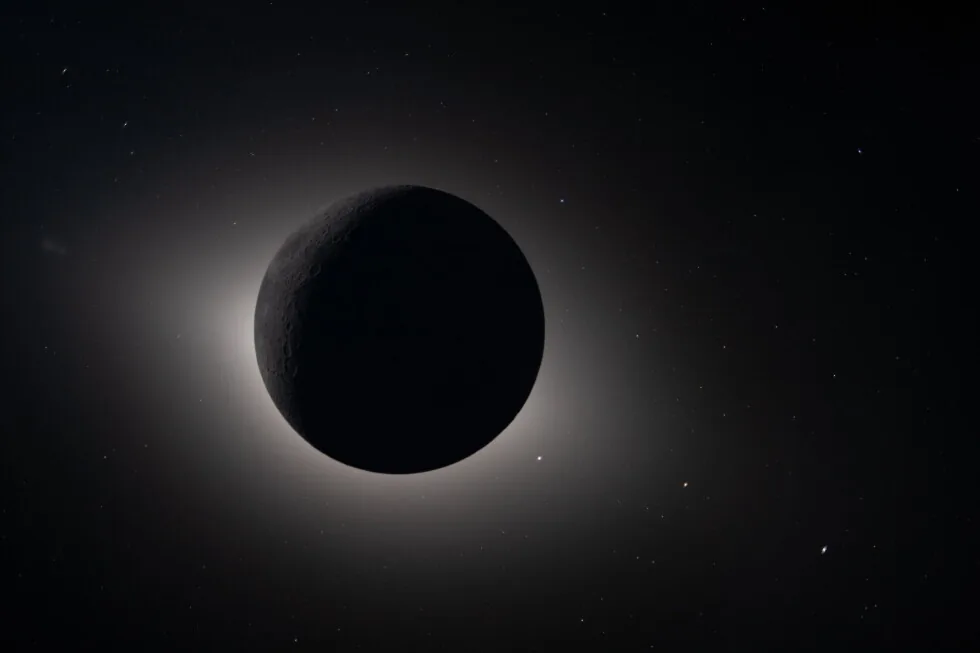
A rare total solar eclipse will grace the skies over Spain, Iceland, and Greenland on August 12, offering a breathtaking celestial spectacle. This event marks the first total solar eclipse to cross mainland Spain in over a century, with the path of totality set to briefly darken the skies near sunset. The alignment of the sun, moon, and Earth will create an unusual period of daytime darkness for observers in specific regions.
The eclipse's journey begins near the North Pole, with the moon's shadow tracing a path south. Totality, the phase where the sun is completely obscured by the moon, will last up to two minutes and 18 seconds. This event serves as a prelude to an even more significant solar phenomenon anticipated next summer, promising a prolonged 6 ½-minute eclipse that will traverse from Spain to North Africa and the Middle East.
The moon's umbra, the darkest part of its shadow, will travel an estimated 5,130 miles (8,260 kilometers) across the Earth's surface. Much of this path will be over the Atlantic Ocean, with maximum totality occurring off the west coast of Iceland. As the shadow reaches Portugal and then Spain, where significant crowds are expected, the duration of totality will diminish to about a minute. The spectacle will conclude as it reaches the Mediterranean Sea.
Scientific Observations and Public Engagement
While hundreds of millions will witness at least a partial eclipse across Canada, the northern U.S., Europe, and West Africa, dedicated eclipse chasers and scientists are preparing for in-depth observation. A partial eclipse will be visible as far away as Alaska and Siberia, with the extent of the sun's obscuration varying by location. For instance, Dublin is expected to see 94% coverage, while Oslo will experience 83%. New York City will observe an 18% bite out of the sun, tapering to 9% in Norfolk, Virginia. Crucially, special eclipse glasses are mandatory for viewing, even during partial phases, to protect eyesight.
Adding to the celestial wonder, the day of the eclipse will be marked by a pre-dawn alignment of six planets forming an arc in the sky, followed by the peak of the Perseid meteor shower after nightfall. The new moon phase will provide ideal dark conditions for viewing meteors, which might even appear alongside brighter planets and stars during the eclipse itself.
Eclipse mapmaker Michael Zeiler is pursuing a rare phenomenon: the northern lights. For his 13th total solar eclipse, Zeiler plans to be on a cruise ship in a Greenland fjord, hoping to capture auroral activity during totality. "What gets me excited is viewing rare phenomena," Zeiler stated in an email. Organizations like the European Space Agency (ESA) and NASA are also supporting the event. The ESA will host a live webcast from Spain’s Astrophysical Observatory of Javalambre and a public celebration in Leon. NASA will offer its own coverage, alongside the Italian-based Virtual Telescope Project.
"For me, it’s not just a scientific moment. It’s not just an incredible alignment of heavenly bodies. It’s also a very human moment," said ESA’s director of science Carole Mundell. "It’s a real human connection between us with our feet planted on the Earth and the cosmos." ESA's Proba-3 mission, a duo of artificial eclipse-making satellites, will attempt to capture before-and-after shots of the sun's corona, its outer atmosphere.
U.S. college research teams are deploying over 60 high-altitude balloons from Spain and Iceland. These balloons will gather data on Earth's atmosphere and environmental changes that occur during the eclipse, such as momentary temperature drops. This initiative builds upon previous efforts, with ten times more balloons launched during the 2024 total solar eclipse that captivated North America. "A couple of minutes isn’t a lot of time, but it’s still plenty to affect the atmosphere and to make that cold, dark shadow of the moon on Earth," commented Angela Des Jardins of Montana State University, who leads the NASA-funded balloon project. Southwest Research Institute’s Amir Caspi will conduct research aboard a NASA high-altitude plane, using four cameras to record the corona in nine wavelengths. By flying at 460 mph (740 kph), the jet aims to extend the perceived totality to nearly three minutes for the instruments, capturing thousands of images.
The upcoming August eclipse is part of a significant period for solar events in Spain. Following this year's spectacle, a particularly long total solar eclipse is scheduled for August 2, 2027. This future eclipse will offer up to six minutes and 23 seconds of totality, visible from southern Spain, Morocco, Algeria, Libya, Egypt, Saudi Arabia, Yemen, and Somalia. On January 26, 2028, Spain will host a "ring-of-fire" eclipse, completing a trio of celestial events. These occurrences are extraordinary, considering Spain's last total solar eclipse—excluding its Canary Islands—happened shortly before the Titanic sank in 1912. Some astronomers consider 1905 to be the last time Spain witnessed a full solar eclipse of comparable magnitude.