
August Eclipse & Perseid Meteors Cap Off Summer Stargazing
August offers a celestial spectacle with a partial solar eclipse and a nearly total lunar eclipse, culminating in the dazzling Perseid meteor shower, marking the end of summer stargazing.

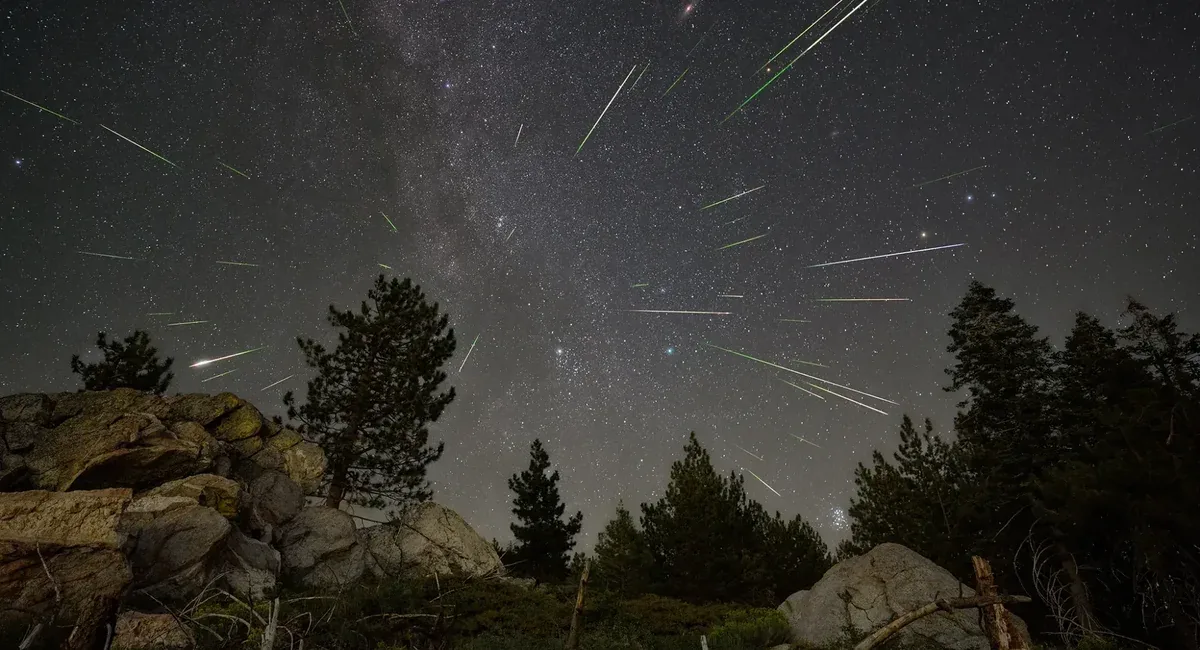
August is set to provide a spectacular send-off to the summer stargazing season with a series of celestial events, including a partial solar eclipse, a significant lunar eclipse, and the peak of the famed Perseid meteor shower. These astronomical displays offer skywatchers prime opportunities to observe the cosmos as the season draws to a close.
The month kicks off with a partial solar eclipse on August 12. While observers in New York City will witness about 10% of the sun obscured by the moon, the event will be noticeable. The peak of this solar spectacle in the city is expected just before 2 p.m. For those seeking a more dramatic view, the path of totality will be visible in Iceland, Spain, northern Russia, Portugal, and Greenland. In a unique celebration, musician Björk is reportedly hosting a day-long rave outside Reykjavik, Iceland, to mark the occasion.
"From New York City, we get a pretty good partial solar eclipse. A very good chunk of the sun will be taken out by the moon," explained astrophysicist Dr. Jackie Faherty, who is affiliated with the American Museum of Natural History. "Obviously, it's nothing like a total eclipse, but you really get the feeling that the moon is passing, partially in front of the sun."
A Deep Dive into Lunar and Meteoric Wonders
Following the solar event, a near-total lunar eclipse will grace the skies on August 27. New Yorkers can anticipate seeing approximately 96% of the moon obscured by Earth's shadow, an event that will turn the lunar surface a dramatic blood red. The eclipse will commence at 10:33 p.m., with its maximum coverage occurring shortly after midnight. The phenomenon will conclude just before 2 a.m. Unlike solar eclipses, lunar eclipses do not require special viewing equipment; clear skies are the only necessity.
"Solar eclipses and lunar eclipses chase each other because of the positioning of the Earth and the moon," Dr. Faherty noted. This predictable dance makes these events a highlight for astronomers and casual observers alike.
The undisputed highlight for many, however, will be the Perseid meteor shower, which typically peaks around August 12-13 each year. Known for its rapid and bright meteors, the Perseids travel at speeds exceeding 133,000 miles per hour. The shower is also famous for producing exceptionally brilliant meteors known as fireballs. Ideal viewing locations are generally found in areas with minimal light pollution and an unobstructed view of the night sky, such as rooftops, waterfronts, golf courses, and clearings in parks.
The Amateur Astronomers Association is organizing a viewing event on August 12 at Brooklyn Bridge Park, providing a communal experience for meteor shower enthusiasts. "These moonless Perseid meteor showers are not as easy to come by, which is why I would encourage people to go for it this year," urged Dr. Faherty, emphasizing the prime viewing conditions this year due to the lack of a full moon during the shower's peak.
Beyond the major events, August offers a last chance to observe prominent summer constellations. The constellation Scorpius, easily identifiable by its distinctive hook-like shape, is particularly well-positioned. August 20 is highlighted as a good date to seek out Scorpius, as the bright red star Antares, often called the heart of the scorpion, will appear near the moon. Visible in the southern sky shortly after sunset, Scorpius lies between the constellations Libra and Sagittarius. Adjacent to the scorpion's tail, the Milky Way galaxy stretches across the sky, presenting a breathtaking celestial ribbon.
For those living in light-polluted urban environments like New York City, venturing outside the city limits is often recommended for the best viewing experience. "It's pretty cool. For anybody who's never seen the Milky Way, this is a really good month to give it a shot," commented astronomer Joe Fried. "If you're not finding it from New York City, drag a friend with a car or find a way to get out of the city." This period represents a final, brilliant flourish for celestial events before autumn begins.