
Chile's Atacama Desert Fights for Darkness Amid Light Pollution
Chile's Atacama Desert, a prime location for astronomy, faces a growing threat from artificial light pollution. Researchers are working to preserve its pristine dark skies, crucial for scientific discovery.

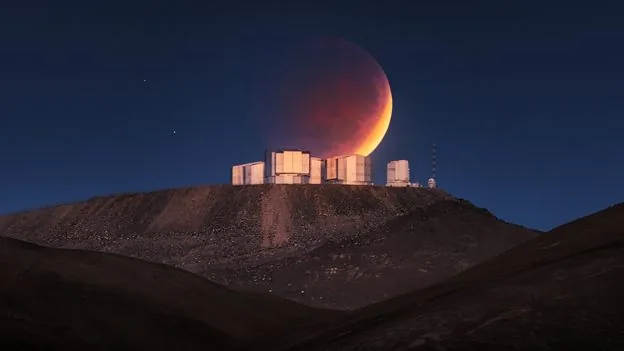
In the remote Atacama Desert of Chile, a region renowned as one of the darkest natural environments on Earth, astronomers are engaged in a critical battle against the creeping encroachment of artificial light. This pristine darkness, essential for professional astronomy and groundbreaking scientific discoveries, is increasingly threatened by the expansion of nearby cities, industrial operations, and mining complexes.
Itziar de Gregorio-Monsalvo, a senior astrophysicist at the European Southern Observatory (ESO) in Chile, highlights the unique conditions of the Atacama. "There are very few places on Earth with these conditions," she stated. "Astronomers like her flock to this remote part of the Atacama Desert precisely for the view." The desert's clear skies, high altitude, and minimal population density have made it an ideal location for some of the world's most advanced ground-based telescopes, including those at ESO's Paranal observatory. However, the global proliferation of electric lighting means that approximately 80% of the world's population now lives under light-polluted skies, a trend that is slowly but surely impacting even this remote sanctuary.
Global Light Pollution Challenges
The problem of light pollution is not unique to Chile; it's a worldwide phenomenon with significant consequences. A recent study indicated that global skies brightened by nearly 10% annually due to artificial light between 2011 and 2022. This degradation of the night sky affects not only astronomers but also has implications for human well-being and ecological balance. Psychologists suggest that the diminishing view of the stars could negatively impact mental health by severing a vital connection to the natural world. Ecologists have also documented how artificial light can disrupt the natural behaviors and physiology of animals and plants, thereby disturbing delicate ecosystems.
For these reasons, some scientists advocate for classifying excess artificial light as a primary environmental pollutant, akin to air or water contamination. The warnings from the scientific community about the impact of light pollution on astronomy date back to the 1970s. Early research in California revealed that the lights of San Francisco were already interfering with telescope observations. At that time, astronomers predicted that a mere 10% increase in night-sky brightness above natural levels would severely impact ground-based astronomy. By 2022, a concerning two-thirds of the world's major astronomical observatories had surpassed this critical threshold.
Researchers involved in that study metaphorically described astronomical observatories as "the proverbial canary in the coal mine." They warned, "If we are not able even to keep the canary alive, then we can forget being able to solve the problem of light pollution as a global environmental issue." Their findings underscored that the Atacama Desert remained one of the few remaining major astronomical sites still below this crucial 10% limit, highlighting its importance as a last refuge for dark skies.
At ESO's Paranal observatory, located at an altitude of 2,600 meters (8,500 feet) and approximately 130 kilometers (81 miles) from the nearest city, Antofagasta, stringent measures are in place to preserve the darkness. The entire complex is engineered to prevent light leakage, with blinds and shutters on all windows and strict protocols for vehicle headlights after dusk. Posters like "Dark is Beauty" are displayed throughout the facilities, encouraging staff and visitors to minimize light emission. Even drivers are instructed to use vehicles without main headlights after dark. The remoteness of Paranal, with no visible signs of human habitation in any direction except for the desert and the Pacific Ocean, has historically been its greatest defense.
Eduardo Unda-Sanzana, an astronomer at the University of Antofagasta and a vocal advocate against light pollution in Chile, explained that the desert's vast distances have provided more effective protection than any regulation. "It's not really the result of human protections. But basically the result of human absence: the distances in the Atacama Desert are so large that they have been a lot more effective than any regulation. They have been the actual defences of these dark sites," he noted.
However, this natural protection is diminishing. The expanding lights of Antofagasta are now increasingly visible, beginning to affect the edges of astronomical observations. Another emerging challenge comes from the growing number of satellites in orbit. During a recent visit, observers noted dozens of satellites passing overhead, visible to the naked eye. If companies like SpaceX proceed with their ambitious plans for satellite constellations, potentially numbering in the thousands or even a million for data centers, this could further compromise astronomical imaging. AI development, relying on vast data, could exacerbate this issue if orbital data centers become widespread.
The most pressing threat to Paranal and other observatories in the region is the expansion of industrial activities. Mining and energy facilities are moving closer to these sensitive sites. De Gregorio-Monsalvo confirmed this trend, stating, "We have been monitoring the advance of light pollution for many years. Around four or five years ago, we saw an increment in light pollution that was very high, with more and more industries in the area approaching Paranal." This concern recently culminated in a specific threat from the proposed Inna complex, an industrial megaproject by AES Andes planned for construction just a few kilometers from Paranal. A 2025 analysis by ESO warned that the Inna complex could increase light pollution at the observatory by up to 50%, posing a severe risk to its scientific capabilities.