
Ancient Shark Graveyard Found in Egyptian Desert
Paleontologists have discovered a fossilized "graveyard" of shark teeth in Egypt's Western Desert, revealing at least seven ancient species and offering new insights into the region's prehistoric marine life.

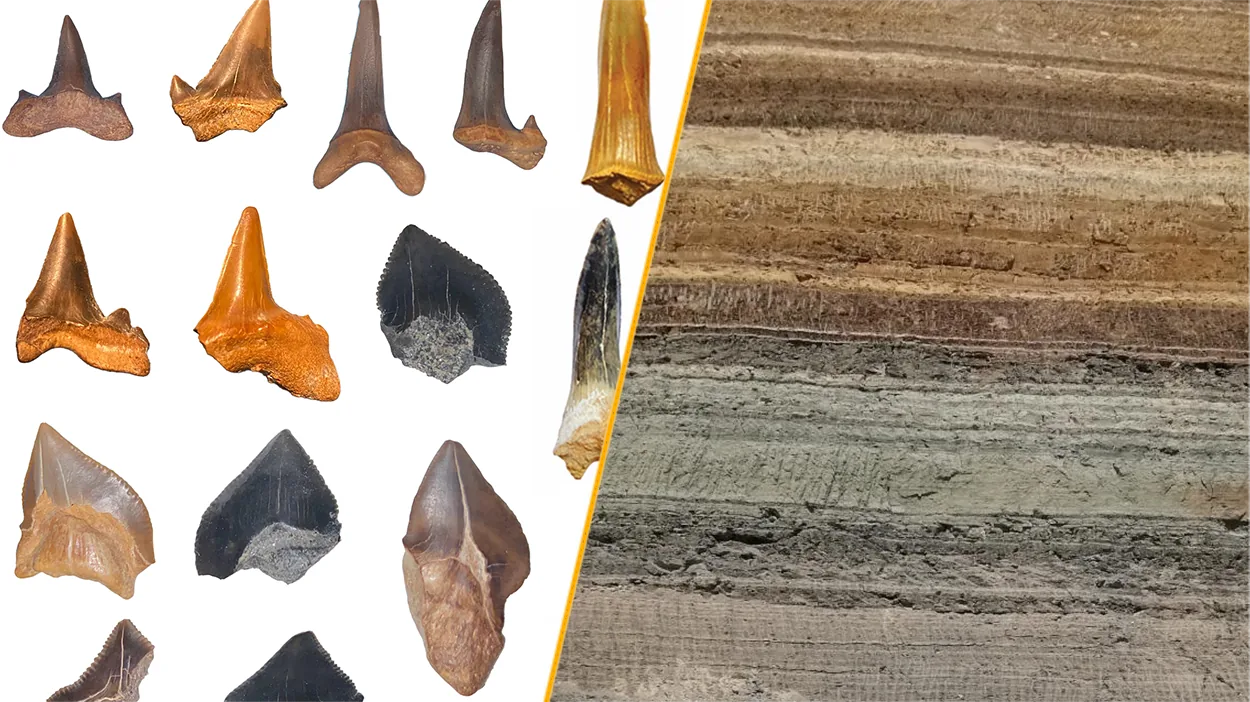
Scientists have unearthed a significant fossil trove in Egypt's Western Desert, uncovering what they are calling an ancient shark "graveyard." The discovery, located on the Abu-Tartur Plateau, includes fossilized teeth from at least seven distinct shark species that inhabited the area millions of years ago. The findings, detailed in the journal Cretaceous Research, provide compelling evidence of a once-thriving marine ecosystem in a region now characterized by arid desert landscapes.
The Abu-Tartur Plateau, part of the Duwi Formation, was submerged under a shallow sea during the Cretaceous period, a time when global temperatures were significantly warmer and sea levels were substantially higher than they are today. This ancient sea offered favorable conditions, including adequate sunlight and oxygen levels, to support a rich diversity of marine life. Paleontologist Tarek Yassin of Cairo University, the study's lead author, stated, "This study provides evidence that the area now occupied by the plateau was once a sea with flourished marine life, with environmental conditions suitable for its development and prosperity, including favourable temperatures, sunlight, and appropriate oxygen levels."
New Species Emerge from Prehistoric Seas
Expeditions conducted between 2020 and 2022 yielded a remarkable collection of fossilized shark teeth. While previous research in the area had hinted at its past as a marine environment through finds of fish and marine reptiles, this latest discovery significantly expanded the known biodiversity. The team initially found teeth from two types of mackerel shark, but subsequent work uncovered 14 additional teeth representing at least five more species. Notably, the species Scapanorhynchus raphiodon, an ancient relative of modern goblin sharks, had never before been documented in Africa. Additionally, Serratolamna serrata and Squalicorax bassanii were identified in Egypt for the first time.
"Finding teeth belonging to seven different shark species was particularly remarkable, especially because they were all discovered in the same location, in the middle of an entire plateau," Yassin explained. "This discovery is more than simply a large assemblage of shark fossils." The presence of such a variety of shark species in close proximity suggests that the ancient waters were rich in prey, supporting a complex food web with these apex predators at the top. However, the authors caution that the teeth may not represent sharks that coexisted simultaneously but rather have been consolidated in the same sediment layers over geological time.
The region's geological composition, particularly its abundance of phosphorite, a sedimentary rock often formed from marine animal remains, further supports the interpretation of a past marine environment. The extensive research conducted by Yassin and his team in areas known for phosphate deposits, which can contain vertebrate fossils, laid the groundwork for this significant find. The discovery adds a crucial piece to the puzzle of prehistoric life in North Africa, highlighting how drastically environments can change over millions of years.
The research team plans to continue their investigations on the Abu-Tartur Plateau and surrounding areas, anticipating further discoveries. "We believe there is still much more to discover," Yassin remarked. This ongoing exploration promises to shed additional light on the prehistoric fauna and environmental conditions that shaped this now-desolate desert region.