
2026 Solar Eclipse: Live Updates from Path of Totality
Europe prepares for a total solar eclipse on August 12, 2026. Millions will witness totality or a partial view as the moon obscures the sun, with reporters stationed in Greenland and Spain.

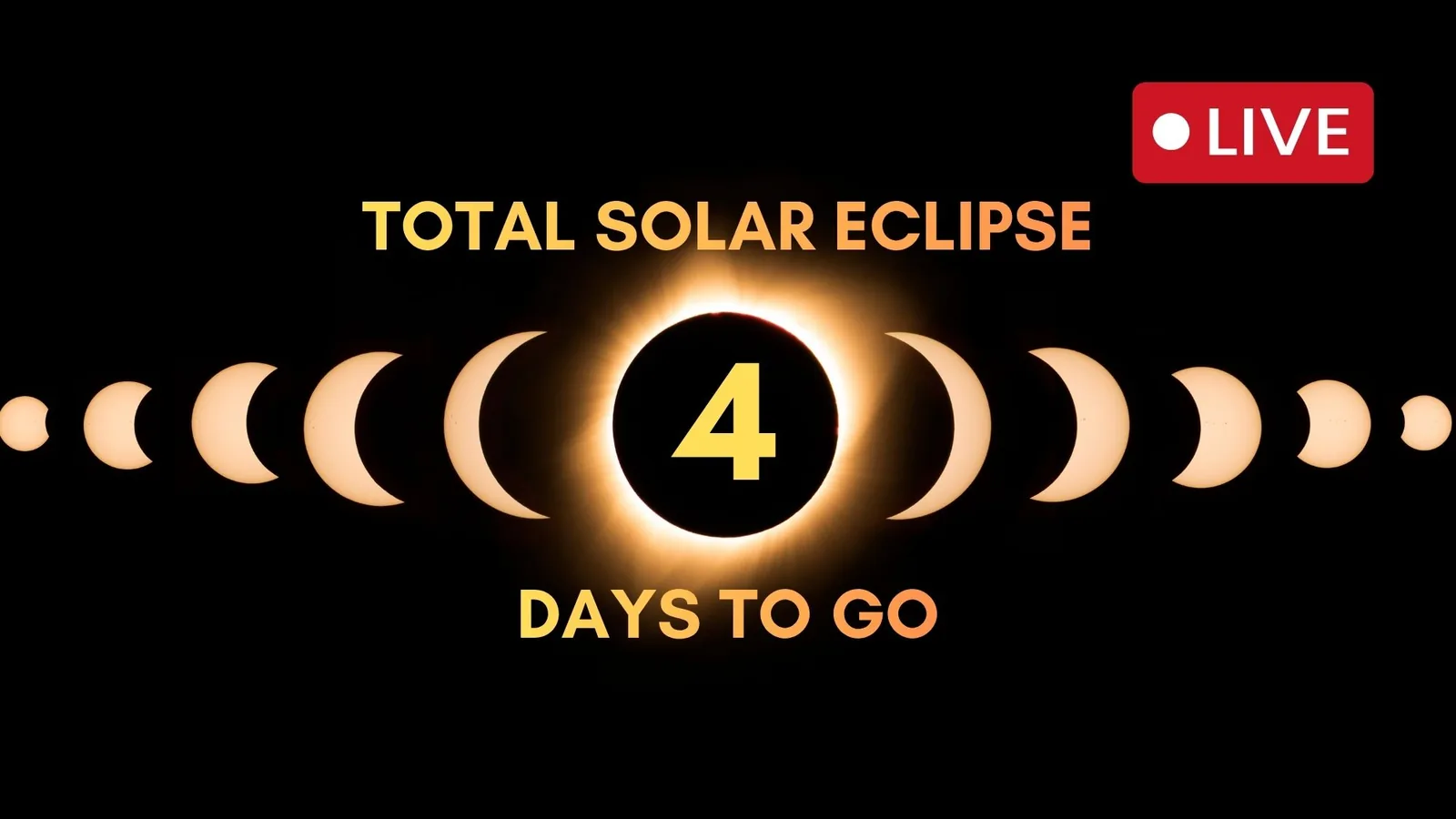
Europe is on the cusp of witnessing a spectacular celestial event: the total solar eclipse of August 12, 2026. This rare phenomenon, the continent's first total solar eclipse since 1999, will trace a path of darkness across Greenland, Iceland, northern Spain, and the Balearic Islands. During totality, the moon will completely block the sun for a few brief minutes, transforming daylight into an eerie twilight and revealing the sun's ethereal outer atmosphere, known as the corona. Millions more across Europe and parts of northeastern United States and eastern Canada will experience a significant partial solar eclipse.
This year, Skywatching Editor Daisy Dobrijevic is aboard HX Expeditions' MS Spitsbergen, navigating the dramatic fjords of Greenland. Her vantage point in Scoresby Sund, the world's largest and longest fjord system, offers a prime location to observe totality. Dobrijevic aims for better luck than her previous eclipse experience, which was unfortunately thwarted. Meanwhile, Skywatching Writer Anthony Wood is embedded with the DEB (Distributed Eclipse Broadcast) initiative in Valoria la Buena, Spain. His location promises a view of the eclipsed sun low on the western horizon just before sunset, marking his very first total solar eclipse.
Safety and Viewing Tips for the 2026 Eclipse
As the eclipse approaches, skywatchers are reminded of the critical importance of proper eye protection. Viewing any part of a partial solar eclipse without certified solar eclipse glasses or viewers can cause severe and permanent eye damage. Safe alternatives, such as simple projection methods using household items, are also recommended. The solar eclipse, while a breathtaking sight, demands respect for the sun's powerful rays. Resources are available to guide viewers on safe observation techniques and what to look for during the event.
The visibility of the eclipse will vary significantly by location. While a select few will experience the awe-inspiring totality, many will witness a partial eclipse, where the moon appears to take a bite out of the sun. For some, the eclipse may not be visible at all. Detailed maps and information are available to help individuals determine what they will see from their specific geographic location. Planning ahead and understanding the viewing predictions is key to fully appreciating this astronomical spectacle.
This August 12, 2026, event offers a unique opportunity for both scientific observation and public wonder. Citizen science projects like DEB, with participants like Wood in Spain, contribute valuable data to our understanding of solar phenomena. The global participation highlights the widespread fascination with space and astronomy. The path of totality is narrow, making those within it uniquely positioned to witness the full grandeur of the corona. For those outside this path, the partial eclipse still offers a memorable experience, underscoring the dynamic relationship between the Earth, moon, and sun.