
UK Physics Labs Face 'Existential Choice': Commercialize or Cease
UK's Science and Technology Facilities Council (STFC) labs must significantly increase commercial funding or face closure, with a £42 million annual shortfall. This policy shift impacts major research facilities amid broader UK science funding reforms.

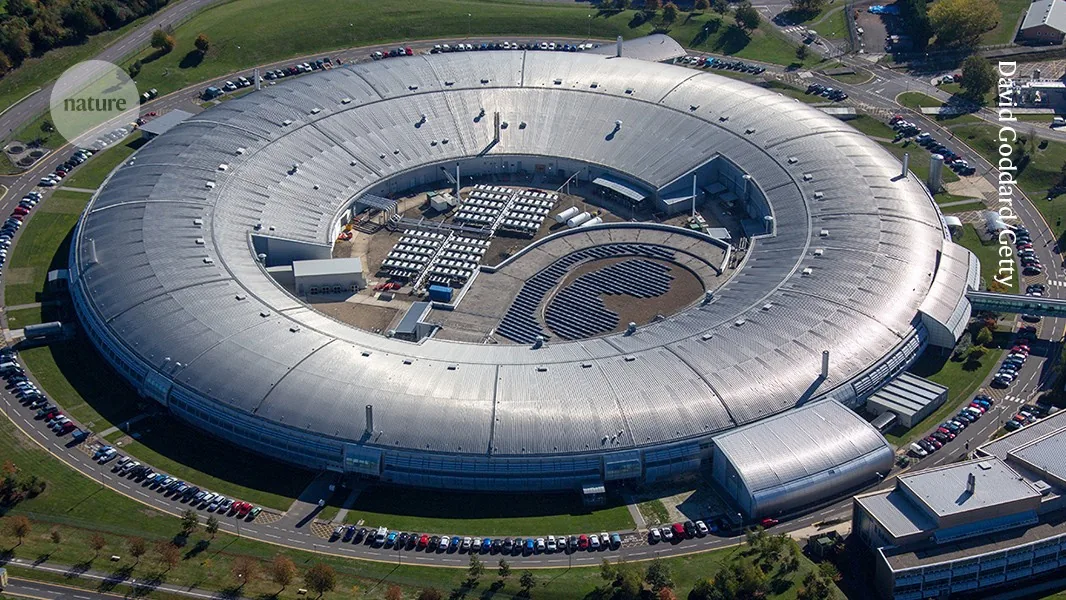
Major United Kingdom physics research facilities, including the Diamond Light Source, are confronting an "existential choice": drastically increase commercial income or risk permanent closure. The UK Science and Technology Facilities Council (STFC), which oversees these flagship laboratories, has mandated that sites must generate substantially more revenue to cover their operational costs, a directive aimed at addressing a projected annual financial deficit of £42 million (US$56 million).
This stringent requirement is part of a wider overhaul of public research funding in the UK, aligning with the government's current strategic priorities. The move comes at a turbulent time for the nation's scientific community, marked by recent shifts in leadership within the Department for Science, Innovation and Technology. Patrick Vallance, a respected clinical scientist, stepped down as science minister on July 20, with chemical engineer Chris McDonald appointed to the role on July 24.
The challenge for STFC facilities arises despite previous government assurances of a growing science budget. While the UK Research and Innovation (UKRI) fund was slated to increase from £8.8 billion in 2025-26 to £10 billion by 2029-30, much of this growth is earmarked for strategic areas like artificial intelligence, business support, and digital infrastructure. Funding for "curiosity-driven research," often supported by individual grants, is projected to remain largely static. Consequently, STFC's core budget faces flatness, necessitating cuts elsewhere to accommodate rising costs for postdoctoral researcher grants and international collaborations, such as membership fees for the European Organization for Nuclear Research (CERN).
By 2030, key facilities like Diamond, the ISIS Neutron and Muon Source, and the Central Laser Facility (CLF), all located at the Harwell campus, are expected to see their funding reduced by 15%, amounting to £28 million annually. Similarly, STFC spending on national labs and estates, including the Daresbury Laboratory and RAL Space, will decrease by 8%, or £14 million per year. The Boulby Underground Laboratory, a facility specializing in dark-matter and quantum research situated 1.1 kilometers underground, faces an even steeper 40% funding cut over the same period.
Efforts to Bridge the Funding Gap
To help these facilities navigate the transition, UKRI has provided a one-time injection of £135 million over three years. This interim funding is intended to allow the labs time to implement cost-saving measures and secure external income streams. STFC Chief Executive Ian Chapman indicated that operational efficiencies, such as reducing user support and technical assistance, will be pursued. Beam time for experiments at ISIS, for example, will decrease from 80% to 66% of its availability. Furthermore, job reductions are anticipated, potentially affecting "hundreds" of the STFC's approximately 3,000 staff members.
The mandate extends to actively pursuing revenue through industrial partnerships. Many STFC facilities already engage with the private sector, charging companies for proprietary research using their advanced instruments. Diamond and ISIS, for instance, allow industry access, with certain conditions applied if the research is to be published openly. The ISIS ChipIr instrument, which simulates space radiation, is utilized by the aviation industry to test material resilience.
While STFC staff are reportedly open to generating revenue, their experience in commercial ventures is considered relatively limited compared to international counterparts. The STFC's revenue from facilities, goods, and services in 2025-26 was approximately £29 million, representing about 3.5% of its total budget. This figure is comparable to, but slightly lower than, the roughly 5% generated by France's Institut Laue–Langevin (ILL) through beam time sales and medical isotope production. However, other European institutions demonstrate significantly higher levels of commercial engagement. The Paul Scherrer Institute (PSI) in Switzerland, for example, derives around 7% of its income from industry collaborations, including a dedicated X-ray beamline for pharmaceutical companies. This suggests a potential pathway for UK facilities, provided they can adapt and build robust industry partnerships to secure their future.