
Apple's New Macs Target AI Costs Against Microsoft, Nvidia
Apple has launched new Mac Studio and Mac mini models featuring its M5 Ultra chip, aiming to compete with Microsoft and Nvidia in the AI computing market by offering lower costs for AI development.

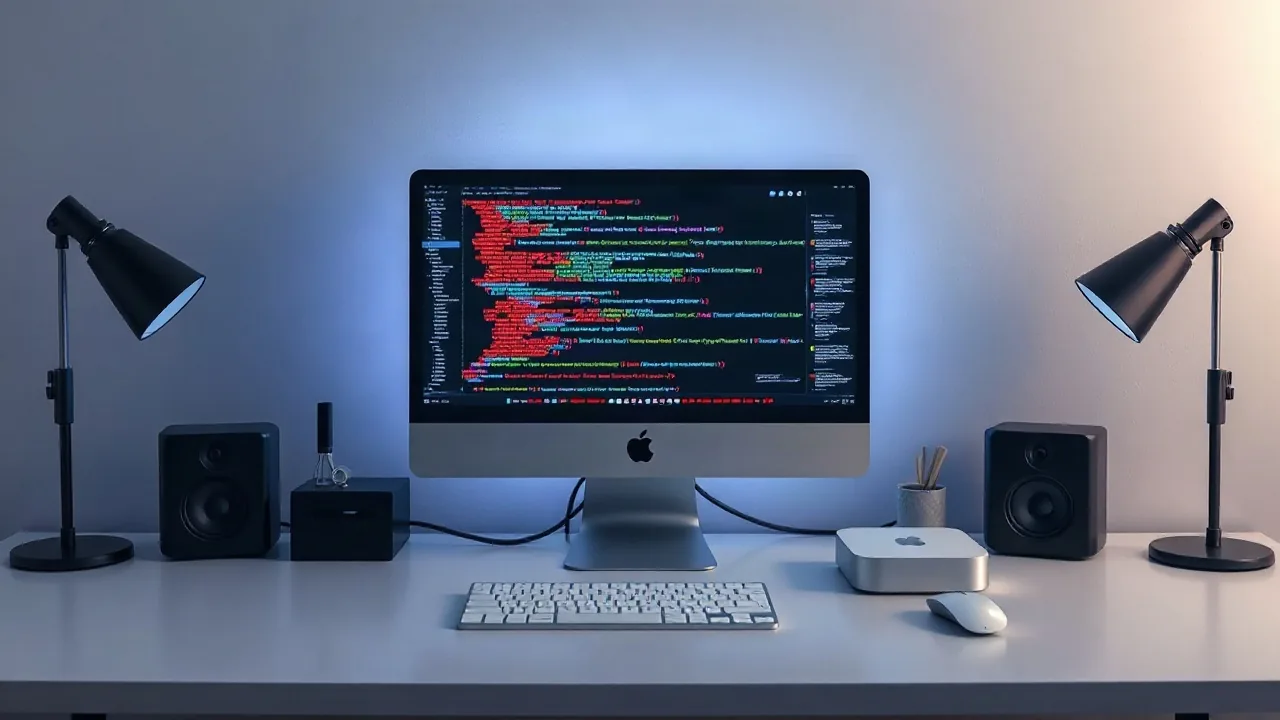
Apple officially released its latest Mac Studio and Mac mini models today, prominently featuring the new M5 Ultra chip. This launch signals Apple's strategic push into the artificial intelligence computing sector, directly challenging established players like Microsoft and Nvidia by offering a potentially more cost-effective solution for AI development and deployment.
The new hardware is designed to provide significant processing power for demanding AI tasks, including machine learning model training and inference. By integrating its custom silicon, Apple aims to control the entire ecosystem, from hardware to software, thereby optimizing performance and reducing the overall cost for users compared to existing cloud-based or specialized hardware solutions. The M5 Ultra chip is an evolution of Apple's custom silicon strategy, promising substantial gains in performance and power efficiency for professional creative workloads and AI computation.
New Chips Drive AI Performance and Cost Savings
At the heart of the new offerings is the M5 Ultra chip, an advancement that Apple claims delivers superior performance per watt. This efficiency is crucial for AI workloads, which are notoriously power-intensive. Industry analysts suggest that by leveraging its in-house chip design, Apple can bypass the incremental costs associated with third-party hardware, such as those from Nvidia, which currently dominates the AI hardware market. Microsoft also stands to face increased competition as Apple pushes its macOS ecosystem into high-performance computing environments traditionally dominated by Windows and Linux.
The strategy appears to be a direct response to the escalating costs associated with developing and running AI models. Companies often rely on expensive GPU clusters or metered cloud services, which can become prohibitively costly for smaller businesses or individual developers. Apple's approach aims to democratize access to powerful AI computing resources by offering them through a more accessible hardware platform. The new Mac Studio, for instance, is positioned as a powerful workstation capable of handling complex AI projects, while the updated Mac mini offers a more compact and affordable entry point.
Sources close to Apple indicate that the company is focusing on optimizing its software, including its Core ML framework, to take full advantage of the M5 Ultra's capabilities. This integrated hardware-software approach is key to achieving the advertised performance gains and cost reductions. It allows Apple to fine-tune the silicon for specific AI operations, potentially offering a distinct advantage over more generalized computing platforms.
The move also signifies a broader trend in the tech industry towards vertical integration, where companies control more of their supply chain and product development. This allows for greater innovation and competitive pricing. While Nvidia's GPUs remain the benchmark for many AI applications, Apple's integrated strategy presents a compelling alternative for developers seeking to reduce their expenditure on AI infrastructure and focus more resources on the creative aspects of AI development.
The initial reception from tech reviewers has been largely positive, with benchmarks showcasing the M5 Ultra's impressive capabilities in tasks ranging from video editing to complex data analysis, including AI model training. Early adopters are expected to explore the potential of these new machines for a variety of AI-driven applications, potentially reshaping the landscape of AI hardware accessibility.