
Nvidia DLSS 5 AI Tech Leaked, Enables Graphics Upgrades in Popular Games
An unreleased version of Nvidia's DLSS 5 AI upscaling technology has been leaked, allowing modders to integrate its advanced graphics enhancements into various PC games, including titles like Control, Skyrim, and Grand Theft Auto.

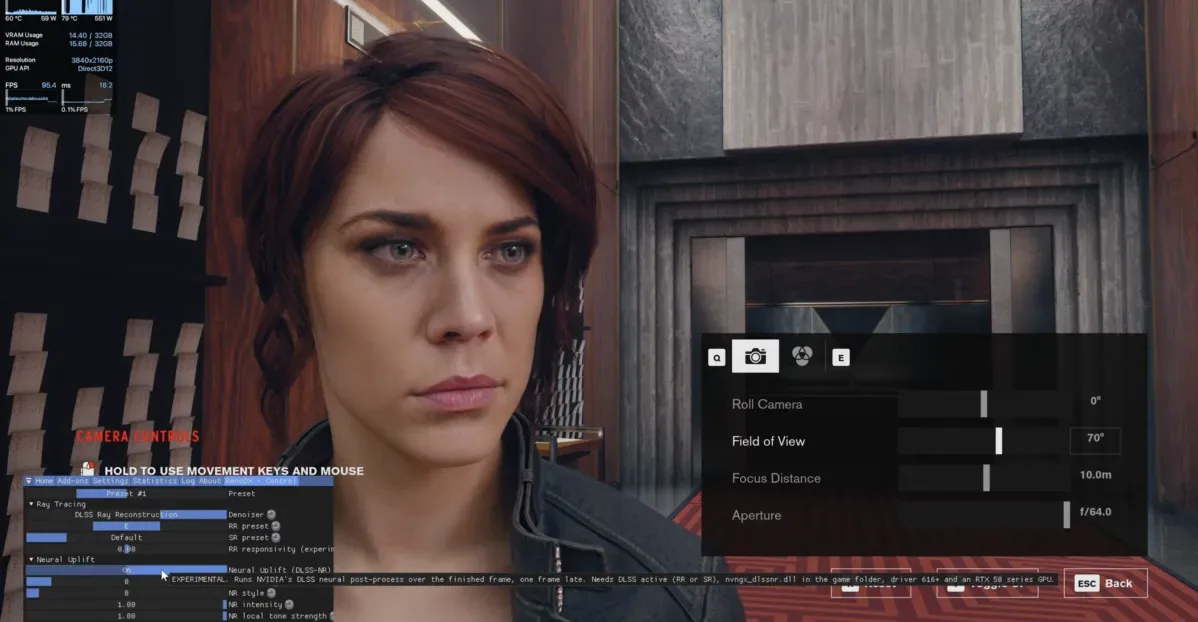
An unreleased iteration of Nvidia's Deep Learning Super Sampling (DLSS) 5 technology has reportedly been leaked, enabling a community of game modders to implement its sophisticated AI-powered rendering capabilities into a wide array of popular PC titles. The unofficial integration allows players to experience enhanced visual fidelity and performance improvements in games that were not originally designed to support the cutting-edge technology.
Reports indicate that modders have successfully applied early versions of the leaked DLSS 5 technology to titles such as Remedy Entertainment's Control, Bethesda's Skyrim, and Rockstar Games' Grand Theft Auto series, among others. This breakthrough offers a glimpse into the potential future of real-time graphics rendering, where artificial intelligence plays a crucial role in optimizing visual quality and frame rates.
Community-Driven Advancements
The leak, circulating within gaming communities, has sparked a wave of creativity from modders eager to experiment with Nvidia's proprietary AI algorithms. While official support for DLSS 5 is still pending an announcement from Nvidia, these independent efforts demonstrate the technology's potential impact. DLSS is a proprietary AI-powered image scaling technology developed by Nvidia that aims to boost frame rates while maintaining or improving image quality. By intelligently reconstructing detail from lower-resolution inputs, DLSS can significantly enhance gaming performance, particularly on high-end titles that push graphical boundaries.
This situation highlights the power of the modding community in extending the lifespan and capabilities of existing games. Modders have a long history of enhancing game graphics, adding new content, and fixing bugs, often pushing hardware and software to new limits. The application of a leaked, next-generation rendering technology like DLSS 5 is a prime example of this ongoing innovation.
Nvidia has not yet officially commented on the leak or the specific capabilities of DLSS 5. However, the company has consistently invested in AI research and development, particularly for its GeForce graphics cards. Previous versions of DLSS, including DLSS 3.5 which introduced Ray Reconstruction, have significantly improved graphical realism by using AI to denoise and enhance ray-traced reflections, offering a substantial visual upgrade over traditional rendering methods. The advent of DLSS 5, as suggested by these early modding efforts, could potentially introduce even more advanced AI techniques to game development and player experience.
The implications for the gaming industry are substantial. If DLSS 5 delivers on the promise shown by these unofficial implementations, it could set new standards for graphical performance and visual fidelity. Players might soon expect higher frame rates and more detailed graphics across a broader range of titles, even those with aging engines. Furthermore, the leak could pressure developers and Nvidia itself to accelerate the official rollout of the technology and its features. The widespread adoption of such AI-driven enhancements could reshape the landscape of PC gaming and potentially influence console development as well.