
IFA 2026 AI Gadgets Transform Smart Home Automation
Berlin's IFA 2026 unveiled next-generation AI-powered smart home devices that automate daily tasks with machine learning. Major manufacturers showcased innovations in climate control, security, and energy efficiency.

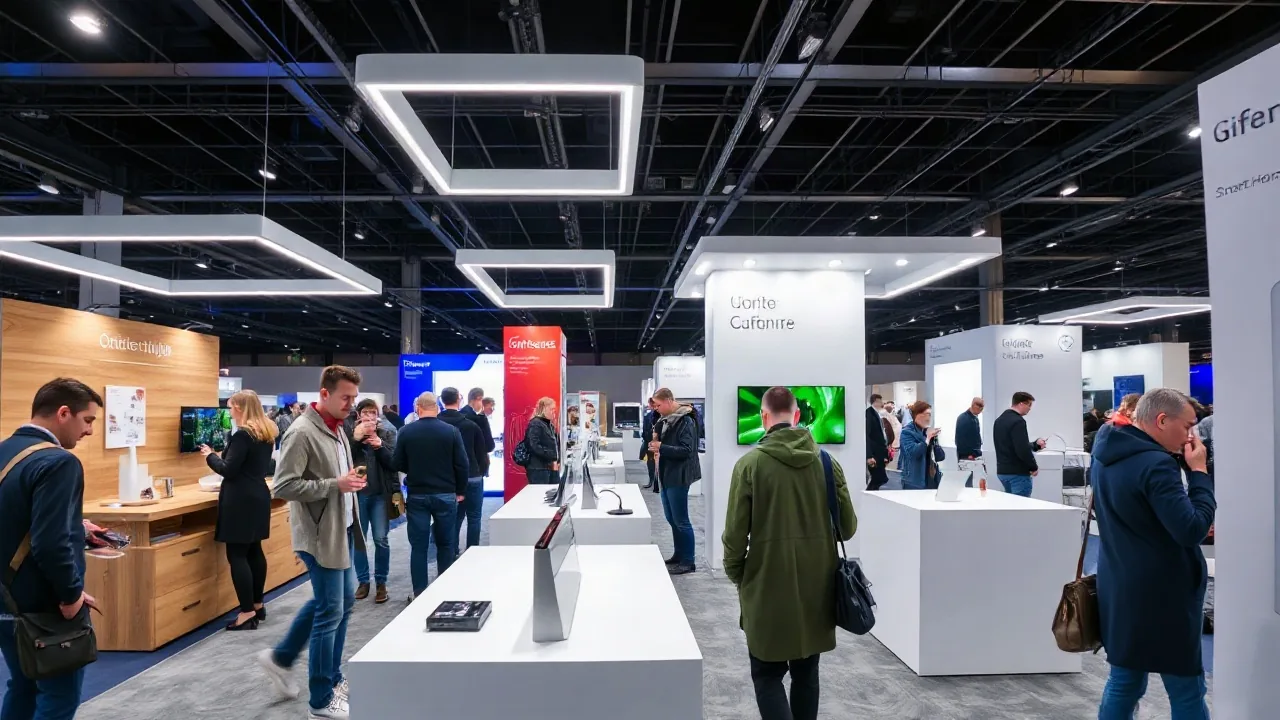
Berlin's IFA 2026 tech conference, held September 4-8, revealed a wave of AI gadgets designed to reshape residential living. Exhibitors from Samsung, LG, Bosch, and emerging startups demonstrated systems that learn household patterns, predict maintenance needs, and optimize energy consumption without manual intervention.
The shift reflects industry recognition that AI requires context. "Traditional smart home devices respond to commands," said Dr. Michael Chen, senior analyst at Berlin Tech Research Institute. "The devices at IFA 2026 anticipate needs by analyzing historical behavior, weather forecasts, and utility patterns in real time."
Samsung's new SmartThings AI Hub aggregates sensor data from 47 compatible devices, then adjusts lighting, heating, and appliance operation automatically. The system learns occupancy patterns within two weeks and began shipping in August 2026. LG Electronics unveiled a refrigerator with internal cameras and AI that generates shopping lists based on consumption habits, then integrates with local grocery delivery services.
Core Technologies Driving the Shift
Smart home innovation at IFA 2026 centered on three enabling technologies. First, on-device AI processing reduces latency and privacy risks by computing decisions locally rather than sending data to cloud servers. Second, improved sensor fusion combines input from cameras, microphones, thermal sensors, and occupancy detectors for nuanced environmental awareness.
Third, standardized communication protocols like Matter and Thread now support AI inference directly on hub devices. Bosch Home Appliances demonstrated a washer that analyzes fabric texture via AI vision, then automatically selects water temperature, spin speed, and detergent dosage. The company estimated the system cuts water consumption by 23 percent compared to manual cycles.
Startup innovators also captured floor space. Eve Systems, a Munich-based firm, showed an indoor air quality monitor with AI that predicts allergenic pollen counts six hours in advance, then automatically triggers HEPA filtration. Nanoleaf, a Canadian lighting company, unveiled modular panels that adjust color temperature based on circadian rhythm calculations derived from time of day and user location history.
Practical Applications and Energy Impact
Energy management emerged as the strongest use case for home automation systems at the fair. German utility company E.ON partnered with Siemens to demonstrate a prototype that coordinates household battery storage, solar panel output, and appliance scheduling to minimize grid demand during peak-pricing hours. A three-bedroom test home in Munich reduced annual electricity costs by 34 percent over 12 months.
Security applications also showed tangible results. Logitech's Circle View AI system processes camera footage on a local storage device, eliminating cloud upload delays. The device identifies package deliveries, unusual loitering, and vehicle approaches, then sends categorized alerts within 2.3 seconds on average. Arlo, a security camera maker, integrated facial recognition trained on household members' photos to reduce false alarms by 68 percent.
Climate control systems demonstrated another practical frontier. Ecobee's new thermostat routes data from seven room sensors through an on-device AI model to predict temperature changes 45 minutes ahead. The system then adjusts heating and cooling to maintain comfort while minimizing run time. Beta testing in Toronto and Portland showed 19 percent energy savings without occupant perception of temperature variance.
Manufacturers emphasized privacy safeguards. Most AI processing now occurs on local hubs rather than remote servers. Samsung stated that SmartThings hub stores all video and audio analysis results locally, never transmitting raw footage to the cloud unless the user explicitly activates remote playback.
Market Expansion and Industry Direction
The IFA 2026 lineup signals rapid consolidation. Smaller vendors now position themselves as partners to major platform providers rather than standalone competitors. Somfy, a French blinds automation company, announced integration with Matter-compatible ecosystems, moving away from proprietary wireless standards used since 2019.
Tech innovations displayed at the fair also reflect growing regulatory pressure. The European Union's AI Act, effective as of January 2026, requires manufacturers to document training data sources and algorithmic decision logic. Multiple exhibitors highlighted transparency documentation as a competitive advantage. Philips Hue, a lighting brand, published detailed explanations of how its occupancy detection AI weights sensor inputs, positioning the move as a trust signal to privacy-conscious consumers.
Market research firm IDC projects that future tech adoption in smart homes will reach 71 percent of US households by 2029, up from 38 percent in 2024. The IFA 2026 showcase accelerated timelines. Major retailers including Best Buy and Amazon announced fall 2026 launch dates for over 200 new AI-enabled devices, with average retail prices declining 12-18 percent compared to 2025 equivalents due to increased competition.
Industry analysts attribute the acceleration to three factors. AI chipset costs have dropped 31 percent since 2024, making embedded processing economically viable at consumer price points. Second, consumer frustration with fragmentation has peaked, driving demand for unified platforms. Third, energy cost volatility in Europe and North America created immediate ROI potential for automation systems, spurring enterprise and municipal pilots that now inform residential product design.
The path forward appears clear: hardware makers are shifting from selling connected devices to selling integrated intelligence. IFA 2026 demonstrated that the smart home era has transitioned from novelty to necessity, with AI as the enabling force reshaping how homes operate and inhabitants live.